Showing posts with label Alternative History. Show all posts

Monday, February 12, 2024

Interview with J.E. Tolbert, author of Arsalan the Magnificent


Today it gives the Speculative Fiction Showcase great pleasure to interview J.E. Tolbert, whose novel Arsalan the Magnificent has its debut on February 13, 2024.

Who is the eponymous hero, Arsalan the Magnificent, and what can you tell us about him?

Arsalan the Magnificent, or Arsalan Ozdikmen, is a wizard employed as a magical architect of fantastic structures. He belongs to a guild of such magical architects who travel the world constructing wonderous buildings for lavish royal commissions. Though Arsalan is worldly, wealthy, and educated and is the best at his profession, he has some questionable personal habits from a childhood in which he was raised by cloth merchants who were not highly educated. Arsalan doesn’t know how to control either his spending, his temper, or certain impulses such as horserace betting and drinking. This leads him into the situation he meets at the beginning of the book. Ultimately, though he has a fierce and temperamental exterior, Arsalan harbors a soft heart and a grudging compassion for everyone he knows. He is a complex character, one who, for example, is quick to anger but abhors violence, one who can be impulsively emotional but retains a keen intelligence.

What inspired you to write a fantasy novel set in an alternate, magical version of the Ottoman Empire?

Many magical fantasy novels are based in worlds that are fantasy versions of medieval northern European societies and geography, and I simply wanted a setting that was different from that. The Ottoman Empire was a good start, not only because it’s sunnier and more southerly but also because it’s closer to our real world.

Why did you choose an older man as the protagonist?

Again, many but not all fantasy novels focus on a coming-of-age theme, which means that many of their Protagonists represent adolescence in some way, and their journeys therefore represent a transition from childhood to adulthood. These are perfectly valid and oftentimes beautifully told stories, ones needed by human society to make sense of the dramatic process of psychological maturation of puberty. I, however, didn’t feel the need to add to our already voluminous library of these stories. Rather, I wanted to imagine what a post-adolescent or middle-aged fantasy novel would be like, one that does not avoid the unglamorous, ambiguous, or knotty themes and issues associated with adulthood. Yet, I wanted to write the book in a way that would be accessible to younger readers so that they would be delivered a refreshingly mature and sober perspective on life amid a story that is still exciting and hopeful.

In any case, I find older characters a bit more interesting in a way, because they are more plausibly capable of psychological resilience. They have a lot of personality and history and many unexpected reservoirs of memory and experience from which to draw resources they can use to cope with adversity. Think of Gandalf or Aragorn from The Lord of the Rings.

What do you feel are the limitations of the traditional quest or hero’s journey?

In my view, the traditional hero’s journey symbolizes the transformation into adulthood, where the hero discovers his or her own unique abilities and place in the world. Although one may be able to experience echoes of the hero’s journey many times throughout one’s life, it chiefly represents puberty. Thus, the limitation of the hero’s journey is that it represents only one small section of the continuum of life: the beginning of it, essentially. One can imagine how hero’s journeys must have described life a bit more comprehensively in the past when the human lifespan was briefer, and adolescence constituted a larger proportion of it. Now, however, that medical science has extended our lifespan to remarkable lengths, we are forced to confront the question of what happens after the hero’s journey is long since complete. What is life like after the dragon is slain, the treasure is won, and the hero becomes king or queen? Is everything perfect? Of course not. Conflicts do continue, but in ways, our traditional magical myths are too simple to describe, so it is an interesting and amusing exercise to expand the boundaries of magical fantasy and myth to describe this strange, new, protracted adult reality.

Where did your love for fantasy begin and what authors have influenced you?

My love for fantasy began when I was ten years old, and I read The Hobbit and The Lord of the Rings. I spent two years reading all four of those books and additional Tolkien material. It was a magical experience. I felt I underwent the journey with all the characters, and I was saddened when there was no way to venture further into the Fourth Age with them. Eventually, I moved on to other genres and forms of literature after that, but my affection for fantasy literature remained.

I think the feature of magical fantasy that appeals to me the most is its plasticity. In a magical fantasy novel, one can more directly access the mythological and psychological underpinnings of the story without resorting to a lot of logical contortions to explain how such things are possible. Events can just occur, and the story is allowed to unfold according to its own internal reasoning.

Why did you focus on psychokinesis and architecture as the magic in your universe?

I did this to address the problem underlying the existence of magic in any story. How much magic can there be? If there is a lot of omnipotent magic, then anything is possible, and if anything is possible, then it’s harder to care about what happens in the story. The extreme manifestation of this is the dreaded deus ex machina. This is why fantasy authors feel the need to invent systems of rules and constraints for their magic.

Thus, my constraints on the magic in Arsalan the Magnificent are heavy. I wanted the magic to be like electricity or magnetism: mundane, unmysterious, workaday, associated largely with materials and mass, and governed by well-documented principles of engineering. This ordinariness serves to put the magic in the background of the story and the characters in the foreground.

Of course, on the fringes of the story are hints of magic being used for weirder and potentially more sinister purposes, but the wizards in Arsalan the Magnificent are conservative and stick to their own everyday magic to build buildings. I liked the idea of a society that has discovered magic using it for the purposes of civil engineering. It seemed like a charmingly adult thing to do. I simply couldn’t imagine fully grown wizards using their magical powers only to shoot lightning bolts at each other. What society wouldn’t use magical telekinesis to erect buildings? That’s a lot of good to be done and wealth to be made.

You also write poetry and literary fiction. How do these different genres co-exist, and do they overlap? 

I would say that poetry is the raw, natural language of the mind, and I believe that it’s from poetry that all other forms of literature have descended. The genetic imprints of poetry exist in all storytelling. I see it this way because the literature I wrote evolved from my own poetry. I see my novels as very large poems, in a way, in the same strange way that whales are very large mammals.

I see literary fiction as not really a genre but an approach to literature that exists outside of genres and many times defies them. I would say that genre literature is literary fiction that is processed into a condensed or distilled format for popular consumption. Both literary fiction and genre fiction can be excellent literature depending on the skill with which they are written, and often there is no clear distinction between them.

One good example of a novel that is both good literary fiction and genre fiction is The Road by Cormac McCarthy. It is post-apocalyptic science fiction but possesses such literary qualities as to seem biblical.

What kind of fantasy or other fiction do you like to read?

I like to read surrealist, magical realist, existentialist, and modernist literary fiction. My tastes are old-fashioned, and I am particularly interested in German-language literature from the early twentieth century. I have read all the stories written by Kafka and Hesse, and I enjoyed Death in Venice and The Magic Mountain by Thomas Mann. I also read Robert Walser, Leonora Carrington, Virginia Woolf, James Joyce, Flann O’Brien, Jose Luis Borges, Dino Buzzati, Gerald Murnane, and J. A. Baker. Marquez’s One Hundred Years of Solitude is one of my favorite books, and Bruno Schulz is probably my favorite author.

I’ve been making a tour of the novels by Thomas Hardy, whose stories are simple but whose use of phraseology to describe natural scenes achieves an otherworldliness that is underappreciated. Next on my reading list is Beloved by Toni Morrison, who is underrated as a surrealist writer, and Drive Your Plow Over the Bones of the Dead by Olga Tokarczuk.

I like to read strange or philosophical fiction because of the possibilities inherent in it. I feel there is a natural mixing point between strange literary fiction and magical fantasy fiction since they share common literary ancestors.

These days in both indie and mainstream fiction, there is an increasing overlap between genres. How do you feel about that?

I love it and applaud it. I don’t really like genres. I don’t think that genres are made for the convenience of readers and authors. I think they are made for the convenience of marketers and salespeople. It consists of elements of literature boiled down to a few rules, tropes, and formulae that prove to be saleable in one way or another. Genre novels can be written very well, but ultimately, genres can become tiresome and wanting in variation. I think this is why more authors are experimenting with genre-blending and why more readers have more of a taste for such experimentation, and this is why I find no problem with infusing elements of literary fiction into Arsalan the Magnificent.

Why is the complexity of the central character important to you?

It is important because my novel is ultimately character-driven and internal, and complex characters are more compelling for this purpose. Sometimes a story will be more action-oriented, or it will require the Protagonist to be more of an everyman or everywoman on whom the reader can project his or her own interpretations. But I wanted Arsalan to emerge from the page as a real psychological entity, one who doesn’t seem bound within the book but whose personality can echo in the reader’s head for a while. 

The Fantasy genre has changed and evolved immensely since the era of Tolkien and Lewis, and even Michael Moorcock. To what extent are you aware of these changes and the explosion of sub-genres and diversity?

Of course, I am keenly aware of how fantasy literature has evolved over the past fifty years. In the days of Tolkien, Lewis, and even Moorcock, fantasy literature was much more of a niche market and readership, at least in the United States. Tolkien and Lewis were respected because they were elite scholars who happened to write stories based on their research, but other fantasy authors did not enjoy that same degree of credibility in the eyes of the literary establishment. Fantasy literature by and large was seen as pulpy and juvenile. I remember when one simply could not talk about fantasy literature openly without fear of some sort of derision. Also, quite frankly, the readership and authorship of fantasy literature at that time were dominated by a lot of heterosexual young white males, and for this reason, the stories catered toward their tastes, which did nothing to alleviate its perception of adolescent pulpiness. This was the case all the way through the nineteen eighties.

By the nineties, though, this began to change. I believe the first generation of readers to champion the fantasy genre as respectable and vital was Generation X, followed closely by the Millennials, who embraced it even more fervently. Now the fantasy genre is so prevalently mainstream that it’s considered big business. These two generations have insisted on more racial, ethnic, and gender diversity in their fantasy stories, so there is now an increasing number of fantasy stories happening in worlds based on, say, Middle Eastern, East Asian, Indian, and sub-Saharan African culture and geography, and there’s a heavy influence from Japanese anime and manga culture. A lot of fantasy stories are now set in contemporary urban settings, and there are more fantasy stories with a female focus. Also, there is more experimentation with themes and stakes, and genre-blending. All this directly reflects the diversity and complexity of our current society, and it’s wonderful. This is probably the most interesting period in the history of fantasy literature so far, to be honest.

All the same, it seems that the largest moneymakers in the genre of fantasy continue to be those that emulate violent medieval European male warrior tropes, such as the A Song of Ice and Fire and The Witcher series. They are darker and grittier and more morally ambiguous, and they contain grim intrigue, but their central themes are fundamentally similar to those in, say, the Conan the Barbarian series. It is against these types of stories I was reacting when I wrote Arsalan the Magnificent, because I dislike violent power fantasies.

Will you be writing more about Arsalan or his world, and what are your plans for the future?

If Arsalan the Magnificent is successful, or in any case if there is enough interest in it, I do have plans for a sequel that would focus on the adventures of Arsalan’s grown children.

In any case, I have two completed novels of literary fiction that I plan to publish in the future.

Do you have a daily regime for your writing and a place where you like to work?

I don’t really have a strict daily regime for my writing. Writing is so enjoyable to me that when I have a writing task, it’s simply difficult to keep myself away from it. I must work on it at least a little every day to achieve a sense of accomplishment for that day. It becomes a type of compulsion.

I have a day job, which means that I write in the evenings and on the weekends. Sometimes I will write for as long as two hours and at other times for as little as fifteen minutes. I don’t have a targeted word count for a day. I mentally decompose the story into small sections, and my overall goal for a day or a few days is to complete just that section. Sometimes this section will be a chapter, and at other times a few paragraphs. Sometimes I will spend a week or two just to perfect a few sentences. Once I word everything to my satisfaction, I move on to the next section. It sounds excruciatingly slow, but through cumulative persistence, it’s a rather normal pace.

I tend to think about my writing all day, such that I end up laboring over the wording of a phrase, sentence, or paragraph in the notes on my phone. I do this so often that when I am finally in front of my computer, that time is typically spent transcribing the writing I had produced that day rather than trying to think of what to write next.

Who are your readers and what do you want them to take away from the story?

I was targeting young adult readers with Arsalan the Magnificent, those who are fans of fantasy literature but with a hunger for a bit more, perhaps something with a literary flair. I want the reader to take away the lesson that heroes are not always young, beautiful, and athletic, and they don’t always make the most correct choices. Sometimes heroes are drab, unpleasant, impatient, and cantankerous and suffer from too many vices but nonetheless are capable of redemption and transformation into better individuals, regardless of their stage of life. 


Amazon


About J.E. Tolbert:


J.E. Tolbert was born and raised in Maryland, where he had an early interest in pictures, words, and music. As a child, he was a fan of Tolkien’s works and eventually moved on to Asimov’s Robot Trilogy. As an adult, he became enamored with modernist and surrealist literature from the early half of the 20th century, absorbing the works of Franz Kafka, Hermann Hesse, and Virginia Wolf among others. While working as a graphic designer, he wrote poetry as another one of his creative outlets. These poems evolved into short stories and novels, one of which is Arsalan the Magnificent. He considers himself a poet and writer of literary fiction who sometimes writes within the fantasy genre, a cross-hybridization that he believes enriches both literary and genre fiction.


Website - Instagram - Facebook


Wednesday, April 15, 2020

Interview with Gideon Marcus, author of Kitra and founder of Galactic Journey


Today it gives the Speculative Fiction Showcase great pleasure to interview Gideon Marcus, whose YA new release, Kitra, we featured on April 1st.

Galactic Journey is a finalist for Best Fanzine in the 2020 Hugo Awards announced on April 7, and has been nominated twice before. Congratulations! Can you tell us a little about Galactic Journey, what it is and what it does? In your bio, you describe it as a “historical web project” - what’s it all about?

Thank you so much!  I'm always a little taken aback when we make the ballot.  We are lucky to have so many great readers along with us on the Journey.

Galactic Journey is more than a fanzine -- it's a portal to 55 years ago, day by day.  We started out in 2013 as a review site for science fiction magazines, and since I am a professional space historian specializing in the robotic probes of the late 50s, I also covered the space shots.

Our scope very quickly expanded.  To understand the science fiction of the time in context, you have to appreciate the whole of the period.  The politics, the music, the fashion...everything.  Plus, from the start, we focused on marginalized voices:  women, persons of color, LGBTQIA+, partly because their contributions tend to be forgotten in 2020, and partly because their works stand out both in content and quality.  Science fiction was and is global, too.  So as the number of Journey writers grew, so did our coverage.  We now have authors from the UK, Russia, Australia, and our demographics are extremely diverse.

The Journey is not just a historical project -- in our coverage of the past, we always have an eye toward relevance to the future.  After all, it's a modern audience that reads it, and we often spotlight issues that are significant to the 21st Century.  But at the same time, we also try to preserve our in-the-minute mentality to keep the experience authentic.  It's a really fine tightrope, but I think we've managed!

You describe Kitra as a Young Adult Space Adventure. What does that mean to you - and to your readers?

Back in the mid-20th Century, folks like Robert Heinlein and Andre Norton wrote "juveniles."  These were stories aimed at teenagers but enjoyed by all ages.  That's because they didn't talk down to their audience; they simply made sure that younger people could understand the works, too.

Those stories were usually positive in tone, emphasizing resourcefulness and persistence.  And they almost invariably involved some kind of space exploration because space was "the final frontier."

I feel we've lost a lot of this in the current "YA" landscape, which dwells mostly in the realms of dystopia, post-apocalyptic, high fantasy or urban fantasy.  The dividing line between teen and adult literature is more sharply defined.  And space is an almost forgotten setting, or else the story is farcical or science fantasy.

Kitra is an attempt to bring back hard space-based science fiction for a younger audience, with the adventure, the excitement, and the fun, but also a serious, realistic tone.


The cover art is stunning. Can you tell us about your protagonist, Kitra Yilmaz; who she is and where she is headed?

Thank you!  We really wanted to do right by Kitra and give her the cover she deserved. :)

At the start of the book, Kitra is 19, an orphan with a passion for the stars.  Her mother was an important ambassador, and she left behind (metaphorical) shoes that Kitra despairs of being able to fill.  That's why Kitra stakes her entire inheritance, including her beloved sailplane, on buying a salvage starship.  

It's a pretty headstrong thing to do, but that's Kitra.  

The book is also about the idea of a “found family”. What is at the root of this idea and why is it so important now - what resonates with readers and other audiences?

Family is a strange, malleable concept.  From 1950-1965, the era that Galactic Journey is just finishing, the nuclear family was upheld as ideal -- despite the fact that it's a pretty unnatural concept.  Before 1950, extended family was the norm.  After 1965, once women were able to assert their rights to autonomy in matters of marriage, employment, and sex, and after the post-war economic boom led to stagflation followed by anemic growth, the strongly gender-roled nuclear family simply became untenable.  Single parents, broken homes, even old-fashioned generation gaps frequently now make for strained family situations.  As a result, friends are becoming the new family.  People with common interests and goals.   They can often understand and support you better than any blood relations.

I don't think Kitra would even have dreamed of embarking on her quest had she not had a group of very good friends that would make a natural crew.  Marta, her ex-girlfriend, is a biologist and vital for keeping a ship's life support working.  Marta's current partner, Peter, is a gifted engineer (though whether Kitra can actually convince him to get into a ramshackle vessel is another problem entirely!)  Fareedh is new to the group, but his computer (sayar) skills are top-notch.  And then there's Pinky, the blob-like alien, who has been Kitra's best friend since childhood.  

Kitra is not the story of a single heroine taking on the universe.  It's about how she and her found family work together to overcome the biggest crisis of their lives.  Indeed, Kitra can't really mature as a character until she can knit her friends into a crew.


On the day of the release, you talked about the story being “a timely book, involving themes of isolation that everyone can identify with. It’s also a hopeful one where teamwork and ingenuity can save the day.” How important is this in our changed and troubling circumstances?

I did not plan the release for this novel to be so on-point with what's going on right now.  The parallels are eerie.  You've got a small group trapped in a confined space with limited resources, surrounded by a hostile environment.  They're not responsible for their predicament, but they've only got themselves to rely on to get out of it.  

If that doesn't resonate with this new age of isolation and social distance, I don't know what does!

And right now, I don't think people want to escape their modern-day dystopia into even darker dystopias.  I want Kitra's message to inspire and motivate, to say that working together, keeping our heads, we can make it through the toughest times.  The greatest praise I'm hoping for is someone telling me that my book kept them going through it all.

How has Covid-19 affected you as a writer, a publisher and someone who is passionate about books vintage and contemporary?

Well, it certainly made me rethink sales strategy!  I run Journey Press, a publishing house.  Our first book was Rediscovery: Science Fiction by Women (1958-1963), kind of a natural fit for Galactic Journey.  It ended up being a surprisingly good seller (maybe I shouldn't have been surprised, given the subject matter and the quality of the stories) and by March 13, it was in 330 bookstores across the US.  We were doing so well with physical sales that I didn't focus much on digital sales.

Now the bookstores are all closed.  I'm working with them as best I can, scheduling virtual author signings and such, but until the doors open, they're an outlet on hold.

So I'm learning to connect with people online, meeting a lot of wonderful folks I didn't have the bandwidth to find before.  

As for reconciling the modern crisis with the 1965 world I spend much of my time in, one of the reasons I chose a 55 year gap is the resonance between that time and today.  I often describe it as "our world, only crappier."  It's recognizable.  And in 1965 as in 2020, there was an increasing feeling of malaise, that society was going the wrong way.  We got daily body count totals on the evening news, except back then, the killer wasn't a virus -- it was a war in Vietnam.  It's not an exact fit; it never is.  But as (someone who probably wasn't) Mark Twain observed, "History doesn't repeat, but it often rhymes."

What do you think Science Fiction particularly offers in a dystopian present?

Science Fiction is about extrapolation, "if this goes on."  It can be, and for a long time has been, really dark.  Part of it is we all want to be the one with the great cautionary tale for the ages, the next 1984 or Handmaid's Tale (by the way, Sonya Dorman essentially wrote the first incarnation of the latter in 1964).  But it's become so facile to engage in what I call "angsturbation" these days.  It doesn't all have to be edgy, or cynical, or snarky.  

Because science fiction also is about hopeful futures, about people using technology to improve situations, about exploring what family, friendship, being human means.  The original Star Trek, one of the few true Science Fiction television shows, inspired a host of inventions and thousands of scientists and engineers, not to mention bringing women into the genre in droves.  Its utopian setting is often chided today as naive, but I guarantee Trek  buoyed a lot of spirits ground down by the darkest parts of the 60s.  

I don't have the hubris to say Kitra will be the Star Trek of the 21st Century (that's probably The Expanse :) ), but I hope it can be as inspirational to a new generation of fans.

Tell us more about your non-fiction writing and how it led to writing fiction.

It's actually the other way around.  My Dad, who gave me my love of SF, always wanted to be a Science Fiction writer.  I think he managed to write exactly one story before he died quite young.  I've been writing fiction since I was 14.   I turned in a story for extra credit in my math class, sophomore year.  Throughout the day, people kept telling me how much they liked it, which surprised me because how would they know?  Turns out the teacher read it aloud the next period!

My brother also wrote a lot of Science Fiction and Fantasy, and when I was 20, I helped him finish what I thought was a decent book called What is a Demon?  It got an impressive number of rejections. :)

I gave up on fiction for a while, becoming a space historian in 2006 specifically because my History of Science grad school professor told me that I'd never make a good historian. He  said I "lacked the proper philosophical underpinnings."  He showed me!

Then I was a journalist for a couple of years, then a law clerk, then I wrote a lot of copy while I was running a software company.  But I've always wanted to write fiction.  Galactic Journey was sort of a transition point, non-fictional writing by a fictional me.

After I started the Journey, whenever I was between jobs, I'd always crank out a bunch of stories.  Some remain in the desk, many made it onto long lists, some made it into print.  Kitra started out as a novella, and not a very good one.  Many revisions and expansions later, I think I've found the beautiful sculpture that was under all that marble.


The book has illustrations by Lorelei E. Marcus - tell us about them.

I grew up reading the Wizard of Oz books and novels of the period.  They all had these great pictures illustrating key scenes.  That's something you just don't see anymore.  Also, most of the SF mags I read (in 1965, natch) have great interior art.

As it turns out, our daughter is quite a talented artist.  She ought to be; she's been studying and improving diligently for a decade now.  So I asked her if she'd be interested in producing pictures for the book.  

She did a great job, and being able to see my characters realized visually on the page is just the coolest thing.  Plus, my wife (Janice) edited the book, and she'll be reading the audiobook.  Kitra is really a family effort, which is neat.

You mention the “diverse, realistic” characters in Kitra. What does this mean to you and why is it important?

My daughter paid me a great compliment the other day.  She said she loved how the book showcases the importance and value of diversity without ever explicitly beating you over the head with it.  Kitra is bisexual.  So's Marta.  That's just a fact.  I don't use the word "bisexual;" it's just obvious in context.  

Both Kitra and Fareedh are of Middle Eastern extraction.  Their skin is dark.  The strong white guy isn't the hero (though he has some heroic qualities, I think).  Marta's the beautiful one.  She's also the heavy one.  Pinky's an alien:  asexual, weird-looking.  

I didn't specifically pick diverse characters, not really.  They say "write what you know," and I'm queer, and my mother was born in the Middle East.  But I'm hoping that people reading the book will like seeing ethnicities and backgrounds that haven't really made the foreground until recently.  

Most importantly, I hope readers see Kitra and her crew simply as people (and that includes Pinky).  Their nature informs who they are as characters, but it's their fundamental person-hood that is most important, that's universal.

With the coronavirus lockdown in place across the world, what are you watching and what are you reading? Is there time?

Oh sure.  I have to keep up to date on 1965, which fills a lot of my dance card.  Every month, it's Fantasy and Science Fiction (better since Avram Davidson left the editorship), Analog (Campbell needs to leave the editorship), and Galaxy.  I also read a couple of period fiction books each month.  Given the time and opportunity, I voraciously read nonfiction -- also usually period stuff.

But I also follow the current news, which isn't always the best for my mental well-being.  We watch a lot of anime (we just finished Violet Evergarden, a beautiful, wonderful treatment of PTSD), but most of the TV we watch is period.  Lorelei and I watch Burke's Law every Wednesday, and on Friday nights, it's Danger Man, followed by Password, then Rocky & Bullwinkle.  When Bonanza comes on, we turn off the set.

(if that sounds confusing, understand that our house is in a time bubble.  We have TV and radio stations that play stuff from exactly 55 years ago.)


How do you think the year 2020 will be remembered fifty-five years in the future?

Well, I'm kind of hoping I'll still be doing the Journey fifty-five years from now and lapping myself!  I hope we learn from this year as a cautionary tale.  In many ways we've recently traded progress for racist populism, sacrificed a lot of our country's great institutions (although, of course, when you look closely, there's never been a Golden Age.  There are always worms underneath the disturbed rock.)  These are the times that test souls.  I like to think we'll come out of it like tempered steel, stronger and better for it.  That's the lesson I've gotten from living in the past.  Things are hard.  They get better, if we work at it.

WorldCon and the Hugo Awards will take place online this year, which sounds both exciting and challenging. And possibly fun! What are your thoughts?

Worldcon used to cost $2 a ticket, although travel was more expensive back in the day.  The cost of attending Worldcon is so prohibitive these days that it's become exclusionary.  A cheaper, more easily attended Worldcon can help democratize the institution.

On the other hand, I do worry for those disabled in ways that make computer use difficult.  There's also something lost in the lack of physical proximity.  It's a great opportunity, but like you said: challenging.

Your short story, Andy and Tina, an alternate history, is the lead tale in the Sidewise-nominated anthology, Tales from Alternate Earths 2. Can you tell us about that?

Andy and Tina directly evolved from my space history work.  Early in the 2000s, I developed a game called "Sputniks."  It was a simulation of the Space Race with each superpower represented by teams of five, done in turns that spanned six months of historical time.  We would meet once or twice a year, and I'd run the teams through a year or two, wherein they dynamically wrote a timeline through their decisions.

In the Sputniverse, the Soviets made it to the Moon a few months after the Americans.  Bobby Kennedy won in '68 and got us out of Vietnam.  Gus Grissom made the first small step/giant leap.  Andrian Nikolaev took the second.

Andy and Tina is set in the Sputniverse in that alternate 1970 and stars Valentina Tereshkova.  Interspersed with the scenes, I've got snippets of a rock opera by The Kinks about Tereshkova and Nikolaev's marriage.  They never wrote it in our timeline, but it seemed something they might do in that one.  Anyway, it's kind of a somber piece, very hard science fiction, but I really like the ending.  I've got another story mostly written, in the same universe, called Flight of the Pegasus.

Have you more books or short stories to come? And what next for Galactic Journey?

Galactic Journey will keep plowing ahead, day by day.  We'll cover Star Trek when it comes out next year.  We'll watch the unfolding careers of new voices like Ursula K. LeGuin and Samuel R. Delany.  I'm looking forward to Octavia Butler.  I'm also enjoying revisiting the works of Larry Niven, which I grew up on.

Journey Press has got a whole line-up planned.  In June, we're releasing Tom Purdom's 1964 classic, I Want the Stars, which (I believe) is the first SF novel to star a person of color.  Next year, we're coming out with Rosel George Brown's Galactic Sibyl Sue Blue, corresponding with its debut in 1966.  Janice has a got a high fantasy gay romance called The Eighth Key coming out late this year.  We'll have more volumes of Rediscovery, eventually covering 30 years of science fiction.

As for me, my story Home Insurance is coming out in the Simultaneous Times podcast sometime this year.  I've got an 8500 word story called Clairvoyage that's never been able to find a home, though I think it's the best thing I've ever written, inspired by Cordwainer Smith (one of the best authors no one has ever heard of).  It's an awkward length for modern magazines, and maybe too literary.  At some point, it's going to be the anchor story for a collection called Clairvoyages, but I'd love it to see print before then.

I'm working on a gay romance set on a B-17 bomber in World War 2 called Closer than Brothers.  And Lorelei and I have teamed up to do a daily post/photo story about life during the Coronavirus, disguised as a silly science fiction story.  Those are my fun work. :)
Most importantly, there will be more stories in the Kitra saga.  I've plotted it out for ten books, actually -- one four book arc and a subsequent six book arc.  They'll all stand alone, of course, but the total story will be pretty epic.

But every journey begins with a single step, and every series starts with a successful debut novel.  I hope people love reading Kitra and want to see more.  I certainly want to write the rest of her story!

Thanks so much for the opportunity to share a bit of the behind-the-scenes on Galactic Journey and Kitra.  It's really been a lot of fun!


About Gideon Marcus:


Gideon Marcus is the founder of the Serling Award-winning and twice Hugo-nominated historical web project, Galactic Journey, Gideon Marcus is a science fiction writer and space historian. His alternate history story, Andy and Tina, is the lead tale in the Sidewise-nominated anthology, Tales from Alternate Earths 2. He lives in the San Diego area with his wife and their prodigy daughter as well as a matched pair of cats.

Tuesday, March 31, 2015

Indie Speculative Fiction of the Month for March 2015

Indie Speculative Fiction of the Month
It’s that time of the month again, time for “Indie Speculative Fiction of the Month”.

So what is “Indie Speculative Fiction of the Month”? It’s a round-up of speculative fiction by indie authors newly published this month, though some February books I missed the last time around snuck in as well. The books are arranged in alphabetical order by author. So far, most links only go to Amazon.com, though I may add other retailers for future editions.

Once again, we have new releases covering the whole broad spectrum of speculative fiction. We have science fiction, space opera, paranormal romance, fantasy romance, dystopian fiction, post-apocalyptic fiction, epic fantasy, urban fantasy, Norse mythology, alternate history, time travel, young adult SFF, Steampunk, vampires, witches, mermaids, dwarves, vengeful Norse gods, South African werewolves, post-apocalyptic owl queens, fox shifters, magic schools, superheroes, airships, interstellar archeologists, plucky teenaged cooks in outer space and much more. This month’s round-up also features authors from the US, the UK, Australia, Canada, South Africa and Bulgaria.

As always, I know the authors at least vaguely, but I haven’t read all of the books, so Caveat emptor.

And now on to the books without further ado:

Time Slip by ML BannerTime Slip by M.L. Banner

His invention would have changed the world…
if the world hadn’t ended first.

By accident, Dr. Ron invented a time slip, a way to travel through time. When he finds out his wife is dying of a rare cancer and the cure is five years away, he decides to slip forward in time and bring the cure back to the present. Only, this is a one-way trip and he arrives right after an apocalypse has brought the world back to a new Stone Age.

Survival for Dr. Ron, his wife and even that of the rest of the world, just became a race against the clock.

Elves and Escapades by Eleanor BeresfordElves and Escapades by Eleanor Beresford

In some disgrace after the events of the preceding term, Charley is determined to redeem herself, and resolve her complicated love life. The Christmas holidays change her life forever, but before she finds her feet again, she and her friends are drawn into dark, old magic.

A magical YA school story with a sapphic twist, the second in the Scholars and Sorcery series, following Pegasi and Prefects.

Scholars and Sorcery is a series of young adult fantasy novels set in an alternate version of 1950s England in which elves invaded in the far past, leaving magic and mythical creatures such as fairies and dragons behind them. It features lesbian heroines and a sweet dollop of romance.

The Shard by Ted CrossThe Shard by Ted Cross

A dying king. A mysterious invader. The seer’s vision was clear: find the lost shard from the Spire of Peace or the realm would drown in blood.

The problem: eight hundred years ago the elven hero Kathkalan took the shard with him into the lair of the most vicious dragon ever known to mankind…and he never returned.

Reluctantly drafted to lead the quest is the minor noble Midas, torn between his duty to the realm and the desire to protect his sons. With an unlikely band of heroes, including two elderly rangers and a young tinker’s son, Midas must risk losing everything he loves if he is to locate the shard and save the Known Lands.

Edifice Abandoned by Scott Michael DeckerEdifice Abandoned by Scott Michael Decker

Inbound on an interstellar flight, Archeologist Nosuma Okande sees far more ancient sites to excavate on Achernar Tertius than the Institute has on record. Setting out to unearth these sites proves more of a challenge than she realizes, bringing her into conflict with local villages and ancient traditions—and with a shadowy force called the Madziva Mutupo, the Hippopotamus Totem. 

Cast in Stone by A.F. DeryCast in Stone by A.F. Dery

After her parents are murdered by a brutal warlord, Celia makes it her ultimate mission to bring him to justice, but she can’t do it alone.

Rupert is a criminal mage whose sentenced execution is commuted if he agrees to serve as Celia’s Guardian until her mission is complete.

But what looks like the perfect opportunity for them both quickly turns into the perfect catastrophe. In the fall out, she is betrayed by those she trusted most. Now on the run, Celia and Rupert find not only their lives in jeopardy, but also their hearts.

Torn between her old vow and a new love, Celia must choose justice…or vengeance.

Wolf Logic by Masha du ToitWolf Logic by Masha du Toit

Never trust a werewolf. That’s Gia’s first lesson as she enters the wolf cages at Special Branch, the police force that deal with the illegal use of magic. But working with the tracker-werewolves is not the greatest danger she faces: Gia is a spy. She risks torture and death if her secret is discovered.

Then Gia receives shocking news. Her little brother has disappeared, taken out of his bed, in the middle of the night. She doesn’t want to believe that Special Branch is responsible, but who did take Nico? Could it be the magical terrorists, the Belle Gente? Or is there another, even stranger explanation?

Contemporary fantasy set in Cape Town, South Africa: Wolf Logic is the sequel to Crooks and Straights.

Heart of the Kraken by A.W. ExleyHeart of the Kraken by A.W. Exley

Legend says if you consume the heart of a mermaid, you will know all of a man’s secrets.

Ailin doesn’t care if the legend is true or not – she’s stuck in a crate on her way to feature as the main course at a lavish banquet. Her heart to be served while still beating for a cruel noble while the rest of her is sliced into sashimi. Unless she can escape.

Across the ocean, Fenton longs for a different release. Sold as a child by men who labelled him a mistake, a failed experiment. Except he has one valuable skill, he can summon the dreaded kraken. Bought by a pirate, he has only known life at sea, wielded as a tool by the captain.

Two lives collide when the pirates capture the vessel holding Ailin. The kraken holds the key to Ailin’s freedom but in summoning the beast one last time, Fenton must choose between losing his life or his heart…

The Last Mermaid by Ian FraserThe Last Mermaid by Ian Fraser

The Last Mermaid is about the coming of age of a young girl in a small island community off the coast of Maine. It is set in an alternative1940’s. Hitler has conquered Europe, and the US faces an imminent invasion. A German-speaking family struggles to maintain a semblance of normality as the possibility of internment draws near.

Ragnarok by C. GockelRagnarok by C. Gockel

Loki vowed Asgard would burn.

Bohdi Patel, latest incarnation of Chaos, wants nothing to do with Loki’s psychotic oath.

Stranded on the icy world of Jotunheim with Amy Lewis, his friend Steve Rogers, and an unlikely band of civilians, magical beings, and elite military, Bohdi just wants to keep himself and his friends alive … but when you’re Chaos incarnate, even the simplest goals are complicated.

If Jotunheim doesn’t kill them, Odin will, and if Odin doesn’t, the secrets they harbor might.

In the final installment of I Bring the Fire, Bohdi, Amy, Steve, and their companions learn that Chaos cannot be contained, some secrets cannot be kept, and some vows cannot be broken.

The Fires of Yesterday by Mark R. HealyThe Fires of Yesterday by Mark R. Healy

The Earth is in ruins. Cities and nations are destroyed.

Brant is a synthetic, a machine made in the image of man who dreams of bringing humans back into the world. Close to achieving his goal, his tiny cradle of life is now threatened by ominous black clouds that roll in from the north and bring darkness to the land.

In the wasteland, the cannibalistic Marauders begin to escalate their war with the resistance fighters of Ascension. As resources dwindle, both sides become more ruthless, endangering all within the region.
Brant will be forced to once again return to the wasteland and into the midst of the battle to confront the source of the darkness in an attempt to save all that he has created.

This is book 3 of the Silent Earth series, following After the Winter and The Seeds of New Earth.

Nestor deNeffo by R.D. HendersonNestor deNeffo by R.D. Henderson

A fantasy novella that is second in a series that follows the exploits of the conniving, calculating, and corrupt black elf intelligence operative as he expands his criminal activities to the surface when he is involved in a scheme to sell weapons up there.

The Pyramids of London by Andrea K. HöstThe Pyramids of London by Andrea K. Höst

In a world where lightning sustained the Roman Empire, and Egypt’s vampiric god-kings spread their influence through medicine and good weather, tiny Prytennia’s fortunes are rising with the ships that have made her undisputed ruler of the air.

But the peace of recent decades is under threat. Rome’s automaton-driven wealth is waning along with the New Republic’s supply of power crystals, while Sweden uses fear of Rome to add to her Protectorates. And Prytennia is under attack from the wind itself. Relentless daily blasts destroy crops, buildings, and lives, and neither the weather vampires nor Prytennia’s Trifold Goddess have been able to find a way to stop them.
With events so grand scouring the horizon, the deaths of Eiliff and Aedric Tenning raise little interest. The official verdict is accident: two careless automaton makers, killed by their own construct.

The Tenning children and Aedric’s sister, Arianne, know this cannot be true. Nothing will stop their search for what really happened.

Not even if, to follow the first clue, Aunt Arianne must sell herself to a vampire.

Dwarf's Ransom by M.L. LarsonLay of Runes: Dwarf’s Ransom by M.L. Larson

Jari, a young dwarf from an isolated kingdom, is sent out to find his trouble-making brothers. After being saved by a stranger from being trampled by a horse, Jari finds himself with a new companion in this strange land. As they search for Jari’s kin, they find more trouble made than either of them had anticipated. Soon, Jari’s missing brothers are implicated in the murder of a god, making their return home all the more urgent. But when they are finally found in a distant land, troubles only seem to get worse for Jari and the companions he’s picked up along the way.

This is book 2 of the Lay of Runes series, following Sky Treader.

The Other Car by Paul LevinsonThe Other Car by Paul Levinson

James Oleson is beginning to see everything in perfect duplicate – two identical models of cars which are the same down to scuff marks and license plate, two old philosophy books with the same torn pages and inscription in old ink, and twin mail men. Is he losing his mind, or experiencing the birth of a new alternate reality via binary fission?
  
Dissident by Cecilia LondonDissident by Cecilia London

She once was important. Now she’s considered dangerous.

In a new America where almost no one can be trusted, Caroline lies unconscious in a government hospital as others decide her fate. She is a political dissident, wanted for questioning by a brutal regime that has come to power in a shockingly easy way. As she recovers from her injuries, all she has are her memories. And once she wakes up, they may not matter anymore.

Part One of a Six Part Series. Each part is a full length novel between 60,000-120,000 words and ends in a cliffhanger. For readers 18+. This saga contains adult situations, including non-gratuitous violence, explicit (consensual) sex, psychological and physical trauma, and an oftentimes dark and gritty plot (particularly in part two).

Back to the Viper by Antara ManBack to the Viper by Antara Man

The Jackal had the chance to shoot to the top of the charts”
” until they blew their live showcase in The Viper Room.

Four misfits in a music band called The Jackal — single mother Ashley on the vocals, Hollywood stuntman Wane the guitarist, computer techie Craig banging the drums and Chad the ‘bent’ photographer doing the back vocals. And then they blew their live debut on The Viper Room. Now ten years on, the four are roiling in their own mud of guilt and regret. They’re not built to be prisoners of their own making, that’s for sure.
Then an oddball scientist turns up with an offer they can’t refuse – time travel. Can it make a difference? Will it? Who’s to say what they’re letting themselves in for?

No man is free who cannot control himself. Will time travel make any of those four anyone’s favorite person?

Awakened by C. Steven ManleyAwakened by C. Steven Manley

Chicago journalist Israel Trent and Erin Simms- a woman with a life she’d rather not have -awake in a modern day dungeon and are thrust into a world of shadowy government agencies, secret societies, and fringe sciences so far beyond understanding they might as well be magic. To survive in this secret world, they must face down a powerful doomsday cult intent on opening a gateway for their alien masters while simultaneously coming to grips with the unearthly power locked deep within their own DNA.

Our Fair Eden by Harry MannersOur Fair Eden by Harry Manners

Welcome to Eden, citizen. The fate of the world is in your hands. Don’t forget to wipe you feet!
Our Fair Eden is a near-future dystopian mystery, marrying technothriller with hard sci-fi against a background of climate change and spellbinding narrative.

It’s 2087, and the Earth’s climate is in wild fluctuation. The Amazon Basin is a sun-baked graveyard, the Gobi is blossoming into tropical beauty, Europe is buried beneath icy tundra, and Manhattan is a swamp of the risen Atlantic. Old paradises are becoming new wasteland, old wasteland a new breed of paradise.
Nowhere is safe. Millions flee the world’s cities. But where do they run to?

The UN has an answer: the Eden Projects, colonies drawn from all nations, leading the charge in beginning anew, and developing new technologies to help start over.

Desh can’t believe his luck when he wins the lottery to Eden Prime, most famous of all the Projects, hidden in the heart of Mongolia. But when he arrives in Eden, he finds himself caught in a struggle against a cruel autocracy, divided into gentry and peasants, all under the watchful eye of mysterious Texan matriarch, Mother Eden.

Hidden Falls by Stephanie MarksHidden Falls by Stephanie Marks

All that Seline Michaelson needed was some time to get away from the city to clear her head. She never expected to meet a man that could make her forget about her ex-boyfriend while staying with her cousin, until she met James.

But what started as a simple vacation in the small town of Hidden Falls, quickly became a lesson that would put everything Seline thought she knew about the world to the test. Because everything seems to grow bigger in the mountains, especially the wolves.

Protector by Christine PopeProtector by Christine Pope

Caitlin McAllister has been keeping a secret. While her clan suffers for lack of a seer, she’s been hiding her gift of second sight—hiding and running away from a destiny she does not want and has done her best to escape. Unfortunately, she finds that keeping secrets carries its own price when she and two of her friends end up in the hands of three evil warlocks who seem intent on using the young witches for their own dark purposes.

Far from her clan’s territory, Caitlin turns to Alex Trujillo, whose grandmother is the prima of the de la Paz witch clan and whose own gift is the ability to cast a unique kind of protective spell, to help her with tracking down the warlocks who planned the kidnapping.

As Alex and Caitlin work together to save her friends, they find themselves falling under one another’s spell. But their combined talents may not be enough to save the kidnapped witches… or to stop a murderous conspiracy that threatens the safety of all the Arizona witch clans.

This is book 5 of the Witches of Cleopatra Hill series.

Company Daughter by Callan PrimerCompany Daughter by Callan Primer

A girl. A saucepan. A plan to conquer the universe.

Aleta Dinesen doesn’t see the point of hanging around home, not when she can cook a mean paella. But her plan to conquer the universe one meal at a time runs afoul of her overprotective father, commander of a tough mercenary company. And when he puts his foot down, he’s got the firepower to back it up.

Undeterred, Aleta escapes the dreadnaught she calls home one step ahead of the gorgeous, highly disapproving Lieutenant Park, the unlucky young officer tasked with hauling her back. But the universe isn’t the safe place she thought it was. Stranded in a dangerous mining community, she clings to survival by her fingernails. Only by working with someone she can’t stand will she have a chance to escape, proving to everyone that a teenage cook can be the most dangerous force in the universe
.
No Way Home, edited by Alex Roddie and Luca BaleNo Way Home, edited by Alex Roddie and Lucas Bale

Stories From Which There is No Escape.

Nothing terrifies us more than being stranded. Helpless, forsaken, cut-off. Locked in a place from which there is no escape, no way to get home.

A soldier trapped in an endless war dies over and over, only to be awakened each time to fight again – one of the last remaining few seeking to save mankind from extinction.

In rural 70s England, an RAF radio engineer returns to an abandoned military installation, but begins to suffer hallucinations, shifts in time and memories that are not his own.

A widower, one of ten thousand civilian space explorers, is sent alone to determine his assigned planet’s suitability for human colonisation, but stumbles across a woman who is part of the same programme and shouldn’t be there at all.

A suicidal woman in a poverty-stricken near-future America, where political apathy has allowed special interests to gain control of the country, takes part in a particularly unpleasant crowd-funding platform, established by the nation’s moneyed elite to engage the masses.

An assassin from the future, sent back in time to murder an insurgent, is left stranded when he fails in his mission and knows he will soon cease to exist.

These sometimes dark, sometimes heart-warming, but always insightful stories and more are to be found in No Way Home, where eight of the most exciting new voices in speculative fiction explore the mental, physical and even meta-physical boundaries that imprison us when we are lost.

Call of Kythshire by Missy SheldrakeCall of Kythshire by Missy Sheldrake

The existence of the fairies of Kythshire is a secret kept for over a century…

Azaeli has trained from a young age in order to follow in her parents’ footsteps and become a Knight of His Majesty’s Elite. When she finally becomes a Squire, her name is mysteriously left off of the list for the King’s Quest. Her parents set off without her, but the simple quest goes awry leaving tragedy in its wake. With the help of her lifelong friend, Rian, a Mage apprentice, Azaeli must unravel a sinister plot that threatens both the existence of Kythshire and the peace that her people have celebrated for generations.

Call of Kythshire includes over a dozen beautifully rendered illustrations in this author-illustrator’s debut novel. Enjoy full color illustrations in the digital version and black-and-white images in the Paperback.

Joey and the Fox by Hollis ShilohJoey and the Fox by Hollis Shiloh

Asshole cop. It’s Joey’s role, and one he’s comfortable with. Joey tells gay jokes. He’s crude, tough, and thick-skinned. But now he’s got a chance to work with a fox shifter—and he doesn’t want to lose that opportunity.

Dylan is a mess: clingy and broken, cheerful but lost, seriously unpredictable…and very gay. But Joey desperately wants the partnership to succeed. He’s not willing to lose the fox shifter for any reason, even when Dyl drives him crazy.

Is there any way to make it work? And will the weird attraction he feels to the cute redhead ever go away?
57,000 words

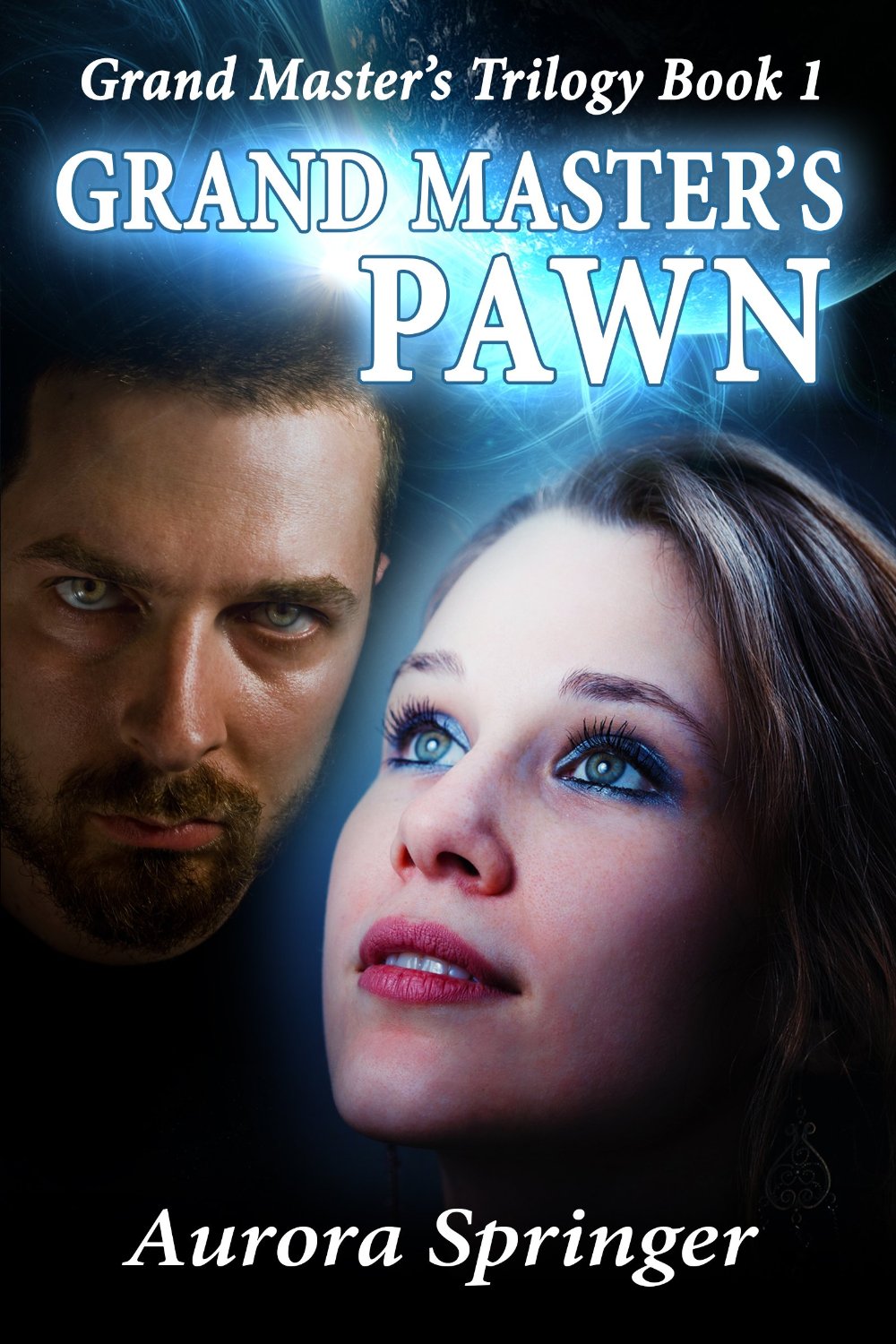
Grand Master's Pawn by Aurora SpringerGrand Master’s Pawn by Aurora Springer

A thousand years in the future, wars and portal failures disturb the fringes of the galaxy. On Terra, twenty-two year old Violet Hunter seems an ordinary student of the Space Academy, who dreams of exploring unknown planets. She applies to serve as the pawn of one of the twelve Grand Masters, although her hidden talent of empathy makes her ineligible. Violet has defied the prohibition against psychics for half her life. Why should she stop now?

Isolation is the penalty for a Grand Master’s great power because their touch is deadly to a normal person. The Grand Master with the griffin avatar selected the girl with the star-shaped birthmark in spite of her father’s dire prophesy. He is suspicious about his disobedient pawn, yet he cannot deny the success of her missions to strange planets where she finds more than he expected.

Violet seeks the truth about the mysterious Grand Masters. Who or what are they? Do they threaten or benefit civilization? While searching for answers, Violet does the unthinkable. She makes a bargain with her obnoxious Grand Master and challenges him to meet her face to face, risking her secret to discover his purpose. She plunges into an impossible love and a world of intrigues. Can she survive the vicious conflicts?

Acorn 666 by Josh St. JohnAcorn 666: Episode 1 by Josh St. John

The Human Apocalypse has Ended… Within the destruction left from the fire that fell from the sky, only the animals remain. Prophesied by the Owl Queen and her loyal army for years, the Apocalypse has started a war of control between the various factions of animals left behind — revealing ancient magic passed down from generation to generation. From the noble woodland creatures led by a quiet and mysterious council, to the domesticated animals who were once companions for humankind everywhere.

The Animal Apocalypse Begins…
Outside of the warring factions of animals left behind, the owls who foretold of the Apocalypse have regrouped. With the return of magic, the war has grown into a struggle of power. Not only power over the arcane, but power over life… and death. The Owl Queen has foretold of a new prophecy. One where owls rule the land under her command. In order to grow her army, the Queen comes up with a painful curse. A curse that will transform anyone who ingests it into a bloodthirsty and frenetic owl, hellbent on destruction. A curse that will make this prophecy come true. The prophecy of Acorn 666.

Don’t eat the acorns.

Sac'a'rith: Rebirth by Vincent TrigiliSac’a’rith: Rebirth by Vincent Trigili

All Zah’rak wanted to do was train and work with Narcion, but now Narcion is dead, leaving Zah’rak and the others without guidance or a plan. Cyborgs, Resden, and many others are after their blood, while Phareon tries to be their puppeteer.

Before Zah’rak can get far, Raquel reappears and offers them their dream: to be real wizards and full members of the Wizard Kingdom, but Zah’rak does not trust her or the offer.

Meanwhile, the Korshalemian sorcerers are up to their old tricks again, and it is up to Zah’rak, Raquel, and the others to discover their new plan and prevent a new great war.

The Lost Tales of Power is an open-ended series of Sci-Fi/Fantasy books set in a vast multiverse featuring a mixture of traditional fantasy and science fiction elements.

Never Sleep by Cady VanceNever Sleep by Cady Vance

127 days without sleep…

Thora Green had a life once upon a time. But that ended the day her parents enrolled her in sleep clinic prison. At the facility, her chronic months-long insomnia is observed by scads of doctors, but she is never actually treated for her dire disease. In a feat of desperation, Thora escapes and heads straight for New York City. Buried deep in the city’s underbelly, there is rumored to be a secret haven called the Insomniacs’ Café: a place where people like Thora can find relief.

As Thora joins forces with Aiden and Florence, two fellow insomniacs, their midnight quest will take them from the dusty bookshelves of The Strand, to the smokey underground clubs in the Lower East Side, to countless taxi and subway rides. Clues leading to their final destination are waiting for them at every turn. But so are Sleepers–a powerful core of sworn-enemies to all Insomniacs– who wish to see Thora and her friends destroyed at any cost.

Flashpoint by Indigo WilderFlashpoint by Indigo Wilder

Caia is a fresh college graduate who has the power to start a fire with the snap of her fingers. She isn’t ready to grow up and settle down in real life. But ready or not, real life is coming for her. When out-of-towner Brandt bumps into her too many times to be coincidence, Caia begins to realize that her parents might not be who they say they are. They have a secret, one they are willing to die to protect.

Ash is a Guardian, genetically enhanced to be stronger, faster, and smarter than an ordinary human. Cool, collected, and highly trained, Ash is one of the Agency’s best. But when a long time missing Guardian draws the attention of the Guild, an organization of powerful rune masters, things get personal for Ash. Very personal.

Caia is swept up into Ash’s world of super soldiers and rune masters and propelled toward an uncertain future. But one thing is always certain when playing with fire – someone is bound to get burned.