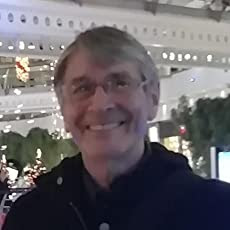
It gives the Speculative Fiction Showcase great pleasure to interview Declan Conner, whose new release Earth's Fury: Our Last Thanksgiving (Book 1 of The Prepper's Son Trilogy) we feature on Sunday March 7, 2021.
The Prepper’s Son is described as a Post-Apocalyptic
Dystopian trilogy. What does that mean to you?
Well, the genres defined on Amazon are, Apocalypse –
Post-Apocalyptic, then Dystopian. The translation of Apocalypse is revelation.
In this case, it is the revelation of a disaster to come, then the aftermath of
that catastrophe. Dystopian is the alternate society that develops out of that
disaster. The books in the trilogy are crafted as disaster thrillers each with
three distinct goals outside of the stories as – The destruction - the division
– and then the rebirth of society in the United States, albeit an alternative
one.
The first book in the series, Earth's Fury: Our Last
Thanksgiving, introduces us to your protagonist, Rob Bell. Who is he and why is
he a reluctant survivalist?
Rob Bell is someone we can all identify with, having a sense
of family loyalty, hard-working, striving to make the best of himself in life
doing it his way, yet finding it hard given outside circumstances. In that
respect we would all be reluctant survivalists drawn into situations that test our
moral compass and sensibilities, having to act outside the norms of our nature
to face our fears and to survive.
Why are contemporary readers gripped by stories of
catastrophe and survival?
I can only answer for myself, and in my case, I only need to
look at history for examples. Unlike science fiction and fantasy, catastrophic
disasters in Earth’s past are there for all to see as scientific fact, from the
flood, to the ice age, to continents moving, to asteroids causing destruction,
and so on. Then we have threats that we face in the here and now, such as a
nuclear holocaust, pandemics, EMP strikes, climate change, etc. So, the
scenarios are plausible. During our history, societies have come and gone, and
while most of us alive have no experience of such disasters and changes in
society, we all have an instinct to survive. So, if others are the same as me,
I guess there are lessons to be learned of how we would face such catastrophes
and how society would react. I also think the recent pandemic has honed senses
in this regard. I know that I look in my refrigerator, and I think to myself, one
week and if the food supply chain is broken, what then?
When a natural disaster changes the landscape of the US for
ever, Rob faces a journey fraught with unimaginable danger. How did you go
about imagining and evoking that world?
For me it had to be plausible, and I didn’t want it to be
one type of disaster affecting a small territory. It all started with a map I
found on the internet of the changes to the US territory in the event of
extreme increased sea levels. Then I found a recent NASA article that the sun
goes through eleven-year cycles of solar storms. Added to that, scientists now
say that solar flares not only cause EMPs, but the charged particles from such
flares affect the mantle on Earth by disrupting the magnetic field, which leads
to increased volcanic and earthquake activity. Taking that to its extreme, I
imagined a world in which the entire tectonic plate system on Earth would be
disrupted, with subductions to reduce areas of the land below sea level, and
for new mountain ranges to be formed. The EMPs would destroy satellites for
communication and the grid. Volcanic eruptions would darken the skies reducing
temperatures and bring agriculture to a halt. Tsunamis of unimaginable levels
would destroy civilisation along all coastlines. In effect, the territory would
become an ashen landscape with populations displaced. I wanted the disaster to
be of such immensity, that everything we take for granted, such as the
internet, banking, shopping etc, would be destroyed, and how society would
overcome that, in an attempt to rebuild society and an economy for who were
left to survive from a level playing field, as everyone’s wealth would be lost.
Rob is the (reluctant) hero. Tell us about Brogan, his
antagonist.
Brogan starts out as the head of security for the gated
community where Rob lives. An officious character, and ex-army, he does everything
by the book for the rules of life inside the community. Rob and Brogan have an
instant dislike of each other. It is difficult for me to explain without giving
away the story, but here goes. As the disaster unfolds, Brogan arranges for
other guards to bring supplies to the gated community and he takes control of
all aspects of life inside the community, leading to an Animal Farm type of
existence. On a personal level, he lacks moral compass, which leads to
tremendous animosity between them that follows both throughout.
The hero’s journey is an ancient trope dating back to
Homer’s Odyssey and beyond. Like the Greek hero Odysseus returning to Ithaca,
Rob has to return to his father’s bunker, a thousand-mile journey. Who is Rob’s
father and what legacy does he leave his son?
Rob has a love hate relationship with his dad, more from
Rob’s misbelief as to his controlling ways when he was growing up after his
mother and brother died in a bus wreck. His control was the reason Rob left
home on the farm in Colorado to attend university in LA. Rob also wanted to get
away from his dad’s obsession with prepping. His dad is rich and has built a
bunker on his farm in a disused mine. As much as he hates his dad, he is his
only blood kin and Rob longs for his dad to show affection. For all that Rob
needs to go to the bunker to survive, it is somewhere he does not want to be.
Their relationship is an interesting dynamic to witness as the story unfolds
and with the legacy he leaves for his son, and not just in wealth terms after
he succumbs to cancer.
In the second book of the trilogy, Secession: Last Fourth of
July, Rob faces a new set of challenges, not least in the relationship with his
father. How does he deal with those?
Rob doesn’t deal at all well with his return to the bunker
at his dad’s farm. I can’t give the story away, so again this is difficult. As
I have said, he is not where he wants to be. Added to that, in view of
experiences that have gone before, trust is a big issue and apart from Rosa, he
becomes introvert, avoiding the others taking shelter in the bunker. His dad’s
death is a big turning point for Rob for reasons best not explained as it would
be a spoiler.
Who is Rosa and what role does she play in the story?
Rosa is a strong character and just as important as Rob as
the MC, as an integral part of the story as it develops. There is no need for
her POV, as she is adequately fleshed out through the eyes of Rob. Rosa carries
a secret from the first book until its revelation at the end of Secession in
the form of a book with a brown paper cover that hides the title. Like most of
us, we have books that inspire us, but this one is highly significant to the
story and personal to her character.
Once again, Rob has to stand and fight, facing both old and
new enemies. How has he changed since the first book and has he learned
anything?
Rob could be described as naïve to start out with as to the
ways of the world. He has awakenings or transformations in all three books as
to his character when he realizes the need for change when faced with adversity
of differing natures. Some are internal and some are forced on him by external
events. So yes, he learns a lot about himself and he has to face his fears,
truths, and especially his misbeliefs.
The third book is titled Invasion: Alliance of Nations and
pits Rob and Rosa against his arch-nemesis Brogan, who has taken refuge in the
Republic of New Mexico. How does Rob find himself drawn back into the conflict?
In book two, we see perspectives from differing POVs of
emerging political leaders that clarify the governance of the divided
territories that emerge from the aftermath of the catastrophe, and which are separated
by race, religious, criminal, and political ideologies. In book three, Rob and
Rosa are thrust into the cauldron of these political factions as impartial
negotiators. Their involvement escalates when the territories are threatened by
an outside invasion. It is during this time that Brogan has ingratiated himself
with a criminal organisation that now governs one of the territories and leads
their army on a mission in which there will be a final conflict with Rob, Rosa,
and his best friend Tom.
You have written many short stories, and one, The End, or a
New Dawn, reached the finals of a short story competition judged by Harper
Collins editors and authors. What brought you to write a much longer work?
I’ve always had a love of short stories, though I always
tried to stick to 5,000 words or so. I felt that I had to face the challenge of
writing full-length stories that gave more time to develop characters that jump
off the page. And the rest is history as they say.
What was your inspiration for the book?
My inspiration is multi-faceted. First, the political
division, racial tension, and upheaval in the US seemed to me to be at a
precipice, with secessions talked about in the media at one time. That got me
to thinking, what if. I also had read two biographies. The first was Bolivar:
American Liberator by Marie Arana, about the general who liberated a large tract of territory from the
Spanish in South America. I enjoyed the dynamic between him and his lover, and
the political intrigue. The second was Nzinga: African Warrior Queen by Moses L. Howard. She
is an interesting historical figure, a strong woman who ruled Angola for forty
years, fighting and negotiating with the Portuguese against colonialization and
the slavery of her people. Her strength and negotiating skills were the
inspiration for Rosa’s character. Finally, Game of Thrones was an
inspiration, with the warring factions, and an alliance needing to be formed to
defeat the outside threat.
Do you have any favourite authors?
Lee Child and Michael Connelly are my favourites.
How has the pandemic affected you as a writer, especially of
thrillers and post-apocalyptic fiction?
Well, yes of course, not many haven’t been affected. I’ve
been isolated for over a year now, so with time on my hands it helped me to
outline and research the trilogy in depth, then to put my fingers on the
keyboard to write almost 300,000 words over the three books in five months. I’m
usually a one book a year author, so the pandemic has been beneficial for me in
that regard. But I also think those of us that are isolated have more time to
withdraw into ourselves and deliberate how worse it could get, and to consider
scenarios.
What do you do in your spare time? Do you have any favourite
TV shows, movies, or books?
I don’t read fiction much these days for fear of
subconsciously copying tracts, though I’ve had a lifetime of reading. I strive
for originality in all my works, so that’s been a conscious decision. For favourite
books, I think back to King Solomon’s Mines, though the film was terrible. It
wasn’t that I read it, but our teacher read a chapter a day for us. He imagined
the voices when it came to dialogue, and the voice he used for the narration
taught me about how valuable it was to have voice in you writing. When I’m not
writing, I play guitar and sing, at times performing for the local bar in the
gated community where I live in Brazil. I’ve also taken to writing poems of late
and posting them on Twitter or Facebook. As for television and films, I really
haven’t had time to watch either to any degree, I’ve been so wrapped up in my
writing.
Amazon
About Declan Conner:

Declan Conner lives something of a nomadic life, travelling and living between Portugal, the UK, and Brazil. Having written thrillers over the past ten years, he became fascinated with the political upheaval and divisions in the US. Not one to shirk from controversy, an alternative society along political ideological, religious, territorial, and racial lines began to ferment. Having taken a two-year sabbatical from writing, with the story he wanted to write buzzing around in his head, the pandemic lockdown spurred on the kernel of his idea of the new trilogy, until he felt compelled to start writing once more. After extensively reading books in the genre, research, and outlining, he put his fingers to the keyboard. To describe the trilogy in a nutshell, he fashioned each book in the disaster trilogy along the lines of - The Destruction -The Division - and the Rebirth of society and governance in the US. All of this is through the eyes of Rob Bell, a prepper’s son, and other major characters, with each book crafted as a thriller. Just now the e-books are available on preorder, with the print books ready and waiting for the e-books going live.
Facebook | Twitter | Blog