Showing posts with label steampunk fantasy. Show all posts

Tuesday, August 22, 2023

Interview with Noah Lemelson, author of The Lioness and the Rat Queen (The Slickdust Trilogy, Book 2)


Today it gives the Speculative Fiction Showcase great pleasure to interview Noah Lemelson, author of The Lioness and the Rat Queen (The Slickdust Trilogy, Book 2).


The second novel in The Slickdust Trilogy, The Lioness and the Rat Queen, has its debut on August 29. Your first book, The Sightless City, garnered high praise and received First Place Award in the 2019 OZMA Book Awards for Fantasy Fiction. How did you approach writing the “difficult second novel”?


Initially this whole trilogy was just one large brick of a book. You can thank my CalArts mentor Brian Evenson for putting me on the saner path of splitting it into three. Though I never quite finished that one oversized mega-draft, it did function as a very detailed outline, so it was relatively easy to get going on this one. The Lioness and the Rat Queen actually flowed much more smoothly than the first, as The Sightless City did the hard work of setting up the characters and the world. I could just focus my energy on moving the plot along and digging in deeper into my characters, examining their wrought relationships to each other, to their world, and to themselves.


Like The Sightless City, The Lioness and the Rat Queen begins with the city of Huile and its world, with conflict over the precious commodity, æther-oil. How much do you think contemporary environmental and (in the broadest sense) political issues influenced the novel?


Neither book is meant to be a parable, or allegory, but of course that are influenced by modern environmental and political issues. In some ways they’re optimistic, a near-apocalypse has happened and yet humanity continues on, the world survives, albeit in a scarred, mutated state. In other ways my novels are quite pessimistic, the world nearly ended and yet all the problems that led to that destruction continue on unabated. Greed, hatred, and prejudice remain. So yes, themes of conflict over resources and environmental destruction are central to the trilogy. Another core theme is the way seemingly decent people can be taken in by easy, false, stories, and how ideology can blind people to reality. Lazarus Roache is not meant to be a stand-in for any one person, but I would be lying if his development wasn’t at least influenced by a certain recent demagogue. 


The Sightless City takes place in Huile itself. In The Lioness and the Rat Queen, your protagonist Marcel Talwar and his companions leave the city and enter The Wastes on a mission. What can you tell us about the Wastes, and what drives Talwar to leave on such a perilous errand?


The Wastes were once called Vastium, a verdant and cultured land, the heart of Æthmach civilization. Now it is ash and ruins, rust and dust and those things fierce or strange enough to survive the Calamity.

As for why Marcel is willing to chase Lazarus Roache into this desolate and dangerous land? The obvious one is to stop whatever future plans the murderous tycoon is crafting, and to bring him to justice. Marcel feels used and betrayed, so there is certainly a personal angle, he feels shame for falling for Roache’s deceit for so long, and guilt for all the evil he let slip by. There’s a desire for personal redemption in this hunt, though it remains unclear if shame and guilt can ever be cured by gunfire and bloodshed.


How much has Talwar changed since the events of the first book? What drives him now?


A lot has changed, though perhaps not as much as he thinks. Marcel’s eyes have been opened to the ways he has been used, how his desire for heroism and purpose allowed him to be manipulated. Yet he is still trying to play the hero all the same. There’s moral complexity to his choice to leave Huile. Marcel could stay and try to rebuild the city, but that would require him to sit with the grim, bloody results of his attempt at heroics. He sees his choice to hunt Roache as a departure from his previous complacency, but in many ways he is still the same person he’s always been. Does this quest for justice and revenge represent his bravery or is it a form of cowardice? I think this sequel explores those sorts of complexities. 


When Talwar and his friends enter the Wastes, their mission is thwarted, and they have to make common cause with the Lioness of Vastium. Who is she and why is it a dangerous move?


Before the events of the first book, Marcel was part of a liberation campaign set on stopping a Principate invasion led by General Belona Agrippus, known colloquially as the Lioness of Vastium. To say there is bad blood between her and Marcel would be to call an intercontinental missile a “firecracker.” Which is why, early on, Kayip decides to keep their identities hidden from each other.

      Still, even with her identity hidden, Belona embodies both danger and opportunity. She’s mercurial and bitter, but deadly in combat. She’s capable and erratic, smart and bloodthirsty. She might be just what they need to help take down Roache, but only if her rage is focused in the right direction.


How far is this a story about revenge and its consequences and flaws?


A big question the characters have to ask themselves in this book is whether they are seeking justice or vengeance, and for what end. Each has been wronged in a deep and personal way by Lazarus Roache, but will taking him down repair the damage done? And the conflict between the Principate and Resurgence, the conflict that blasted this world to ruin, was and is fuelled by a desire for vengeance. There are cycles of violence that are larger than any one character, and which threaten to tear our “heroes'' apart. 


This is clearly a dystopian world but it has elements of “fantasy, dieselpunk, and sci-fi.” (Gary Goldman, screenwriter of Big Trouble In Little China, Total Recall, Navy Seals). What does that mean to you?


I’ve never used the label “dystopian” myself, I think I just tend to write stories with darker elements and those tend blend in with the dystopian. As for exact genre, I’ve always struggled with the exact label. I took a lot of inspiration from various books in the steampunk, fantasy, science fiction, and other genres. It’s industrial, but magical, with a bit of post-apocalypse and western thrown in here, a hint of noir, as well as some worldbuild details that fit more into sci-fi. I think that’s the fun of speculative writing, you have freedom to write outside of clear boundaries to craft distinct and unique worlds.


In your last interview, you talked about your love for The New Weird. Was that something you wanted to evoke in The Slickdust Trilogy?


I love New Weird because it’s the genre for writers who don’t care about what genre they’re in. In the pineapple-on-pizza genre, the throw-everything-at-the-wall-and-see-what-sticks genre, it’s a label for all things that are just too strange for current genre labels. I took a lot of inspiration from China Miéville’s Perdido Street Station, and though I think The Slickdust Trilogy is not quite as aggressively weird, it does share with the New Weird a love of taking ideas from disparate genres and shoving them together.


Now your second book has been published, how do you feel about the third (and final) book of the trilogy? 


I’m excited for it, I’ve had the ending sketched out for years now, so it will be a relief to finally get it on the page. There’s a lot of plot threads that will finally get resolved, and some character-choices and plot swerves that I think will surprise people (hopefully in a good way!)


Will you write more novels set in this universe, or explore other worlds?


After I finish the trilogy I will definitely be writing some work in other worlds. But I wouldn’t be surprised if I find my way back to Æthmach. I have a few ideas for other stories that can be told.


How do you deal with the social media and marketing side of the business?


Honestly I struggle with social media, it has never been my thing. Writers love to live in our little writing holes, and are horrified to find out we actually have to leave, talk to people, and actually “sell” our books. I’m working on it!


If you could choose any director living or dead to direct the film of your books, who would you choose?


Oh geez, a lot of pressure. I might cop out and say that in an ideal world, I’d love to see my books as a TV show over a movie. I think having the space to sit with the characters for longer on their journey, to explore their relationships and personal struggles at a slower pace would better fit the story. 


Amazon | Bookshop


About Noah Lemelson:


Noah Lemelson is a short story writer and novelist who lives in LA with his wife and cat. Lover of Science Fiction, Fantasy, New Weird, and Punk. He received his BA in Biology from the University of Chicago in 2014 and received his MFA in Creative Writing from the California Institute of the Arts in 2020. He has had several of his short stories published in both print and online magazines, such as Allegory, Space Squid and the Outsider’s Within Horror Anthology.

Facebook | Instagram

Wednesday, February 16, 2022

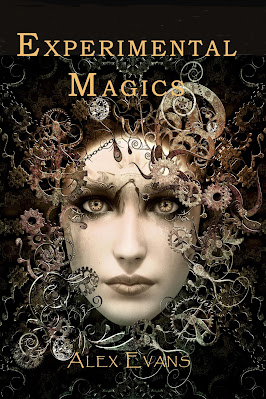
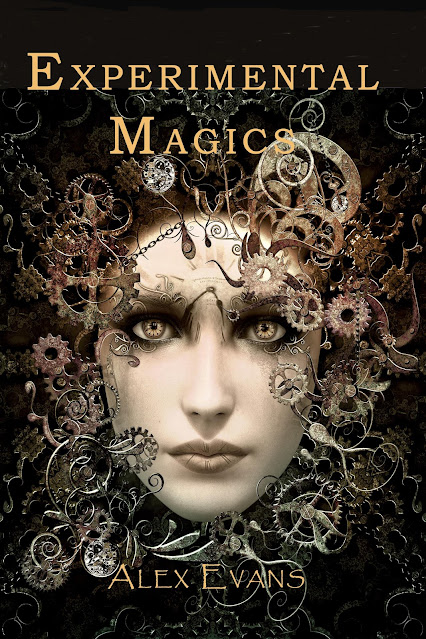
Interview with Alex Evans, author of Experimental Magics


Today it gives the Speculative Fiction Showcase great pleasure to interview Alex Evans, author of Experimental Magics.

Experimental Magics is your first novel in English. What made you decide to write in English?

It's no secret that in order to have as wide a readership  as possible, you have to write in English, especially if you write "non-standard" fantasy (non-medieval, non-romance, etc…). I was used to translate from French to English, but mostly technical texts. So during the lockdowns of the last two years, I decided to try my hand at translating or writing short stories in English. Some were actually accepted by various magazines, like here: https://www.swordsandsorcerymagazine.com/archive/category/alex-evans So, since it looked like I was writing acceptable English, I decided to translate my latest novel. Experimental Magics is actually the second in a series (the translation rights to the first one are owned by my publisher, Actusf), which means I had to use the three or four first chapters to align with what happened in the first book.


You have written many novels and short stories in the steampunk and fantasy genres. Tell us about those.

Most of those stories take place in the same world: Nor. The peculiarity of this world is to have a magic that appears and disappears, following a cycle: it is present for 600 years, then disappears for 400 and then, the cycle restarts.  Since these are long periods of time, people usually forget how life was exactly "in the time when magic existed" or "in the time when there was no magic". When magic is present, it can be used as a source of energy by an entire class of wizards. When it's absent, you have to make do with "non-magical" technology, just like in the real world. Naturally, its disappearance and reappearance leads to a period of adaptation with technological, social and ideological upheavals. Moreover, there is a "mystical price" to be paid for the use of magic and a good part of the "technical issues" faced by wizards is to manage it. Finally, just as with oil or coal, magic use has social, political and environmental consequences.

This world is not steeped in Western and Judeo-Christian culture. There are no good or bad magical creatures. There is a whole supernatural ecosystem. There are gods/goddesses, but they are not normative and don't care much about humans. Symbols or creatures that usually get bad press in fantasy novels are rather positive: the rat, the snake... Sexuality isn't usually seen as something shameful or exceptional, so people aren't obsessed with it. Finally, many societies are matriarchal or matrilineal and have family systems very different from most fantasy novels. This also leads to a different vocabulary and symbolism: women are not associated with liquid, emotions or intuition, men are not associated with strength, movement or logic. However, do not imagine a nice PC world: conflicts and violence are still there, as well as ultranormative ideologies.

In the case of Experimental Magics, it takes place at a time when magic has just reappeared before having been absent for 400 years. Humankind has been forced to develop "ordinary" technologies and we are witnessing an industrial revolution similar to that of our 19th century. Also during those 400 years, a new ultranormative religion has destroyed most of the documents related to magic, so when it reappears, nobody knows really how to use it. But with the rational and optimistic mindset of the industrial revolution, people see it like any other scientific discovery: something which can have a practical use. They study it in the laboratory, look for industrial applications … The new wizards are researchers working in labs and soon, engineers building magic machines, oblivious of the mystical price

What are the challenges of translating your own work?

I quickly realised that I could not just make a translation. The whole flow of ideas is different from one language to another. Sometimes, you have to invert the order of several sentences to have a better effect or simply make sense. I almost rewrote the whole story from scratch, then got it edited by a native English speaker. I also had to get rid of some humour and cultural allusions which would be meaningless to someone who isn't French and I changed quite a lot of names because they didn't have an appealing sound in English (the protagonist, Adrienne is called Constance in the original version). At the end, it was a much bigger work than I thought!


Is there a difference between genre fiction in French and English?

A lot. First, French readers love their sci-fi/fantasy in the form of graphic novels and are far less keen on written novels. Also, big publishers would rarely consider publishing a speculative novel in general and more specifically by a French author. On the other hand, they gladly publish the translation of relatively old foreign language blockbusters (GOT, The Witcher or Harry Potter, to name a few). Therefore, the readers have less choice, and writing speculative fiction in French is mostly a niche activity for small publishers or indie authors.

Second, most French sci fi fantasy novels don't fit in one specific genre, like "military Sci-Fi" or "Epic Fantasy". If I take the example of a few authors translated into English:

-Bernard Werber's Empire of the Ants trilogy sci-fi, alternate points of views between humans and the inhabitants of an ant colony.
- With his Cardinal's Blades uchrony Pierre Pevel was writing flintlock fantasy before the term was invented.
- Aliette de Bodard, who writes in English, has several unique and diverse worlds
- The indie author Alan Spade (The Ardalia Trilogy) also has a very unusual world

Uchrony and Steampunk are also more popular than in the US, especially as a YA genre, and with very different narratives. For Steampunk, this is linked to French history throughout the 19th century: roughly between 1800 and 1870, France went through 2 revolutions, 2 empires, 2 republics, 2 foreign invasions, countless coups, riots and risings (I might have forgotten some!), all that while going through the Industrial Revolution. Then, in 1871, to everyone's surprise, it became a model of stability and democracy in Europe. That's enough to write a lot of novels

 Experimental Magics describes a world where magic has returned after a long absence. Why did it disappear and why has it come back?

Aha! Well, the full nature of magic is a twist in one of my future books, so I don't want to spoil it, but among other things, there are several parallel worlds and magic simply flows from one to another.

Your protagonist, Professor Adrienne Imlay, is a scientist who also has magical powers. What problems does this create for her?

Some humans have the ability to sense and manipulate magic. Contrary to what you often find in fantasy novels, that does not make them the chosen ones and does not mean they have to go to a school or an apprenticeship to learn how to control it. In real life, you can have some natural gift, like the perfect soprano voice and an ear for music, but have no inclination to become an opera singer! In addition, imagine you live next to a magic place or object: you can "hear" background magic like a background noise at any time. Finally, the mystical price for magic use is prohibitive, a problem I develop in the following books.

Adrienne lives on a continent where a new religion has destroyed all information on magic after its last disappearance. She spends her childhood in a very backward country where this religion has its most radical form: anyone with her abilities is executed. As an adult, she has moved to a more liberal country, but which is still under the influence of that religion. Besides, the authorities believe that those who can wield magic can create accidents or mischief (in the case of Adrienne, they are quite right) and try to identify and monitor them. That brings all sorts of questions: how do you manage people who have not done anything wrong, but have the inherent potential to create a disaster?

Politics also plays an important part in this story. Tell us more about the world and the country where Adrienne lives.

The world is quite similar to ours, except there are two moons which make for a very complex and powerful system of tides. There are countless islands and four continents (the fifth one has been destroyed in the magic equivalent of a nuclear catastrophe). The two most populous continents are simply called the North Continent and the South Continent. The South Continent used to be the most technologically advanced when magic was present. Since its disappearance, it has plunged into decadence and wars, while the Northern Continent has developed steam technology and is now the most powerful. However, with the return of magic, the balance of power might shift again…

Adrienne lives in the North Continent, in Deshwan, a country whose inhabitants used to be nomads (think Turkey or Hungary). Contrary to most fantasy novels, it's not a kingdom, but a democracy. The story takes place in the run-up to elections with very controversial issues and candidates: one is ultra-religious and another one ultra-nationalistic. As the story unfolds, Adrienne discovers secrets about both of them and has to face a hard choice.

A reviewer has suggested that the book will appeal to readers who enjoyed “the Lady Trent series by Marie Brennan, the unusual magic of the Powder Mage, and the treasure hunts of Tomb Raider”. What do you think?

Apart from the 19th century setting and the protagonist being a female scientist, I don't think there are many similarities with A Natural History of Dragons. Adrienne is not a lady, she doesn't rely on men, has a limited supply of diplomacy and is caught in an epic struggle (I'll expand on the social background of Steampunk protagonists a little later).

I think the mix technology/magic/gods of the Powder Mage is quite in line, as well as the treasure hunts of Tomb Raider in the flashback chapters when Adrienne is a child.

How do you research your stories and how do you go about creating a believable world?

I don't really do much research. Most of my inspiration comes from real historical periods about which I had already read. The "antique-smuggling industry" of Gandarah came from the real antique trade in places like Egypt in the 19th century. The idea to make Adrienne a child digging for old artefacts came to me when visiting an exhibition about Tutankhamun. There was a photo of one of the boys working on the excavation. One of the archaeologists apparently thought it would be fun to photography him with a priceless gold necklace around his neck. I looked at the photo and thought: what the Hell was going through the head of that poor working kid when the shot was taken? There was a story worth telling there!

Why did you choose to write a story about a scientist?

I always preferred stories about peoples using their brains rather than their muscles, or worse, deus ex machina or miraculous rescuers. As a kid, I loved the Lieutenant Columbo series. Those stories are much more interesting than a story about a warrior or a princess who can't see beyond the tip of his/her nose or a wizard getting his/her magic through some inborn gift. Plus, since my magic has some rules, a wizard actually needs to think before using it. Many people in my family are/were researchers and discussions about lab shenanigans were common at the dinner table when I was a kid. I always imagined sorcerers and magicians as scientists of their times, people acquiring their knowledge and skills though hard work and trial and error, rather than some "gift". Also, if magic had really appeared in the middle of the 19th century it would have been studied just like physics or chemistry: if a magic spell has always the same predictable effect, that means magic has rules!

What writers have influenced you and who do you enjoy reading now?

Apart from general literature writers, Robert Howard would be number one. The Scarlet Citadel was what drew me to read fantasy when I was 13. I still enjoy reading sword and sorcery: some other subgenres take themselves too seriously. The authors I like have with unconventional worlds, humour and plenty of adventure: Chris Gooding, Joe Abercrombie, or Sam Sykes.  I'm currently reading a sci-fi novel: Ancillary Justice by Ann Leckie.

You mention the importance of your travels - where did you go and how has it affected your writing?

A few month ago, with my kids, I made a list of the countries I visited, and I came up with about 35. I stayed for a long time in some, in others just for holidays.

My books often talk about travels or peoples who have travelled, both physically and symbolically. As for a particular influence, I would say that West African and Russian history and folklore have left many marks in my stories. The shadow of the Talking Baobab stands somewhere behind Adrienne's potted moonflowers and Adrienne herself has the temper of Baba Yaga or one of her daughters!  Other details are visual: the city of Branes looks a lot like a mix between Prague and Paris, while Isria would be a mix between Trieste and 19th century Singapore.

What does the steampunk genre mean to you? 

First, aesthetics. I don’t especially like gears and cogs, but I like the theatrical side of the 19th century looks and I absolutely love pre-Raphaelite painters and Art Nouveau.

I also like the fact that, since it's a relatively new genre, it has fewer conventions (quests, mentors, damsels in distress…), so you can write what you want, including plain fun adventure stories.

Finally, steampunk is sometimes the occasion to look back on the 19th century and reflect on what it has brought to the world (industry, new technologies, but also pollution, wars...).

As I said, French steampunk is quite different from its English counterpart. If you read the most popular books in English literature of the 19th century (Jane Austen, the Bronte sisters, Charles Dickens, Arthur Conan Doyle…) you notice that they all talk about polite people trying to sort out their problems politely. If you read popular books in French literature, you have Les Misérables (the protagonist is a former convict), The Count of Monte Christo (the protagonist is an escaped convict) or Arsène Lupin (the protagonist is a thief) and so on. As I said earlier, France had a history of major political instability throughout the 19th century and you can feel it the books of the time as well as in modern steampunk, where most stories deal with working class or marginal heroes, oppression and revolutions. So, what happens if you add magic to the mix?

If there was a film of Experimental Magics, who would direct it?

I have no idea, but I wish I could do the setting and the costumes!

Will you publish more books in the series?

Yes. I plan to publish more novels and short stories taking place at different time and in different places in this world. For Experimental Magics, this is meant to be a trilogy. The working title of the next episode is The Road to Cazal: Adrienne embarks on the steamboat to get to a conference crucial for her career. Unfortunately, she is forced to make a stopover in Gandarah, her native city, and that's when everything goes haywire…


About Alex Evans:


After travelling around the world, Alex Evans has settled down to juggle an absorbing job, a lively family and the craft of writing. She loves folklore, ancient history and hates clichés.
Her blog in English and French can be found at www.romansdefantasy.com


Monday, January 24, 2022

Food and magic: guest post by Alex Evans, author of Experimental Magics


Apart from a few exceptions, food is never a topic in fantasy or SF. Surprising, if you compare it with another common life activity such as, say sex: after all, we eat every day! 

Yet magic/religion and cooking have been linked together right from the start! Not only does cooking involve transformations, transmutations and mixtures, but it is closely associated with two major magic and symbolic elements: fire and water. Meals were also taken collectively, with a whole range of social, emotional, and religious interactions. I am not even talking about collective drinking or food poisoning!

We don't know how the idea of cooking food came to prehistoric men or women. Did they find a half-burnt carcass after a forest fire? Has some clumsy person dropped his/her meal into the fire? Did an individual full of curiosity hang a piece of meat/fruit above the flames?

Still, they discovered not only that cooked food had a different taste, but also a different texture. Meat became easier to chew, cut, eat by young children etc... It also kept longer, so the remains of the mammoth could last for a few days. I'm sure there were great philosophical debates between the conservatives, holding to raw food, and the progressives, proponents of cooked food. There must even have been extreme progressives who wanted to cook everything, including fruits and berries. As usual, the progressives won and embarked on various experiments. Some plants with a mediocre taste, or even poisonous in the raw, became delicious and edible when cooked, potatoes or carrots being a prime example (prehistoric carrots were little more than stringy roots). 

With the arrival of agriculture and cattle breeding, we moved on to much more elaborate processes: making yogurt, cheese, bread, preserving with salt... Before the invention of the fridge and freezer, cooking was not just preparing the evening meal in a hurry, but preserving food for weeks or months. That took days and the combined efforts of several people. We do not know when cooking became perceived as female activity. But as the status of women deteriorated, processing food, although vital for everyone's survival, also lost its prestige. On the other hand, when cooking was a fee-paying job, like making meals for a king or a lord, it was suddenly fit only for a man!

Certain processes which bring about a spectacular transformation of the original ingredients were perceived as somewhat supernatural. Take fermentation: you leave a mixture of honey and apple juice to stand and after a few days, you get a liquid full of bubbles making "bloop, bloop" noises. There must be spirits playing inside! If you drink the stuff, it has a different taste, a bit of a bite, and you feel euphoric. A little more of that potion and you look possessed by a playful spirit and finally, if you really drink too much of it, you pass out… Isn't it magic?

Therefore, making of beer/wine/mead/chocolate (yes, it was also fermented) etc around the world was quickly associated with various rituals: to be started at full moon, after prayers and offerings or magic spells. Only water from some sacred spring was used, etc… Ethyl alcohol itself was isolated by Arab or Persian alchemists in the Middle Ages and baptized "spirit of wine" in Europe. Moreover, in legend, alcoholic drinks (wine in Greece, chocolate in South America) often have a legendary and divine origin. 

Same thing for bread: you take seeds, you grind them into powder, you add water and you get an elastic paste (dough). Then after a few hours it rises, changing volume, texture and becoming full of holes (another fermentation). Finally, you cook it in the fire and get bread, a totally different substance. Almost alchemy!

And what about jam? You take sugar, a cristalline powder, a bunch of fruits, you heat them to the boil and you end up with a gelatinous substance. Isn't it magic? Add the fact that sugar was an expensive stuff brought all the way from India in medieval times and you can understand why even an alchemist like Nostradamus wrote a series of jam recipes https://www.theguardian.com/books/2006/apr/01/featuresreviews.guardianreview1 . 

Bread and wine: the union of these two highly elaborated foods requiring a mountain of work over a long period of time is finally found in the communion at the end of the catholic mass, where eating becomes a collective and mystical experience. Admittedly, it's a bit minimalist as a meal. What about the Japanese tea ceremony?

Certain foods and their manufacture became associated with particular rituals: flat breads, pancakes/blinis etc were made since the Neolithic, long before bread. In Russia, they were eaten for Candlemas, which celebrated the end of winter. Their round shape symbolized the sun. To prepare them, the housewives had to make a new leaven. For that, they went in secret, at full moon, to take running water from a stream or river (in February, the rivers are frozen, so do not forget an axe and warm clothes). While collecting the water, they had to whisper magic formulas and stay on the lookout for hungry wolves. They then prepared the leaven with other formulas. Finally, the pancakes had to be cooked over a newly lit fire (a complicated process before matches were invented). https://en.wikipedia.org/wiki/Maslenitsa

Food substances found themselves endowed with magical properties outside the kitchen: garlic protected against vampires, of course, but also against the evil eye, hexes and bad luck in general. This plant has the property of repelling a lot of weeds and pests from the vegetable garden. Hence the reasoning: "if it protects the vegetable garden, it must also be able to protect humans"! Along the same lines, salt, which protected food from rotting, should also protect against bad luck.

Some cooking-related items had their own magic: the Russian witch Baba Yaga does not move on a broom, but sits in a mortar and wields a pestle. In Eastern European folklore, the domestic spirit, protector of the house, takes up residence behind the stove where the cooking is done (I don't know if in modern apartments they have moved behind the microwave). And what about the cauldrons and grails, symbols of transformation? The Renaissance Cauldron of Mabinogion resuscitates the dead. The alchemists' anathor transmutes lead into gold. In short, any self-respecting witch must have one!

Finally, let’s not forget the various diets that existed long before our modern time. Monks especially debated at length about what was permissible to eat at Lent, what was nutritious food, what food elevated the spirit etc... More prosaically, there were diets for pregnant women (lots of beer, to have the smallest possible baby who would come out safely), diets for women who wanted to be pregnant (plenty of stone fruits), diets to get wavy hair, diets to get flat hair (leek), diets according to your temperament (sanguine, bilious…). 

And finally, the broth for people "with nervous disposition": a fashionable condition at the beginning of the Romantic period. The first modern european restaurants were luxury establishments which only served "special broth" to "restore health" for wealthy hypersensitive young people. 


About Alex Evans:


After travelling around the world, Alex Evans has settled down to juggle an absorbing job, a lively family and the craft of writing. She loves folklore, ancient history and hates clichés.

Alex’s latest novel Experimental Magics was published on July 8th, 2021

Her blog in English and French can be found at www.romansdefantasy.com


Tuesday, December 1, 2020

An Enigma in Silver (Mysteries in Metal, Book 2) by Simon Haynes


Release date: November 30, 2020
Subgenre: Gaslamp Fantasy
 

About An Enigma in Silver:


England, 1871. A quiet country village is rocked by murder. Police have no leads and no clues, apart from the grisly state of the victim's body.

Evidence points to a supernatural killer, but Professor Twickham is curiously reluctant to lend his assistance.

Roberta, his daughter, has no such qualms, and she involves me in the case as well... only to turn around and abandon me for a sick friend.

Now I must unmask the vicious killer on my own, but had I only known the truth, I'd never have got involved...

This standalone novel is the second title in the Mysteries in Metal gaslamp fantasy series.


Excerpt:


 Together we turned and hurried up the hall, prancing on tip-toes to avoid making any noise, and in doing so we must have looked for all the world like a pair of pantomime villains. We reached the dining room, but instead of entering Roberta took my hand and pulled me towards the front door. Outside, in the mid-morning sunshine, we took the short path to the front gate, where she led me into the street.
"I think we've run far enough," I said, quite out of breath.
"We're not running, Septimus. I want to speak to those policemen."
"But why?"
"I'm intrigued. Are you not?"
I confessed that I was. When I first met the professor and Roberta, I had no inkling they were engaged in the hunting and trapping of other-worldly spirits. At first I dismissed their business as a type of confidence trick, designed to milk rich folk, but the moment I encountered my first phantasm all thoughts of trickery were quickly forgotten. Indeed, that memory would haunt me forever. Now, it seemed the police had a case involving something of the supernatural, and I wanted to know more. "I'm surprised your father was not more receptive."
"He may have been, had they offered remuneration," said Roberta, with a shrug. "In any case, you and I will decide whether this case merits further attention, while my father reads the newspaper and enjoys the rest of his breakfast."
"We're going to talk to the police?"
"Not us. Me. And here they come."
The two policemen were tall and forbidding, and were made even more so by their helmets and dark blue uniforms. Worse, they bore expressions like thunder, and I prayed Roberta did not antagonise them further.
"Sirs, might I speak with you?"
"Not now miss," grunted one of the policemen. "We're on urgent business."
"I know. You were just speaking to my father."
"Professor Twickham? You're the daughter?"
Well, I thought, you couldn't fault their powers of deduction. But by now Roberta had their undivided attention, and I moved closer, much as they did, eager to see how things might turn out. The older of the two policemen looked Roberta up and down, then glanced at me. His scrutiny was brief but intense, and I felt as though he were peering into my very soul. Then he returned his attention to Roberta, and I let out a relieved breath.
"We can't talk in the street, miss," growled the policeman. He indicated a waiting cab, the horse flicking away flies with its jet-black tail and with sudden shakes of its mane. "You'd better come down the station."


Amazon | Paperback 


About Simon Haynes:

Simon Haynes is the author of the Hal Spacejock series, the Hal Junior series, and the upcoming Harriet Walsh series, as well as several dozen short stories. He is also the programmer and designer behind Spacejock Software, and is responsible for popular programs like yWriter and yBook.


Website | Facebook | Twitter | Newsletter

Tuesday, December 3, 2019

A Riddle in Bronze (Mysteries in Metal, Book 1) by Simon Haynes

Release date: November 30, 2019
Subgenre: Gaslamp Fantasy

About A Riddle in Bronze:


An elderly professor and his daughter advertise for an expert bookkeeper.

Instead, they employ a naive young man with very little experience.

But what if keeping the books is not the real reason they hired him?

What if they have an ulterior motive?

London, England, 1871.
When I applied for a position with Professor Twickham and his daughter, I lied about my qualifications.

As it turns out, they lied about the job for which I was applying.

Had we not been so untruthful with each other, there might have been fewer night terrors stalking the inhabitants of the City.

Fewer unexplained disappearances.

Fewer deaths.

Now, nobody is safe from the creeping horrors we've unleashed.

With no time to spare, we face an impossible task: we must discover the mysteries in metal in order to right this wrong.

But is it already too late?


Excerpt:


I was about to ask what my duties might be, and whether the professor wanted me to get started immediately, when there was a sound of approaching footsteps from the hall outside. It was a heavy tread, which discounted Mrs Fairacre, and I wondered whether one of the other applicants had come to plead their case.
Instead, the door opened and a young woman strode in without having paused to knock. "Father, have you... oh!"
The newcomer was around my age, with long dark hair tied up in a rough bun, in the way of a washerwoman or a market stall-holder, and she was wearing a set of bib overalls covered in soot or a similar fine black powder. Heavy work boots completed her outfit, and I would have taken her for a chimney sweep had it not been for the way she addressed the professor. Then I studied her face, and in that instant it was as though the mirror atop the great lighthouse of Alexandria was reflecting sunlight directly into my unshielded eyes.
I do not speak of radiant beauty or other such romantic frippery, but rather the sheer life force and strength of character apparent within the person standing before me. This was a woman who stood for no nonsense, and her clear, intelligent eyes would miss no detail, however small.
Then she gave me a warm smile and held out a slender hand. "A pleasure to make your acquaintance, Mr Hartlow. I'm Roberta Twickham."
So taken was I by the radiant smile that I had already extended my own hand before I became aware of her error. "Ah, er, it's Mr Jones, actually. Mr Septimus Jones, at your service."
Roberta withdrew her hand. "Father," she said, with an edge to her voice. "Tell me you did not hire the wrong bookkeeper."


Amazon 


About Simon Haynes:

Simon Haynes is the author of the Hal Spacejock series, the Hal Junior series, and the upcoming Harriet Walsh series, as well as several dozen short stories. He is also the programmer and designer behind Spacejock Software, and is responsible for popular programs like yWriter and yBook.


Website | Facebook | Twitter | Newsletter


Monday, September 2, 2019

Peavley Manor (Or, Introducing Macalley) by Robert Dahlen

Release date: August 27, 2019
Subgenre: Steampunk, Gaslamp Fantasy

About Peavley Manor (Or, Introducing Macalley): 


 Alice Peavley was a sales clerk in a book shop, until her rich uncle left her his estate in his will. She moves to the manor, meets her new tenants and neighbors, and adjusts to life in the eccentric town of Darbyfield with the help of her valet, a sardonic gnome named Macalley. Alice gets mixed up in misadventures involving a concert gone askew, a chaotic baking competition, and a mischievous squatter, but there is a more sinister plot afoot to steal her land and her fortune. Can Alice get to the bottom of the conspiracy and save Peavley Manor? Find out in this comedy of manners, mayhem and magic!


Excerpt:


I stepped inside the small room. There were ten glass cases set along the walls, resting on carved wood stands. Inside each casewas a book, except for one that held three. I walked over to one and read the plaque on the stand. I gasped. “Oliver Twist?” I said.

“Yes.” Clarinda beamed. “These are what books we’ve been able to find and salvage from before the Great Relocation.”

“My heavens.” I tried to appear calm, but the library studies major in me was starting to cry. “I’ve never seen a book from those times.”

“We only have these twelve. We need to keep them in these cases, as we’re worried about the pages decaying.” Clarinda paused. “There were five more, but they were in excellent shape, so we sent those to a publisher in Velessa. They were able to get them printed for wide distribution.”

My eyes widened. “Is that where The Three Musketeers came from?”

“It was!”

“Oh! I loved that book!” I smiled gleefully. “I must have read it four times!”

“Same here!” Clarinda smiled again. “It’s ironic that a town with British roots played a part in making a French book so popular!”

“My friends and I dressed up as Musketeers for a costume ball!” My smile turned wistful. “Priscilla made a wonderful Porthos.”

Clarinda chuckled, but her smile faded. “I hate to keep Darbyfield’s heritage locked away like this. We’ve been asking the university to look into how we can preserve and protect these for future publishing.”

“That would be amazing. But wouldn’t there be more of these books?”

“There were many more, at one point.”

“What happened?”

“The Oakton clan.” Clarinda scowled. “It goes back to the days following the Relocation, when the agreement between Darbyfield and Elfking Barkbirch was being negotiated. An objection was made by Lord Dalewood Oakton. He had been closing a deal with Barkbirch to purchase some of the land for a housing development—the land where Peavley Manor now sits.”

“Is that so?” I tried, and mostly succeeded, to hide my surprise.

“The owners of the manor, old Clarence’s parents, disliked Oakton on sight and refused to sell. He then set one condition before he would approve the deal: He wanted our books.”


Amazon | B&N | Kobo | Apple


About Robert Dahlen: 


Author bio: Fantasy novelist, all-around wisecracker and penguin aficionado, Robert Dahlen lives in Northern California with lots of penguins, a tablet stuffed with e-books and works in progress, a collection of Disney Infinity figures that is growing exponentially, and a very nice hat.. He is hopefully working on more Monkey Queen stories (and other projects) as you read this.

Website | Facebook | Twitter

Monday, May 27, 2019

A Quiet Rebellion: Posterity (Numoeath Series, Book 3) by M.H. Thaung

Release date: May 23, 2019
Subgenre: Mannerpunk, Steampunk

About A Quiet Rebellion: Posterity:


In a land where paranormal powers are transmissible, but their recipients condemned as a threat to society, Queen Eleanor struggles to improve life for all her subjects including the afflicted. Rocked by a recent betrayal and disillusioned by her late father's secret scheming, she fabricates threats of an external attack to push for social reform.

Her ploy meets with initial success, easing her guilt about misleading the entire realm. However, evidence comes from an unlikely source that the threat is real. The realm must prepare for war, and Eleanor stands to lose everything she has fought for.

This is the final book in the Numoeath trilogy.


Excerpt:


 Captain Lester Black of the city guard ran a shaky hand through his hair, inspecting himself for the hundredth time in the gilt-framed mirror. How stupid, he’d used too much pomade: an amateur’s mistake. He wiped a greasy hand on his trouser leg while the red-clad guard manning the waiting area smirked. The man had been a visitor at Lester’s previous place of employment, though thankfully not one of Lester’s customers.
Like it or not, with the captain’s uniform came responsibilities. Lester now reported directly to the Council, and citizens gave him cautious respect. He should feign a captain’s dignity and carry himself with a composure like Susanna’s. Standing in for the mother he couldn’t remember, she’d given him a stability he hadn’t previously known. At first, he’d been wary of her interest in him, but anyone with eyes could see her attachment to Jonathan. Once he’d reassured himself about that, Lester could relax in her presence. Relaxing in Jonathan’spresence was another matter, but that was hardly unusual: men never seemed to treat him with friendliness.
He peered in the mirror again. This morning’s shaving nick wasn’t too conspicuous. Dark hair was all very well, but twice-daily shaving was inconvenient. Maybe he could grow a beard? Nah. Face fuzz would distract people from his green eyes. Not that he was out to woo any—
“Captain Black?” came a woman’s voice.
He jumped and blinked at an elderly woman in a pink pinafore. “Uh, yes?”
“The queen’s working in her study.” She nodded at the laden tray she held. “I’m taking her some refreshments, so you might as well follow me.”
“Of course.” Old lady. Probably likes boyish charm. He summoned a smile. “Might I carry your tray, ma’am?”
“Ooh, not just handsome, but polite!” Beaming, she handed him her tray then patted his cheek.
The royal guard’s snigger was cut short by the housekeeper’s glare. “A problem, young man?”
The guard reddened. “No, Martha. Just something in my throat.” He straightened to attention.
Lester followed Martha’s well-padded backside up the grand wooden staircase. The palace wasn’t completely unfamiliar territory. He’d been to the royal library just two days ago when Queen Eleanor held a meeting about Silvers’ crimes and Jonathan’s innocence. Lester’s presence had been peripheral then, so why was she requesting another visit now? And by himself, seemingly?
At the top of the second flight, Martha halted and wagged a finger at him. “Ah! I knew I’d seen you somewhere before. I’d recognise that cheeky smile anywhere.”
“Sure, I visited just a couple of days—”
“No, it was several years ago.” She tapped her chin. “Weren’t you working in... The King’s Pleasure?”
“What?” The crockery on the tray rattled. “What if I was? I mean, what were you doing there?”
She sniffed. “Arranging a home visit, of course. As head housekeeper, I’m responsible for the comfort of my employer. And, well, after the former queen passed on... How do you think the establishment got its name?”
Lester gaped. Was she having him on?


Amazon | Smashwords


About M.H. Thaung:

M.H. Thaung was born in Scotland and has moved progressively southwards throughout her career. She now works in a biomedical science research institute in London, England. She loves her job and academic writing. She also enjoys wondering "What if...?" and seeing what might happen in alternate worlds. She has just completed a trilogy of light SF/mannerpunk adventures set in a world with transmissible paranormal powers.


Website | Twitter