Showing posts with label guest post. Show all posts

Wednesday, June 12, 2024

Writing Magic for Real by Jeffrey Dunn, author of Wildcat


I too, dislike it:*


Let us go then, you and I, to The Mausoleum of Genre Literati and enter the Magical Realism Room.

Niche 1, One Hundred Years of Solitude . . . Niche 2, The House of the Spirits . . . Niche 3, The Famished Road . . . and outside with the commoners . . . The Metamorphosis.

In the land where the critics go, they see things backwards. After the well-spring, after the pouring, after the drinking, they do postmortems. No vivisections here, they hack the corpus and examine chapters and paragraphs and sentences and words, and when the work is done, their hands are put to a different task, explicating all the bits and bobs.

Think Phrenology. Think Scientific Racism. Think New Criticism. Or don’t. No matter, because a book is a dead thing, detritus left over from absent creators and gone cultures. Celtic runes. Egyptian hieroglyphs. Chinese characters. The Cave Paintings of Maltravieso. The Life and Opinions of Tristram Shandy, Gentleman. All signifying nothing . . . until . . . until an active mind plays Dr. Frankenstein and reads the body back to life. Science? The scientists tell us so. Magic? Much more likely.

When a writer points the way to magic, only a fool studies the words.

How curious! How real!

“How curious! How real!”—a cutting from Leaves of Grass (1860, 6:4)—planted and nurtured by the bubbleheaded Walt Whitman, the poet who wouldn’t shut up. Now the cutting, dried and pressed onto the page of a book, is ready to be transplanted. But just like there are different sorts of gardeners—English, Baroque, Industrial—so there are different kinds of readers, and if as a child the reader went forth and heard only “spare the rod, spoil the child” and “cleanliness is next to godliness,” the reader would think there was something very frivolous, maybe even dangerous, about Leaves of Grass.

Even more so if the reader gardened in the plowed, planted, barbed wire-fenced wordscapes of nineteenth century novels, the soil where Mr. Ian Watt boils down “real” (and I’m paraphrasing here from Rise of the Novel, 1957) to a record of consciousness moving through a particular time and place—all of which a middle-class reader will recognize as real.

All well and good for well-behaved children and well-tempered novels, but it certainly will not do for Leaves of Grass.

I believe a leaf of grass is no less than the journey-

      work of the stars,

And the pismire is equally perfect, and a grain of 

      sand, and the egg of the wren,

And the tree-toad is a chef-d'œuvre for the highest,

And the running blackberry would adorn the parlors 

      of heaven,

And the narrowest hinge in my hand puts to scorn all 

      machinery,

And the cow crunching with depressed head surpasses 

      any statue,

And a mouse is miracle enough to stagger sextillions 

      of infidels,

And I could come every afternoon of my life to look 

      at the farmer's girl boiling her iron tea-kettle 

      and baking short-cake. (1860, 64:189)

And, And, And, And, And, And, And . . . so that the reader suspects that the ands will never end, which is Whitman’s point. From leaf of grass to tree-toad and mouse to short-cake, Whitman’s “how real!” cannot be limited by consciousness, time, or place. It cannot be limited to what some reader claims is real. Instead, “how real!” acknowledges the infinite particularity of the dynamic universe. 

When a writer tunes the wavelength to real, magic begins to play.


Hands that can grasp, eyes

that can dilate, hair that can rise*

Ah, we’ve come to the crux . . . the meat and potatoes . . . the magical realist’s worry doll: not losing Whitman’s “!” when bridging the “how” and “real.”

“Ten Lessons about . . .” “Ground Rules for . . .” “Four Reasons You Should . . .” and “Five Myths about . . .” may be someone’s “How to . . .”  for writing, but none of these paths can square the magic realist’s circle. What will?

Let us go then, you and I, to Allen Ginberg’s “Cosmopolitan Greetings.” 

Observe what’s vivid.

Notice what you notice.

Catch yourself thinking.

Vividness is self-selecting.

Need more? Rick Rubin uses the word awareness. Not mindfulness, although that’s a place to start; instead, in The Creative Act: A Way of Being, Rubin does mindfulness one better.

Through detached noticing, awareness [italics mine] allows an observed flower to reveal more of itself without our intervention. This is true of all things.

Awareness is not a state you force. There is little effort involved, though persistence is key. It’s something you actively allow to happen. It is a presence with, and acceptance of, what is happening in the eternal now. (20)

Here, then, is “how real” gets its “!”, which is to say, the path to writing’s dressing room, the place where the real puts on its magical clothes.

I don’t read a lot of magical realism. Instead, I read a lot nature writing. I read it for the kick in the head, the what's-a matter you that only someone more aware can provide. Robin Wall Kimmerer, moss-loving and card-carrying Ph.D. Biologist, writes in Gathering Moss: A Natural and Cultural History of Mosses, “Learning to see mosses is more like listening than looking. A cursory glance will not do . . . Mosses are not elevator music, they are the intertwined threads of a Beethoven quartet. You can look at mosses the way you can listen deeply to water running over rocks” (10-11).

Cursory awareness, no. Synesthetic awareness, yes, a consciousness where one sense of the real informs and bleeds into another. Awareness “that the fir forest and the moss forest mirror each other,” that the mirror through which this correspondence can be seen is a dew drop, and that these awarenesses are mirrored in the fractal geometry of a snowflake (10-11).

a dynamic,

stop-action dragonfly,

how real! 

all these phenomena are important*

 What is magic, really? Lingonberry batter now a scone? The sun’s hydrogen now helium? A caterpillar now a butterfly? A child’s frown now a smile?

Or is it a magician focusing the audience on the performer instead of the performance? “Only I can do it,” the magician says. “Look at me. Look at me. Look at me . . . Presto chango,” and there it is, the word change. Of course, the magic is not in the performer, it’s in the change: a handful of rye now a pint of stout, a storm cloud now a lightning bolt, a bud now a flower, a chance encounter now two hearts racing.

Back in The Mausoleum of Genre Literati, there are two rooms: the Magical Realism Room and The Fantasy Room. After the postmortem, where does Cinderella go? Traditionally called a fairy tale (lit crits, those little name callers!), Cinderella gets its niche in the Fantasy Room because of, you know, supernatural intervention, the fairy god mother and all that.

But take the fairy godmother out for the moment. I mean, if the transformation is the magic and the fairy god mother is the magician, why not dispense with her altogether? . . . poof, gone in a sprinkle of her own fairy dust.

On its face, Cinderella is a pretty gritty story, one that harkens all the way back to “Rhodopis,” a tale told somewhere between 100 BC-100 AD by The Greek geographer Strabo. From then until now, our Cinderella is either a slave or a servant or an abused stepdaughter/sister. Let’s just say Cinderella is the poster child for keepin’ it real, every day, in every way. Then—we all know the story—Cinderella goes all rags to riches, but here’s the catch, the riches themselves aren’t unrealistic. They’re just part and parcel of a different social class. Gowns. Carriages. Footmen. Palaces. Balls. Fancy Shoes. All these are very real, just not part of Cinderella’s experience. These rich trappings seem magical not only to Cinderella but also to middle class readers, not because they are unaware of how the aristocracy lives, but because both are denied access. Put another way, the world of the aristocracy is a world so apart, it’s as if the commoners need supernatural intervention—cue the fairy godmother—before they can load up their moving carts and move into the manor.

All this is to say that supernatural intervention, although one of the devices a writer can employ to bring the magic, is a bit of a cheap parlor trick. Yes, the change Cinderella undergoes is magical, but not primarily because of the fairy godmother, but more so because of the barriers that make the change so politically and socio-economically preposterous. Said another way, Cinderella’s move out of the outhouse and into the big house is so unrealistic, that those who tell Cinderella tales feel the need to add a deus ex fairy to make the magical transformation plausible.

Now you see it, now you . . . the old bait and switch.


“literalists of

the imagination”*

 Moses went over the rainbow to the mountain. Crazy Horse went beyond the horizon to the lake. Jesus went through the looking glass to the wilderness.

There are many paths to magic. Nature writers go outside themselves, but there is also an endless supply fermenting inside. Fantasy writers ferment a strange brew inside their minds, a liquor free from outside contamination. Not so with magical realists. Like nature writers, magical realists first mash their outside awareness, but unlike nature writers, their outside awareness-mash is fermented inside their mind-pots, thereby compounding the magic.

Haruki Murakami distills and collects the drippings in his 1Q84 trilogy. Book One opens inside a taxi. Stuck in freeway traffic, the driver and the passenger, Aomame, are listening to Janáček’s Sinfonietta. So far so real. Unfortunately, Aomame, one of two protagonists, has a very important appointment, and the traffic threatens to make her late. The driver notes that there is an emergency set of stairs, and if Aomame is so inclined, she could take a different path to her appointment. She has her doubts, and although he doesn’t advise leaving his cab, she decides she doesn’t want to be late and goes for the stairs, prompting the driver to say, “[P]lease remember: things are not what they seem” (17).

If the reader hasn’t read Murakami, such a comment could just be a minor character’s curious response, but in 1Q84, it’s Chekhov’s staircase to an unstable reality. On her way down the stairs, Aomame thinks to herself, “I move, therefore I am” (39), clearly a shot at the big daddy and dirty dog of rationalism, René Descartes. Once down the stairs and on the way to her appointment, Aomame then passes an ordinary policeman and notices that his uniform and gun are out of the ordinary—all setting the stage for the inside and the outside, as well as fiction and nonfiction, to exchange places.

As for me, writing magic for real is where it’s at. My novel Radio Free Olympia (Izzard Ink) has been called “a sprawling intertidal zone of magical realism,”—a bit of all right—but when I discovered that my novel Wildcat: An Historical Romance (Izzard Ink) was being read as fantasy, I sat down and had a think. Yes, Wildcat is full of magic—a hotel now a housing and eating co-op, a floodplain now a dairy, a coal mine now a mushroom farm, an ironworks now an artisanal collective—but none of these are unrealistic, which is to say, I don’t believe that generational poverty and Appalachia are hopelessly linked, and that the magical changes I depicted are necessarily a dream deferred.

But it’s also true that Wildcat has an element unique to my own strange brew: The Shadows. Think of a residue, a trace, a presence of someone who has died. No, not ghosts. Not memories, per se. More like visual echoes. Here is how New Kid, the protagonist who has retired to Wildcat, describes The Shadows. “Not everyone can see The Shadows, but of those who can, a few prefer not to. As it turns out, I’m not one of those . . . There was nothing creepy about them, and if I put my hand in, I felt a pleasant chill” (26, 27).

Put another way, “I taste a liquor never brewed.” Bottoms up, Emily!**


*Moore, Marianne. “Poetry.” poets.org. https://poets.org/poem/poetry.

**Dickinson, Emily. “I taste a liquor never brewed.” poets.org. https://poets.org/poem/i-taste-liquor-never-brewed-214.


About Jeffrey Dunn:


As featured on NPR and Medium, Jeffrey Dunn is a critically acclaimed author and award-winning teacher. His works of cultural fiction include his upcoming Wildcat: An Appalachian Romance and Radio Free Olympia, as well as next year’s Whiskey Rebel, the surreal Dream Fishing the Little Spokane, and his poetry collection Hubcap Collection Plate.

His Ph.D. in English literature and cultural studies laid the foundation for his 41-year teaching career of addressing student learning issues and implementing educational programs at the local, state, and national levels. Embracing his dyslexia as a gift, this dream fisher and history miner roams the woods whenever possible.

Website | Instagram | Facebook


Jeffrey Dunn's novel Wildcat is our featured new release on June 18th, 2024.

Preorder Wildcat from Amazon

Monday, January 24, 2022

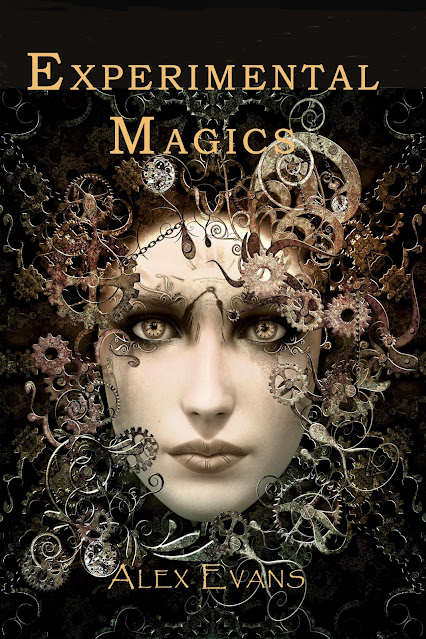
Food and magic: guest post by Alex Evans, author of Experimental Magics


Apart from a few exceptions, food is never a topic in fantasy or SF. Surprising, if you compare it with another common life activity such as, say sex: after all, we eat every day! 

Yet magic/religion and cooking have been linked together right from the start! Not only does cooking involve transformations, transmutations and mixtures, but it is closely associated with two major magic and symbolic elements: fire and water. Meals were also taken collectively, with a whole range of social, emotional, and religious interactions. I am not even talking about collective drinking or food poisoning!

We don't know how the idea of cooking food came to prehistoric men or women. Did they find a half-burnt carcass after a forest fire? Has some clumsy person dropped his/her meal into the fire? Did an individual full of curiosity hang a piece of meat/fruit above the flames?

Still, they discovered not only that cooked food had a different taste, but also a different texture. Meat became easier to chew, cut, eat by young children etc... It also kept longer, so the remains of the mammoth could last for a few days. I'm sure there were great philosophical debates between the conservatives, holding to raw food, and the progressives, proponents of cooked food. There must even have been extreme progressives who wanted to cook everything, including fruits and berries. As usual, the progressives won and embarked on various experiments. Some plants with a mediocre taste, or even poisonous in the raw, became delicious and edible when cooked, potatoes or carrots being a prime example (prehistoric carrots were little more than stringy roots). 

With the arrival of agriculture and cattle breeding, we moved on to much more elaborate processes: making yogurt, cheese, bread, preserving with salt... Before the invention of the fridge and freezer, cooking was not just preparing the evening meal in a hurry, but preserving food for weeks or months. That took days and the combined efforts of several people. We do not know when cooking became perceived as female activity. But as the status of women deteriorated, processing food, although vital for everyone's survival, also lost its prestige. On the other hand, when cooking was a fee-paying job, like making meals for a king or a lord, it was suddenly fit only for a man!

Certain processes which bring about a spectacular transformation of the original ingredients were perceived as somewhat supernatural. Take fermentation: you leave a mixture of honey and apple juice to stand and after a few days, you get a liquid full of bubbles making "bloop, bloop" noises. There must be spirits playing inside! If you drink the stuff, it has a different taste, a bit of a bite, and you feel euphoric. A little more of that potion and you look possessed by a playful spirit and finally, if you really drink too much of it, you pass out… Isn't it magic?

Therefore, making of beer/wine/mead/chocolate (yes, it was also fermented) etc around the world was quickly associated with various rituals: to be started at full moon, after prayers and offerings or magic spells. Only water from some sacred spring was used, etc… Ethyl alcohol itself was isolated by Arab or Persian alchemists in the Middle Ages and baptized "spirit of wine" in Europe. Moreover, in legend, alcoholic drinks (wine in Greece, chocolate in South America) often have a legendary and divine origin. 

Same thing for bread: you take seeds, you grind them into powder, you add water and you get an elastic paste (dough). Then after a few hours it rises, changing volume, texture and becoming full of holes (another fermentation). Finally, you cook it in the fire and get bread, a totally different substance. Almost alchemy!

And what about jam? You take sugar, a cristalline powder, a bunch of fruits, you heat them to the boil and you end up with a gelatinous substance. Isn't it magic? Add the fact that sugar was an expensive stuff brought all the way from India in medieval times and you can understand why even an alchemist like Nostradamus wrote a series of jam recipes https://www.theguardian.com/books/2006/apr/01/featuresreviews.guardianreview1 . 

Bread and wine: the union of these two highly elaborated foods requiring a mountain of work over a long period of time is finally found in the communion at the end of the catholic mass, where eating becomes a collective and mystical experience. Admittedly, it's a bit minimalist as a meal. What about the Japanese tea ceremony?

Certain foods and their manufacture became associated with particular rituals: flat breads, pancakes/blinis etc were made since the Neolithic, long before bread. In Russia, they were eaten for Candlemas, which celebrated the end of winter. Their round shape symbolized the sun. To prepare them, the housewives had to make a new leaven. For that, they went in secret, at full moon, to take running water from a stream or river (in February, the rivers are frozen, so do not forget an axe and warm clothes). While collecting the water, they had to whisper magic formulas and stay on the lookout for hungry wolves. They then prepared the leaven with other formulas. Finally, the pancakes had to be cooked over a newly lit fire (a complicated process before matches were invented). https://en.wikipedia.org/wiki/Maslenitsa

Food substances found themselves endowed with magical properties outside the kitchen: garlic protected against vampires, of course, but also against the evil eye, hexes and bad luck in general. This plant has the property of repelling a lot of weeds and pests from the vegetable garden. Hence the reasoning: "if it protects the vegetable garden, it must also be able to protect humans"! Along the same lines, salt, which protected food from rotting, should also protect against bad luck.

Some cooking-related items had their own magic: the Russian witch Baba Yaga does not move on a broom, but sits in a mortar and wields a pestle. In Eastern European folklore, the domestic spirit, protector of the house, takes up residence behind the stove where the cooking is done (I don't know if in modern apartments they have moved behind the microwave). And what about the cauldrons and grails, symbols of transformation? The Renaissance Cauldron of Mabinogion resuscitates the dead. The alchemists' anathor transmutes lead into gold. In short, any self-respecting witch must have one!

Finally, let’s not forget the various diets that existed long before our modern time. Monks especially debated at length about what was permissible to eat at Lent, what was nutritious food, what food elevated the spirit etc... More prosaically, there were diets for pregnant women (lots of beer, to have the smallest possible baby who would come out safely), diets for women who wanted to be pregnant (plenty of stone fruits), diets to get wavy hair, diets to get flat hair (leek), diets according to your temperament (sanguine, bilious…). 

And finally, the broth for people "with nervous disposition": a fashionable condition at the beginning of the Romantic period. The first modern european restaurants were luxury establishments which only served "special broth" to "restore health" for wealthy hypersensitive young people. 


About Alex Evans:


After travelling around the world, Alex Evans has settled down to juggle an absorbing job, a lively family and the craft of writing. She loves folklore, ancient history and hates clichés.

Alex’s latest novel Experimental Magics was published on July 8th, 2021

Her blog in English and French can be found at www.romansdefantasy.com


Saturday, October 23, 2021

A Funny Thing Happened on the Way to the Sacred Mushroom Summit by A.E. Williams

Once again, the Speculative Fiction Showcase is delighted to welcome our occasional regular, A.E. Williams. As always, all views are the writer's own.

WE LIVE IN INTERESTING TIMES

As you may have heard, there was a Sacred Mushroom Summit held up here in Gainesville, Florida the weekend of 9/11.

It was the first time such an event of this type was attempted, from what I have been able to gather.

Your obedient author was interviewed by The Gainesville Sun, and even quoted, which was no mean feat. Of course, the quote was immediately forgettable, as such things go.

But several interesting things occurred, that, when viewed through a particular lens, present a picture of odd synchronicity.

Let me illuminate you…

ALICE DOESN’T DINE HERE ANYMORE

Mushrooms and psychedelics are undergoing a rebirth of sorts, in the psychiatric and medical fields of late. Even Newsweek recently did a cover story of how these relatively humble fungi are being re-evaluated in light of the pandemic. Many authorities are now concerned about the effects caused by global isolation, government mandates that change hourly and the general depression and boredom being experienced collectively by humanity. Within this context, it has been found that micro dosing of certain compounds found naturally in some hallucinogenic plants are providing positive results.

The sampling sizes are no longer just statistical outliers, either. Even such staid bastions of conservatism, such as Harvard, are proclaiming the benefits of LSD, DMT and psilocybin for treating depression.[1]

Of course, in their tradition of remaining staid and conservative, the Harvard article has its customary disclaimer:

“All in all, it is still far too early to say whether microdosing is a viable way to harness the potential of psychedelics for mental health treatment. Much more research needs to be done to understand not only how it works, but what the potential consequences and side effects are. If clinical trials confirm the safety and efficacy of microdosing psychedelics, these could represent a new avenue for mental health treatment. (sic)[2]”

But from where I was standing, (in front of an audience of experts with this kind of thing, giving presentations on quantum mechanics, multiverse theory, the portrayal of altered states in speculative fiction and the dangers of believing just anything) it was evident that Harvard was far behind the times.

GO ASK ALICE

Actually, ask Larry and Richard Siegal, Tom Lane, Pat High, Greg Lake and many others who attended the event for their perspectives on such cautious approaches.

While it is tempting to dismiss this research as the secret desires and fever dreams of a lost Hippy Generation, whose own fear and loathing has turned inwards during the pandemic, the fact remains that a solid and peer-reviewed body of knowledge has been published since the 1960’s.

Unfortunately, most of this did not occur in the United States. The history of racist and social persecution that began with alcohol, spread to cannabis, and engulfed all manner of medicines into the arcane Schedule mandated and enforced by the DEA has not ended, it seems.

The statistics presented at the Summit underscored the way that a patchwork of outdated, racist and oppressive laws continue to repress research in many states. The effects of these laws separate the classes, break up families, destroy lives and are applied in a random and unfair manner.

The Siegal brothers, renowned in their field for expert psychotherapy that includes treatment for depression, sexual disfunction and relationship counseling, illustrated this in their two presentations.

At times infuriating, but always illuminating, the two men presented evidence that described concerted attacks on blacks, Latinos and the poor by both the Federal Government and the financial barons of the Prohibition era, that persist to this day.

As one example, they detailed the establishment of the Federal Bureau of Narcotics in 1930. Led by the apparently insane[3] Harry J. Anslinger, this department mandated the control of drugs and cannabis. Anslinger was married to the niece of Andrew William Mellon,[4] of Mellon bank fame, and was aided by William Randolph Hearst, the newspaper magnate.[5]

The legality of these racist laws, (every one of which was laced with a cynical treatment of legal citizens of the United States as dire as that of the Dred Scott decision), is only now being challenged. Thanks to the ubiquity of smartphones and the ability to compile research and public records regarding this unfair treatment, some justice is finally coming to those whose lives were adversely impacted.[6]

FUN GUYS

Tom Lane and Greg Lake gave presentations of some note.

Tom is a degreed forester, who shared his remembrance of and respect for the mysterious curandera Maria Sabina.

He regaled the audience with stories of how he had partaken of the sacrament of the psilocybin-laced mushrooms during devout rituals of the Sacred Heart, which resulted in a transcendental experience of deification into the serpent god Quetzalcoatl. His research of various codex and stella regarding this mythology is formidable, and he has published a book on the matter.

Mr. Lake, an attorney, presented case studies of how contemporary religious communities are being impacted by the current laws, affecting their ability to partake of their sacrament.

Of particular note were the ways that indigenous people, who use ayahuasca in their rituals, were finding some measure of success in challenging state laws. Federal oversight is still a thorny issue.

Another speaker was Pat High, who gave a lecture on the care and raising of many types of mushrooms.

Disease is a major factor in raising a crop of fungi, and the presentation was received with much attention from farmers in the audience. Several participants had come from Taos, New Mexico and other similar venues.

The talks spanned three days, and were well-received. The audience was congenial, spirited and rapt with attention throughout. T-shirts, books and other items were for sale by vendors. A food truck provided sustenance for the body, while the talks provide food for the soul.

Then, there were the odd occurrences that seemed to be coincidental.

For instance, when I was speaking of my experiences in Teotihuacán, one of the women in the audience remarked about having been shown a secret compartment, where a cruciform pool of mercury vibrated during certain sacred times of the year. I was not privy to such a thing, but did not doubt her.

A few other members chuckled, but then Mr. Lane reassured them of its veracity. He pointed out that, in one of his earlier talks, he highlighted the identical cruciform shape that was sacred to the people who celebrated Quetzalcoatl and that he knew of the existence of pool of mercury.

The audience was suitably impressed, and so I continued.

I recalled a time when I was blessed by a shaman, in Mexico. The following day, I traveled to the pyramids, and specifically to Temple of the Sun. Although I didn’t choose to climb to its summit, I did circumnavigate the immense structure.

While resting from my walk amongst the ruins, an indigenous man walked up to me. He spoke to me in broken English, which was still far better than my Americanized Spanish.

“Senor, I have something, for your daughters,” he said, offering me a package, wrapped with a cloth.

He opened it to reveal tiny tortoises, carved from volcanic obsidian. There was one for each of my offspring. They were about the size of my palm, and had inlaid mother-of-pearl and turquoise.

How this man, whom I had never before met, knew the exact number, and had the matching number of these items is a mystery to me to this day.

Another member of the audience spoke of being blessed by a shaman, and upon her return to her home, finding a turquoise tortoise waiting by her door.

Weird, right?

The speakers gave insight into their particular fields of expertise, and the enthusiastic audience maintained a robust series of questions to challenge our perceptions.

And then came my own meager offerings…

A.E. ATTAINS HIS OWN ALTERED STATE… EVERY. DAMNED. DAY.

On the morning of the first day, I jumped right into the fray, with a long discussion of The Nature of Reality.

Using mathematics, and a smattering of quantum mechanical concepts, I presented how fractals and the Fourier Transform go a long way in describing our perception of reality.

I showed the possible ways that our travelling through time presents an illusion of movement.

My contention is that the Universe is like a long tube, of infinite length and diameter. If sliced, like a salami, each of these individual slices are just identical pieces of a holographic whole. As we move from one slice to the next, the impression is given that we are moving through time. The initial direction, from the central axis, along the slices, in any given direction, are infinitely possible conditions. The movement to the next consecutive slice then allows a choice of moving along that slice in any direction as well. The combination of all of this is our perception of time. And, since we are all traveling unique paths on this journey, it also can be interpreted to impart a degree of divinity. This manner of existence can be thought of as an all-encompassing, infinite series of unique experiences, being delivered, stored and catalogued by a hive-mind consciousness.[7]

The second day I dove headlong into how many speculative fiction authors (and directors) have portrayed the use of nootropics, hallucinogens and psychedelics. From Gibson to Huxley, from Chayefsky to Thompson, I catalogued a slew of books and films that gave audiences a taste of what it might be like to “tune-in, turn-on and drop out.” Of particular note were the Ken Russell film “Altered States,” Stanley Kubrick’s “2001: A Space Odyssey,” and the adaptation of the Philip K. Dick story “A Scanner Darkly.”

This led into some spirited audience participation regarding the actual reality of a ‘trip’ versus how they appear on-screen.

Once more, anecdotes from various members meshed, supporting their own experiences with random occurrences of others. This pattern would emerge again and again, and almost seemed contrived. But the videos[8] we recorded substantiated these weird intersections.

My final presentation gave the penultimate example of such coincidence. It was about the bending of reality to present a particular brand of ‘truth.’ Of how people can manipulate others, by use of propaganda, repetition of ideas and outright brutal force.

In my examples, I was listing various ‘conspiracy theories’ that had actually been proven out by time and investigative reporting to be true. These included the Tuskegee syphilis experiments on black men, the USS Pueblo affair, and the Manhattan project.

The audience was amused as I ripped apart each conspiracy, pointing out that, in actuality, they were intentional abuse of secrecy, designed to obfuscate in the name of ‘national security.’

In many of the cases, this was indeed a factor. In an appalling number of others, it was simply to avoid the notice of anyone who might object for moral reasons.

And, in many, it was just purely malign intent.

We bantered back and forth for a bit, regarding the definition of conspiracy theories, and semantics. I pointed out that nothing I was presenting was controversial in fact, only in the way that events were hidden, and eventually uncovered.

A few took issue with my global warming arguments, but that wasn’t really unusual. I was primarily using that example as how to how scientific ‘authorities’ might be bent to political winds, as is convenient to the powers that be, as it were.

But, the moment of true amazement arose when I was discussing the allegation that the Dalai Lama had been receiving funds from the Central Intelligence Agency, when he was forced to flee Tibet into neighboring Nepal. I made a joke along the lines of “Lama. Dalai Lama,” referencing Ian Fleming’s James Bond, as portrayed by Sean Connery, et al.

Suddenly, a member of the audience leapt to his feet, accusing me of impugning the good name of the spiritual leader!

When I pointed out I was making a joke, he grew indignant, and excitedly told us that not only did he know the ‘true’ facts regarding the matter, but that he had actually been in the room when the Dalai Lama informed his troops that they had to stand down! He claimed he was an actual revolutionary in the Tibetan Resistance forces!

This caused some degree of disruption, and it took a modicum of effort to regain control of the discussion. In the end, I managed to table the matter until after I had concluded my presentation.

We parted amicably, after spending about a half-hour discussing the political ramifications of CIA involvement.

Thus proving that old adage that truth can indeed be stranger than fiction!

The event concluded with promises of more Summits, and a sense of accomplishment for a job well done. I decided to look into growing some mushrooms on my farm, possibly for a commercial venture. I also decided to not try psychedelics anytime soon. At least, not without adult supervision.

Certainly, I had met some very interesting people, all of whom were life-long advocates of this particular and peculiar tribe. I wished them well, and took my leave. Starting the Suburban, I put on Tangerine Dream and drove away from the lush gardens of Historic Thomas Center, spying a few ‘shrooms in between the shrubbery.

Coincidence? I think not…

I returned to the North Forty, once more convinced that someone – or something – was out there.[9]


A.E. Williams

High Springs, Florida

October 7, 2021


[2] Man, I have ALWAYS wanted to do that! Sick!

[3] SOURCE: If you think insane is not a charitable description, I urge you to read about his personal attacks on jazz singer Billie Holiday. One of his contemporaries is on record as having said “Anslinger was "so racist that he was regarded as a crazy racist in the 1920s."

[4] For a more focused look on corruption during the 1920’s I recommend reading more on AW. I just do not have the space here to do it justice.

[5] Subject of Orson Welles’ masterpiece, “Citizen Kane.” Rosebud takes on a whole new meaning in light of this revelation.

[6] That this kind of thing is still endemic in the world, and especially the Unites States, is shameful.

[7] Incidentally, I do NOT partake of any mind-altering substances, save bourbon, the occasional scotch and other spirits and ales and such. Oh, and oxygen. This planet has just a tad too much for my alien constitution…

[8] I am currently working on editing these videos for inclusion on my YouTube channel, as well as other venues. Interested parties should stay tuned here on the Speculative Fiction Showcase!

[9] I, of course, totally ignored the bright lights in the sky as they followed me home. I am done with that ‘probing’ nonsense.

About A. E. Williams:


A.E. Williams has a unique background of military experience, aerospace engineering and intelligence analysis. He has a varied career, from inventor to consultant, and pretty much everything in between.

Born near Pittsburgh, A.E. Williams is man of a mystery.

As a young man, Williams served the United States government in various capacities, which he then followed with fifteen years as a consultant. Williams currently resides in rural Central Florida.

He does his writing at night, usually accompanied by a bottle of Maker's Mark bourbon and a large supply of Classic Dr. Pepper and ice.  

Website | Youtube

Saturday, July 31, 2021

A.E. Saves the World, One Catastrophe at a Time – or – Your Own Personal Tech Jesus by A.E. Williams

Once again, the Speculative Fiction Showcase is delighted to welcome our occasional regular, A.E. Williams. As always, all views are the writer's own. 

Scroll down for details of an upcoming guest appearance by A.E. Williams at the Sacred Mushroom Summit - Sages of the Americas conference in September, in Gainesville, Florida.


WHAT ON EARTH IS GOING ON?

The other morning, I was having a nice warm cup of Brownian Motion,[1] sitting on my deck in the back of the house, watching the thermometer inch up towards 100 degrees Fahrenheit. That kind of temperature is kind of normal, in this neck of the woods, for this season, Summer.

I learned as a wee lad[2] that the planet Earth orbited the Sun, and not the other way around, despite the best teachings of the Catholic Church and astrologers. I found out that there were four seasons, here in the United States of America.[3] They were Summer, Fall, Winter, and Spring.[4] Of the four of them, Summer was the hottest. Winter was the coldest. Spring was wet, and flowery. Fall was Holiday time.

That was about it. No one worried about ‘global’ anything, except Salvation. There were conflicts across the world, of course, but those were happening far away in countries whose names were funny, and to people who were barely human, not having known Christ and all. Heck, there wasn’t even any Holy Water™ in the Red Sea, and it was practically in Jesus’ back yard![5]

With this fantastic education, I embarked upon a worldview that took some severe hits over the decades.

Women as priests? Nuns without habits? Priests who – well, enough about priests…

BIRTH CONTROL! Yeah, there’s something that really is a hot-button issue, right? It’s not bad enough the world is having tons of babies, like Nature intended. It’s wonderful! Wait, they aren’t Catholic babies?

All those non-Catholic babies could be brought into the fold, eventually, one supposes. Given enough Manifest Destiny…

But there was a terrible side-effect from all that Natural procreation stuff – people.

Billions of people. Billions of people who need to eat, defecate, fornicate, get sick, die, grow old, get injured, fart, kill, maim, become politicians, soldiers, scientists, engineers and liberal arts majors.[6]

And, naturally, all of these people need places to grow food, shelter from storms, harsh weather, and the random drone attack, vehicles to move their goods from one place to another, such as trains, planes and buses[7], educate their whelps offspring, get birth control and other medications so they will live longer and have better quality of lives, communicate across their towns, states, countries and eventually fuck up the entire planet and solar system.

This has been regarded as a bad move, by some closed-minded individuals (and organizations, actually). However, another set of individuals have become immensely wealthy and powerful from all of this activity.

And, in doing so, we are now being told, they have doomed the rest of us to death by Climate Change®.

Now, I have always been an optimist, even when I was cynical, sarcastic and damning lightly with praise. It’s my one true strength – the ability to see the silver lining next to the lead one in the burial vault.[8]

And, in the spirit of that, (and also not wanting to continue getting those glaring looks of hatred from my supposedly doomed whelps children), I offer to the world, free of cost, the SOLUTIONS to all of these thorny issues.

With a CAVEAT:

Seeing the political climate we are operating under today, I want to state right out front that I do not see myself as any kind of technology Messiah. So, for the following few minutes of reading, I want you, the Reader, to pretend that I am an alien, from Alpha Centauri, or thereabouts.[9]

GLOBAL VARIABLES, LOCAL FUNCTIONS

Insurance companies have this policy to not pay out money from premiums for incidents that are routinely classified as “Acts of God.”[10] These include fires, floods, lightning, earthquakes and the like. [11]

So, let’s take a look at some of these “Acts of God” and see if we can do anything meaningful about them, how much it might cost, and how long it will take to get results. (Let’s also ignore the obvious solution for much of these, which is “Don’t build there,” or “Move.”)

WILDFIRES

I want to state right now that fire is a beautiful thing. There is so much magic in the infernal dances of bonfire flames, on a cool evening, with the Harvest Moon in the sky, the odor of oak and pine smoke wafting around the forest, the background noises of cicadas and dying prey providing an almost Beethoven-like quality to the happenings. It is at times like this when - cheroot tucked into the corner of your mouth, a nice adult beverage in hand and a forty-five-caliber pistol strapped to your belt - you really feel One with Nature and the Universe.

If only that distant glow of wanton, Hellish destruction in the distance weren’t so damned close to your property…

It occurs to pretty much anyone that wildfires are complex things, with a multitude of causes, ramifications for power distribution, local economies, federal…

Wait.

NO, THEY ARE NOT!

It’s really simple – let forests grow for a long time, and branches and leaves and stuff accumulate. If the weather is such that there is a dry season, the conditions are as such that a tiny spark may create a fire, that can consume this detritus and grow into a raging inferno.

Fuel + spark = conflagration.

See? Simple.

Putting out a fire is simple, too.

You deprive it of oxygen. You drown it. You cover it in flame retardant chemicals. Or dirt.

See? Simple.

SOLUTION: Get Bill “The Vaccinator” Gates to repurpose his Solar Smegma®™ Aircraft Fleet to run coordinated passes over wildfires, dropping water to smother the flames. Nanobots are optional.

CASE CLOSED.


FLOODS

Floods are caused by too much of a good thing – water. Water is essential to growing food crops, bathing, sewer systems and many other public health concerns and proper hydration during heat waves.

It is ironic, then, that when it rains, it pours – onto the slopes of mountains and hills, and flat parking spaces, and farms, and into rivers and oceans. All of these places don’t need a LOT of water, right?

How then to mitigate flooding?

Take a lesson from our nearest neighbors – the Martians.

Canals.

SOLUTION: Elon Musk can use his Boring Company to build a fleet of subterranean earth-movers. These will drill a vast network of underground canals, acting as capillaries, draining the offensive liquids off into a convenient place. Say, a desert. Or maybe, the Grand Canyon.

The desert can serve three purposes:

1)      Oasis

2)      Location for hotels and casinos

3)      Water storage

Basically, Las Vegas meets Lake Tahoe.

CASE CLOSED. 


HURRICANES / TORNADOES

While it seems there are more powerful, stronger hurricanes, and many more of them, today than in times past, I would point interested parties into looking into the history of this planet.

During its formation, there were planetary storms, that lasted centuries, if not millennia. They flooded the Earth, scoured entire mountain ranges flat, dug canyons with their immense water flow, and generally made life, as we know it today, possible.

Closer to our own era, devastating major named storms[12] in the last century can be counted on one hand:

1)      Camille

2)      Andrew

3)      Katrina

4)      A bunch of others who weren’t as notable. Seriously, ALL of the storms combined produced damages of around one trillion dollars. That is less than the current infrastructure bill being floated by President Joe Biden.

SOLUTION: Firstly, mandate the removal of all kinds of insurance for ALL coastal construction in hurricane-prone areas. If you want to take the risk to build, it should be all on YOU, not the taxpayers of land-locked states.

Next, if you do decide to build there, (and, you shouldn’t!) then build low-cost buildings that can be easily cleaned up. Again, it’s your mess, so common sense dictates you should make things that don’t cost much to demolish. Like, maybe use fire?

Finally, forget about trying to ‘control the weather.’

The US Military already is doing that[13]…

CASE CLOSED.


STORMS

Ibid.

CASE CLOSED.

EARTHQUAKES

Ibid.[14]

CASE CLOSED.


GLOBAL ‘WARMING’

SOLUTION: I am a huge proponent of Space Technology, as you well know.

Having worked in that industry for two decades, and as a follower of the latest and greatest Space Race, I am convinced that the easiest and most cost-effective way of reducing global warming is to put some manner of shading device between us and the Sun, which is THE major contributor to this problem.

Much as a window curtain or vertical blind, (or the Moon) can shield us from the harmful rays of the sun, these devices would be positioned in such a way as to provide a barrier between us and Old Sol.

Made of Kevlar, or perhaps another material (see below), these giant Space Curtains™ would be lifted into space aboard a SpaceX Starship, optimally, or perhaps a ULA Delta Heavy[15].

Placed at Lagrange points, these could be outfitted with ion thrusters, allowing for the intensity of the solar rays that impinge upon our atmosphere to be regulated.

This could also see some actual utility for Branson and Bezos rockets, in that they could be used to man outgoing flights on a Musk Starship for servicing these miracles. Lockheed and Boeing could build space stations that would act as staging areas for assembly and repair.

It would be a hugely profitable industry.

As to gathering the needed materials for the Space Curtains™, we have a literal mountain of raw materials at our fingertips – the Great Pacific Garbage Patch.[16]

Using a consortium of naval ships from around the world (I’m looking at YOU, China!), coupled with cruise ships, we could construct floating factories that gather this detritus and treat it in such a way as to reclaim the plastics for use in the Space Curtains™.

Think of the economic benefits of this! We are cleaning up the oceans, (for fish-farming, see below), and shooting that into space to protect us from Global Warming!

It’s a win-win-win, since this also will quicken the pace for humanity to become ONE RACE.[17]

Some other benefits of this technology are they can be made using current manufacturing processes, they will be relatively cheap, and when they become too damaged for further use, we can just drop them into the Sun.

And, best of all, you won’t have fleets of Solar Smegma™® aircraft dropping nanobots into the jet stream. Those will be preoccupied putting out forest fires.[18]

CASE CLOSED.


‘CLIMATE’ CHANGE

Well, this one is tricky. One supposes we could also float giant Fresnel lenses or space-borne lasers, or lunar bases that can shoot microwaves or particle beams at Earth’s less-warm areas, to heat things up a bit.

One unfortunate side effect of this would be the accidental sparking of wildfires.

Another would be increasing the Brownian Motion of Lake Huron or the Mediterranean Sea to a degree where the entire planet could enjoy Earl Grey for a few centuries.

To be honest, my crystal ball powers here are a bit underwhelming.

SOLUTION: TBD


WAR

Another unfortunate side effect of space-based space heaters is war.

Now, we already are dealing with this, and a lot of it is because of the lack of proper resource allocation, made even more difficult by political grand-standing, warlords and a generally inferior education system across the board.

See, education is merely indoctrination to the ‘Old Ways.’ Novel ideas, much like the ones in this article, are poo-pooed or denigrated as being ‘too fantastic,’ ‘unreasonable flights of fancy,’ or ‘insane.’

That’s because critical thinking is a vastly underutilized skill. Everywhere.

Want some examples?

·         Why do cities allow building in areas that are prone to flooding? Or wildfires? Or earthquakes?

·         Why do ‘intelligent’ people keep electing the same old political hacks?

·         Why is high fructose corn syrup a thing?

·         Why doesn’t the United States elect Nevada to be the ‘Solar Power Station’ for the entire country?

The answers to these, and many other vexing questions, are obvious to a critical thinker.[19]

SOLUTION: This one will take some political will, grass roots activism, and the banishment of money as a concept of wealth.[20]

If people seriously want to live in peace, then warfare is something that cannot be tolerated. The resources expended on killing ourselves would be far better used in getting humanity to a state of existence that is cooperative, and beneficial for all living creatures.

Think about how much medicine advanced DUE to warfare.

Now think about how much further it could have advanced against something like COVID, if those funds expended in conducting war were instead used in research for curing the human condition.

CASE CLOSED.


FAMINE

SOLUTION: Here I am going to list a few subcategories, because they are interrelated with food and eating.

·         CATTLE – Where’s the beef? Isolate it to a few areas where it is grown, and find humane methods for harvesting the meat. Soylent Green Lab-grown meat is almost here!

·         ALLIGATORS – These are so unendangered that people are hunting them again. Figure out what they are good for besides handbags and shoes, and limit their population accordingly. Put them on farms, until we figure out if they like Mars better.

·         TILAPIA – Feed them to the gators.

·         ENDANGERED SPECIES – Clone the ones we think will be useful pets, and don’t bother with the ones that like to eat us.

·         INVASIVE SPECIES – Send them back to where their ‘normal’ habitat is located. Feed people who drop their ‘cute little python’ into the swamp to the alligators.

·         EXTINCT SPECIES – Same as endangered. If we can farm chickens, we can farm the dodo.[21]

·        DEER and OTHER WILD GAME – Move everything to Australia, or Kenya. Whatever survives, we clone.

·        FISHING - Now, this one has a serious component. We KNOW how to farm fishes. We also know we need to clean up the trash in the oceans, rivers and lakes.

We need to combine these two facts into some kind of easy to create solution, such as:

GENETICALLY MODIFIED TUNA, and CATFISH (One for salt water, one for brackish)

Using CRISPR, these wonders of modern biogenetic science could be manufactured to eat all the trash, and poop out monofilament line, much like spiders can spin silk for their webs.[22]

Some care would need to be taken to collect the resulting excrement, otherwise submarines might get snagged in them.

CASE CLOSED!


GEOPOLITICAL UNREST

Well, as I mentioned above, warfare and money are two things we need to dispense with, if we desire to take advantage of all the wonders that Space Curtains™ will provide for us. That may take some doing.

SOLUTION: I propose we either decide on a Benevolent Dictator, or a Theocracy.[23]

CASE CLOSED! 


CIVIL ISSUES

Ibid.

CASE CLOSED!


POLLUTION

SOLUTION: Follow Musk, et al, off-planet.

CASE CLOSED!


Now, you may be wondering, if you are still ‘stuck’ in the traditional paradigm of capitalism or other ‘isms’, one very important thing:

HOW THE F**** ARE WE SUPPOSED TO ‘PAY’ FOR ALL THIS, A.E.???

Man, my windows just blew out from the collective screams of everyone bellowing at once about cost, blah blah blah!

Why do you think Billionaires exist?

BILLIONAIRE MAGIC CARPET RIDES

Realistically, all the money in all the world would not be enough to do these projects. So, why should we care?

Fleecing the rich is obvious, but it denies the entire problem with we humans. We are greedy little bastards, who are genetically programmed to survive. That means we hunt, gather, procreate, fight, horde, kill, rape and murder other human beings to get what we ‘want.’

It’s in our nature. Human nature. You won’t really be able to breed it out of us for centuries, if we are lucky, or thousands of years, if we let Nature take its course.

SOLUTION: Nanobots.

Hear me out!

What if we could somehow inject nanobots into the bloodstream of the typical human?

We could use them to program behaviors, using some manner of radio energy. Maybe Wi-fi, or something… In any event, all we would have to do is come up with an Artificial Intelligence engine.  It would have to be able to deduce how humans behave, from observation of billions of us, over a long time period. Some manner of tracking device would need to be carried by us, all of the time. So, maybe it could be functional, in a way that ties it to the global economy. Like, maybe it is some kind of ‘smart’ device, that allows us to make transactions easily. The public media could help us decide what we need to buy, and consume, and maybe even some games could be put on them, so that we are entertained, and engaged as much as possible.

Heck, even our personal computers can have keyloggers or something, to allow the AI to gather as much information and data as possible!

With all of that, these nanobots can be deployed, and everyone can live in peace! No one will suffer! No one will starve, or be lonely, frightened or poor!

Think of the possibilities!

We could get rid of cars, since everyone will just need to order using their voice, or maybe the AI will SEND you what you need!

Yeah, that’s it!

All we need is some method to induce people to inject these nanobots into their bodies, or maybe we can skip that altogether and just spray them into the atmosphere. It probably would have some physical properties…maybe like snot? Or smegma? Who knows?

So, we can just dye the delivery solvent silver or maybe black? Then, we spray it into the upper troposphere. Hey, I’ll bet it can help cool the Earth! Cool! Cool, cool, cool!

You know who we should enlist to help us do this?

Billionaires!

They have ALL THAT MONEY! They must be SUPER smart!

Damned geniuses, every one of them!

Someone should get Bill Gates on the (smart) phone!

Stat!

CASE CLOSED, AI Master.


A.E. Williams

High Springs, Florida

July 25, 2021


[1] That’s what I call my particular blend of Earl Grey, sugar and the thermodynamic miracle that is hot H2O.

[2] When I went to Catholic Parochial School, almost all of the teachers were nuns, and about 98% of them were from Ireland. So, that’s what they called us. ‘Wee’ whatevers… It’s also where I discovered Earl Grey tea, the Holy Trinity, transubstantiation, the Eucharist, that Jesus died for our sins, that masturbation is really bad, and the interesting concept called a convent …but, I digress.

[3] You should remember that the doctrine to which I was indoctrinated was very White Anglo-Saxon Protestant-centric, even though taught by the Catholic Church. According to this, the United States of America was given to us by God, by dint of superior firepower and Manifest Destiny, and not ‘white supremacy,’ Christopher Columbus got here first, and not the Vikings. And, the inhabitants already here were known collectively as ‘savages.’ Colonialism was something taught to us at England’s knee, and empires lived forever, except Rome, because they also killed Jesus. Ah, misspent youth…

[4] Some Yankees argued about a mythical fifth season, called “Autumn.” They ‘autumn’ just call it ‘Fall,’ like all right-minded people.

[5] Forget about lakes of wine, even if He could walk all across each and every one, right?

[6] I have it on good authority that Lawyers are of the Devil.

[7] Coming soon to a spaceport near you – Amazon Prime Intraplanetary Express!

[8] The lead lining is to keep the radiation in; the silver lining is a Faraday cage for better Wi-Fi reception.

[9] And, frankly, I am tired of defending all of that. I am, much like the Dean in ‘Community,’  complicated…

[10] Who says worshippers of Mammon aren’t biblical?

[11] “War” is its own category, and drone strikes are typically not covered.

[12] Source: Wikipedia. Cyclones are “Other People’s Problems.”

[13] Source: More Wikipedia. Pay attention to the HAARP and Operation Popeye bits…

[14] Source: Still MORE Wikipedia. If you think this is ‘fictional’ you aren’t paying attention. Especially of late… Actually, I am throwing this one on Elon. Those Boring™ machines can be upscaled into Planet Tunnelers®, and used to relieve the stresses on the tectonic plates.

[15] I suppose Jeff Bezos ‘New Glenn’ could be press-ganged into service, but I dread seeing a giant floating AMAZON banner in the sky, 24/7.

[17] The HUMAN one, duh!

[18] Sorry, not sorry, Bill.

[19] Especially when he is sitting next to a bonfire on a cool, winter’s evening, under the Harvest Moon, drinking bourbon and classic Dr. Pepper, idly sighting his .45 at random noises, a smoldering cheroot in the corner of his mouth, and a satisfied grin on his face.

[20] I am not saying to remove money from our system. I am saying the accumulation of money as an arbiter of someone being ‘better’ than someone else is an idea whose time is far over. More money does not equal ‘smarter.’ I leave it to the industrious Reader to Google for examples. 

[21] Of course, if everyone goes Vegan, we won’t need either. Just Test-Tube Turducken™, baby!

[22] On a side note, I am totally AGAINST genetically modifying spiders, in ANY fashion.

[23] Either one will work, but the cost in human lives will understandably be enormous. Of course, this is just Standard Operating Procedure, where I come from.


A.E. Williams will be a presenter at the Sacred Mushroom Summit - Sages of the Americas Conference in September, in Gainesville, Florida


About A. E. Williams:


A.E. Williams has a unique background of military experience, aerospace engineering and intelligence analysis. He has a varied career, from inventor to consultant, and pretty much everything in between.

Born near Pittsburgh, A.E. Williams is man of a mystery.

As a young man, Williams served the United States government in various capacities, which he then followed with fifteen years as a consultant. Williams currently resides in rural Central Florida.

He does his writing at night, usually accompanied by a bottle of Maker's Mark bourbon and a large supply of Classic Dr. Pepper and ice.