Showing posts with label fantasy. Show all posts

Friday, December 20, 2024

Review of To Tune the Beast by Sun Hesper Jansen, by Candice Daquin


To Tune the Beast is a perspicacious polemic. A gentle raging at a lack of parity and fairness, set against a backdrop of passionate elegy for music. Initially this is a plenary story of reconciliation and growth within a subjugated society that isn’t aware that tyranny is eating them from inside out. The reader will oft relate to how this echoes our own experiences. In this mode of sci-fi-fantasy, the concept of being free musically is a metaphor to action. Hence the polemic.

Labyrinthine concepts are juggled boldly. Characters are multifarious and three-dimensional, they’re reachable and possible to understand as they’re written into reality without self-consciousness. Hesper Jansen knows how to write for an audience but isn’t a writer who panders to one. Her writing gives the impression of writing for the love of writing, rather than being forced or artificial. The structure is tight and well-paced, which is essential when falling down the rabbit hole of sci-fi-fantasy. Balance is necessary to ensure one is writing succinctly enough to engage and compel without dumbing down an intelligent story. A sci-fi-fantasy writer must create a world and then help their readers master the translation. 

It would be folly to imagine it’s easy to read an intelligent sci-fi-fantasy novel, but once committed, the writer’s gift draws out sufficient enticement without smothering the reader in lore. Whilst highly ambitious for a first novel, To Tune the Beast is written dauntlessly and with a nimble mind at the helm. The result is Coruscar. When we meet the Cores, mythic beasts with approachable, humorous, horrifying personalities, they are at times as intricate as their human tuners. It is the arc of a writer formidably familiar with their chosen genre, who can become enveloped by the strangeness of fantasy, and vividly render the fantastical to be experienced as real. The best fantasy feels intuitively real, hence our worthwhile investment. 

Coruscar is a little like our own world, and at the same time, very different. The rundown, delightful drinking haunts with glorious, undomesticated monikers, and the potential for nights spent in these grimy snuff boxes to be one’s last night alive. A delicious turning from humor to danger and back again with every rove. The novel is ribboned with modern considerations about the price we pay for choices and actions (the Toll), from ungendering and natural rejection of labels affixed to biological sex or partnering, to myriad notions of morality and what consciousness is, versus dying, versus living in alternate states of reality. But beyond the ingenious and the philosophical, what really endures most of all is the attention to detail in depicting humanity’s worst, feral bright and best, in this strange world. 

What to say of all those creatures who tread this stage? There are so many brilliant creations it’s impossible, without giving too much away, which absolutely would ruin a future reader’s delight when the book reveals itself. I can say, my personal favorites surprised me. The rapacious unseen gods, ‘Vah,’ are a doff to the distant masked creatures of all fantasy novels, and seen at a distance, I found them both terrifying and fascinating. There is a heady blend of influences from ancient Greece to Star Wars, Margaret Atwood and Ursula K. Le Guin. I should point out, influence does not denote affect or copy, as this is a wholly original write; though any artist must understand what came before them, as they write into the canon or break it wide open. 

That the author is a linguist comes out many times in the expert care with which she describes the varied languages and inflections. You discover a love for the wordplay of several created languages that appear more real and urgent than they should, perhaps because of the way in which little intimacies are laced in each chapter, like hors d'oeuvres before a feast. The complexity isn’t only found in witty wordplay or knowledge of linguistics, but the way the writer takes created languages and affectations and translates them into something that feels both familiar and otherworldly. Ale!

To the gist of the story then: Coruscar, a mythical place, is inhabited by several groups. The Beasts, created by the Vah, who are Gods of this world, become more self-aware through the enlightenment of another similar creature, so that they can break the spell of being the God’s playthings. 

“I remember that now about the Vah: They eat nothing but prayers, and drink only regrets.”

Without knowing the exact purpose of their existence, they are freed mentally, just as Eve, no longer the ingénue, plunges to earth in Milton’s Paradise Lost, wracked with the pains of a new awareness. However, in Coruscar, the Beasts find themselves with a modicum of potential power over an intrigued population consisting of human and non-human inhabitants. What is most interesting about this is the Beast’s early choice to stay with the humans and become part of a strange, overly-orchestrated mechanism. This mechanism revolves around the importance of music and its performance. Not just any kind of music. There are those who are considered born to it and those who, despite prodigious talent, do not have a chance in hell to attain it. There are strict rules to be adhered to in this control of music, and the breaking of them results in a hideous death. 

This rulebook is not created by the Gods, who are largely feared but superficial to the goings on in Coruscar. Humans and their otherworldly counterparts are the machinations behind a series of oblique social constrictions that divide everyone into rigid, unyielding class structures: those who perform High Music and those who are forbidden to play it. This is furthered by the Beasts, who possess literal scales that can be tuned and become the swell and greatest part of Coruscar symphonies. Their presence and appreciation of this music, along with the respective Keeps entourage, is the cornerstone of Coruscar society, for those intimately included and those who dream of such privilege from afar. If you are born without such blood, you are relegated to playing out of sight and sound, at great personal risk if that music should overstep one of the many rules. Should you accidentally or intentionally play High Music then your life is forfeit. 

Enter key protagonists; there is Chalcy, who rides her Joffeen, Perfidy. A Joffeen being a smaller but equally lethal prototype of the Beasts. Chalcy possesses the musical intuitiveness, but not the necessary permission. Her fate is to fall in love with an apprentice to Tuning (the Beasts). All Tuners are forbidden to have relationships, that’s the Toll they pay for their socially elevated status. Their relationship, aside being necessarily secret, is the backdrop to greater intrigues; that of Chalcy’s brother, Nix, leader of The Absent Root, which is an underground movement against musical tyranny and perhaps one of the best fictional inventions of rebellion I’ve read. 

A note here about The Absent Root. It’s packed with colorful characters in insalubrious situations that alone would make a vastly interesting book. This is but one facet of a far wider storyline. Nix is tormented by his role as leader, as his heart too seeks a particular fate. All characters are wildly chronologically young and free of convention, aside the terrible requirement to not play particular music outside the confines of special bloodlines. Unbeknownst to those perpetuating such tributaries, there is a larger force seeking to overthrow this. One nobody suspects. 

We have Vanadine and Dama, characters so damaged by their own respective choices for cruelty that initially it’s impossible to stand them. Their interior universes are mined chapter by chapter. What betrayal when, by the close of this story, we are rooting for their success! Speaking more of the manipulation of a good storyteller to turn our fickle hearts from disgust to a very human awareness of mistakes and their eternal stain on us, even as we seek reparation. In some ways this is a metaphor for the larger story, where rules lead to oppression, to insight and the breaking of such life sentences. A literal breathing of life into those thought irredeemable. It is the imperfection that has you panting heavily because it’s rendered without apology and with the piquant droll humor that permeates this novel. 

“Absence, both real and potential, had begun to haunt her, in all the places the dead no longer stirred.”

Set against this intrigue is the poignant story of Syd and Jass, two lovers separated by the inconvenience of death. The gist of this novel may be the reality of music to change everything, but there is a liberal heaping of good old-fashioned attachment here too. We long for certain people to remain together, even as the author refuses such pastiches with a scouring lack of sentimentality that can be equally visceral in opposite intensity when permitted. As To Tune the Beast grows in gravitas, more characters reveal themselves in greater dimension and again and again we long and fall with their urges and disappointments. Ultimately however, there are those who find their way to each other, and we are rewarded for our loyalty to their fates. 

“There are plenty of quirks of Humanity that Coruscarians don’t like to admit to having failed to breed out of ourselves. For those, we use the T’aravi word onziva, which translates most often into Sul as ‘unnatural.’ It means ‘against life’ and encompasses many illnesses of mind, including cases where what cuts against the life of one can be another’s delight.”

There is a necessity in mentioning the difference between a sci-fi-fantasy novel written by a biological male versus a biological female. Such distinctions are being erased as we go forward, with notable wins over predictable biological tropes, but that said, the sci-fi-fantasy market was historically a male-dominated world, from scantily clad women on the covers, to explicit male-centric sex scenes. I for one, having grown up reading these, am gladdened to read To Tune the Beast and other modern fantasy novels written by biological females, where intimacy is truly intimate, and the size of one’s bosom not the most important fact. This reclaiming of imagination superseding the need to insert clumsy sexual parodies is the New Wave in queer + /BIPOC fantasy literature, alongside greats like Shelley Parker-Chan, Charlie Jane Anders and Rebecca Roanhorse.

Many novels create mimeographed mythical creatures, but once they have, they let them loose in haphazard awkward ways that sadly can end up being annoying and pastiche. Appreciating the alacrity of a controlled writer, able to grow complex characters throughout a relatively long novel, is something rarefied. These mythic beasts are approachable, they have foibles and humor and tragedy. They are not two-dimensional for the sake of being creations, nor do they act like self-conscious creations, so much as having jumped the assembly line and run their own way. Reading characters freed of the author’s rein is exciting, as the author is in control enough to know when their own ego should be set aside for the betterment of organic character development. The entirety of Coruscar, is replete with deeply considered storylines, people and places. The events that wind throughout are suspenseful, often unpredictable and well fleshed out. If you seek action-galore you’ll be left searching, as action here takes a back row to an almost cerebral journey of discovery.

A good fantasy must possess this degree of commitment to every created facet within its universe, regardless of how much or little action occurs therein. It is the puncture of the characters that causes the addiction, not how many times someone fires a weapon, and I for one found this very appealing. I particularly relished the idea of several dimensions, the real world, the Alter world and then beyond the state of consciousness. The merging of those who no longer live but are not dead, with the living in varied states of consciousness, especially when talking with people who have that gift such as the Beasts, benefited the storyline(s), as we are not just in one world, one consciousness. When Sun Hesper Jansen talks of affinity it is not just an ability to mind-step from one dimension to another, it’s an intimacy we all long for, brought to life. An intimacy we’ll never feel, but we desperately want to, so we allow words that we cannot convey, to take us there via the art of fantasy:

“I got the strong sense that his silence was not just because he wasn’t allowed to talk about the rite, but because there were simply not words for the experience.”

Ultimately, I found myself wishing I could talk to my ancestors, or a loved one past, with the freedom of those in Coruscar. I wished to ride a Joffeen, fall in love with someone who renounced pronouns and wore velvet in hot cramped music bars, and wished with all my might for a fairness that never exists and music capable of destroying you and putting you back together. What I can tell you, is this is a world you’ll become submerged in, and wish you didn’t have to leave, which quite simply is why we love sci-fi-fantasy novels, especially those too clever to be anything less than wicked smart. 

“Humans are very hung up on their life’s purpose… for as long as she has known him, he has never asked himself, What’s my reason for living? He asks Joffeen questions, like What could happen next? Or What happens if I do this, now? Or if I wait and see?”

The level of care and planning in mapping Coruscar and her people is evident. Not least in the humor, plethora of destinations, internal conflicts, elaborate detailing of costume and personhood. You will smile, gnash your teeth, flinch and feel guilty shame, entering Hesper Jansen’s hybrid brain, where a unique countercurrent of modern and otherworldly, harmonize around a deep love of music and its potential for everything. Blessed beasts indeed. 

by Candice Daquin


Amazon | Waterstones | Barnes & Noble | Bookshop


About Sun Hesper Jansen:
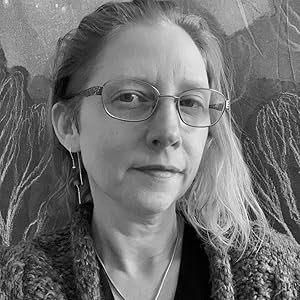


Sun Hesper Jansen is a poet and writer of dark, queer-normative, irrepressibly romantic fantasy based in Madison, Wisconsin. They are the author of To Tune the Beast (fir st book in the 'Coruscar' duology), the open-source novelette Away from the Machine, and the poetry and art collection, The Fairy of Disenchantment.

The Fairy of Disenchantment | Away from the Machine | Instagram


Wednesday, December 4, 2024

Interview with Sun Hesper Jansen, author of To Tune the Beast


Today it gives the Speculative Fiction Showcase great pleasure to interview Sun Hesper Jansen, author of To Tune the Beast.

We’re here to discuss your novel To Tune the Beast, which had its debut in February 2024. Tell us about the original inspiration for the world of Coruscar, and how you came to create it.

The Beasts and their Tuners came by way of a fever dream about ten years ago. When I think of it, how else would I have ever come up with a colossal crystalline manticore whose coat makes music? In my dream, there was only one of them, and one pair of Tuners, who would become Master Euclase and his apprentice, Mica. (A boy, I thought at first, but in the writing, she turned out to be genderfluid, skewing feminine.) I started to write a short story about these people, and a particularly dangerous Tuning that would test Mica’s mettle, but when I started to ask all the questions about how such a spectacle came to be, I realized there were multiple Beasts and a whole Guild of Tuners, and a thoroughly bizarre nation and planet (Karst) that produced them, and Coruscar kind of ran away with me, until I was sitting with the first book in a duology about a tyrannical musical aristocracy about to undergo a long-overdue revolution.

Music is the most important element in Coruscar. What can you tell us about the Beasts of the title and why music is so significant?

The Beasts, properly known as Cores, are considered the Founders of Coruscar, and are only one of many sentient non-Humans who have citizenship there and sovereignty over their own affairs. That said, they’re inextricably linked with Humanity, for better and worse.  They were created by the Vah, who are gods on this world, and who have secrets the Cores were built to protect. But because the gods are greedy for novelty and also cruel, their creations were also designed to entertain them, willingly or not. When the Cores escape their slavery, it gives them agency over their own music, but it’s interesting what they choose to do with it after they make contact with the Humans. Because they possess affinity—an empathic and sometimes telepathic sense shared by many beings in this world but not by Humanity until the Cores cause it to awaken in some of them (creating the future aristocracy)—they’re able to hear not only the music the people make together but also the memories of the music carried from their various homelands. There’s an orchestral tradition in one of those cultures that leaves a major impression on the Cores, and this is what evolves into High Music, which the aristocracy of Coruscar comes to hold sacred and separate from People’s Music, the music of the commoners. The Tuners Guild is born when the Beasts realize that the pitches of their spines can be altered, giving them a potential part in any symphony. The process of Tuning is not painful, per se, but so unpleasant that it drives the Cores a bit crazy, making this dangerous work for the Tuners. The fact that the Beasts have put up with this repeatedly for nearly 200 years shows you how dependent on music they are. The reason for this has a lot to do with affinity. Imagine yourself as an adept (someone with that empathic sense) experiencing a symphony under a vast high-desert sky, in a natural amphitheater, with thousands of people like you. That communal rapture is colloquially known as the Rush, and the Beasts are in no way immune to it.

The Rush is also not limited to High Music. People’s Music is just as important in Coruscar, but the restrictions placed on it by the Human government are what give the book its central story. High Composers can enjoy and even play People’s Music, and steal from it with impunity, but the reverse is a capital offense. (The Cores, who have a taste for Human flesh, benefit from those executions, and are haunted by that, sometimes literally.) There’s an entire Licensing Authority whose job it is to ensure that so-called Afterdarkers (People’s musicians) play only what they’re allowed to play. One of my protagonists, Chalcy, is a songwriter in the Afterdark and a would-be High Composer who takes advantage of those laws to get herself heard by one of the Beasts. The stunt has a few unintended consequences. 

How did you set about world-building and how did it evolve as you were writing?

Everything grew from the music I was listening to at the time. Once I had a grasp of the world’s music, popular and classical, I had my three root-cultures. (Coruscarians, being descendants of a wild Gold-Rush-like historical moment called the Gem Rush, are a mix of three nationalities, and it’s not uncommon to mix or change ethnic identities, sometimes day to day.) One musical style, Taravi Theater, spawned a subculture so competitive they’re basically gangs; Chalcy is part of that world. As for High Music, with its hundreds of Modes dependent on time of day, season, and/or theme, it was as much inspired by Indian ragas as it was European-rooted classical music. All of that helped me get inside the minds of the Human citizens. The non-Humans, beginning with the Cores and the feline Joffeen, grew up alongside my Human characters, because I wanted Coruscar to be a totally integrated society where there’s a basic commitment to peaceful coexistence. There’s a paradox, however. For the Humans, violence against another species is an unthinkable crime (they’re all vegetarians, by the way) and yet they tacitly accept the oppression of their own people, harm themselves regularly, and routinely turn a blind eye to injustice. That side of our actual nature, balanced with the better angels that nevertheless do emerge, also guided the book. Then the characters that popped up as I was fleshing out the world kind of took control, demanding that their stories be told. Somehow they managed to be patient while I excavated the full story over the next seven-eight years.

Tell us about the Vah, the gods of Coruscar. What role do they play?

The Vah are shadowy characters in every sense. They usually take a vaguely humanoid, smoky shape, and there are seven of them. Without them, Coruscar wouldn’t exist. The Gem Rush was the result of a contest in 1729 between two of the gods, which backfired on the Vah thanks to their role in a massacre of innocent beings which the pre-affinity humans didn’t realize were sentient. Because of their past abuses, the gods have limited powers in Coruscar. Only in their own temples are they sovereign, and even there, unless they’re riding a priest, they can only show themselves in reflective surfaces. They’re forbidden to interfere with or manipulate anyone but their priests, unless they’re directly prayed to—but those prayers might also be ignored. Humans can beg boons of the Vah, but supplicants beware, because every boon is a bargain and unless you specify your terms, who knows what you’ve exchanged for their blessings? (No fewer than three of my characters discover this the hard way.) But the true extent of their powers is unknown, at least in Book One. They clearly have the ability to create entities and to tinker with individuals and entire species, drawing on multiple dimensions—which is how Humans come to be on Karst at all. Outside Coruscar, they’re infamous for starting wars, driving people insane, and generally sowing discord. Inside Coruscar, Humanity mistrusts them, but largely ignores them, with one exception. The god Shavaön, the Player, is the god of music and time, and also a trickster. Nobody can resist a trickster. 

Your protagonist is Mica, a Tuner who falls in love with a Composer. What can you tell us about their relationship?

Mica is eighteen when she meets Chalcy (who’s a few years older) at a public reception for a symphony. Mica has no love for High Music, is a devoted promoter of the Afterdark, and also a bit of a rake because that’s how she copes with the Toll, the price Tuners pay in order to have their unique relationships with the Cores, among other perks of the trade. Tuners are forbidden to have any emotional bond, even with each other, and the punishment for breaching that contract is exile of the loved one from Coruscar. Chalcy has been a fan of Mica’s for years, and gets herself noticed without revealing the fact that she’s a convicted criminal who was arrested for writing music above her class. Chalcy manages to get herself indentured to the most frightening of the Cores, the half-mad Garanat, who lets her compose the music of her dreams, but only in secret and for him alone. Initially, she seeks Mica out because she’s miserable at Garanat Keep, has lost hope of ever getting her music heard by the outside world, and wants a witness to it as well as a decent hookup with her idol, but the two soon become emotionally entangled regardless of the risks. The challenges of keeping their relationship hidden are what accidentally connects Mica to some other people she’s not supposed to get close to, but who give her a chance to make as much of a difference to Coruscar’s future as Chalcy hopes to with her music.

Chalcy’s brother Nix is a leader of the resistance to the world’s rigid hierarchy, a movement called The Absent Root. Who are they and what are they trying to achieve?

The Absent Root are a group of Afterdarkers whose guiding ambition is the elimination of the barrier between People’s and High Music. They’re considered a terrorist organization even though Nix, when he becomes the leader of the Movement after Chalcy’s arrest, makes a lot of positive reforms to the group, and tries to distance it from the violence that drove it underground. The A.R. is the natural enemy of a different political organization called the Fermata Society, whose goal is to keep everything as it’s been for the last 200 years—not only with the musical landscape, but with Coruscar’s social structure. I haven’t talked about this yet, but the country’s imminent Bicentennial in 1929 is a pivotal social moment: it’s supposed to usher in a new phase towards Coruscar’s ultimate goal of affinity for all, and allow highbloods and commoners to intermarry for the first time. What happens to the musical divide at that time is up for debate, but the Fermata is determined to keep the Merger from happening, and to protect High Music at any cost. That includes sending an innocent Afterdarker to his death at the beginning of the book, which turns into a galvanizing event for the Absent Root. 

Your bio describes you as “a poet and writer of dark, queer-normative, irrepressibly romantic fantasy”. What does that mean to you?

I think I started calling my fiction ‘dark romantic fantasy’ to distinguish it from ‘romantic fantasy’ which is a lot more light-hearted. Not that there’s no levity or comic relief in To Tune the Beast—I definitely had fun with some scenes and characters—but the first epigraph of the book actually says “expect no comfort here.” Most of the people I write about have painful lives and histories and they engage with depression and suicide a lot more openly and directly than we generally like to in our society. But my characters do find comfort with others who are also discovering what it takes to thrive in a place where literal empathy exists and yet people can still be horrible to each other. Many of these relationships fall in the LGBTQIA+ spectrum, but in Coruscar, that designation doesn’t exist. People are either svai (attracted to each other) or they’re not, bisexuality is assumed by default, and gender fluidity is commonplace. I’ve wanted to live in a world like that for most of my life, so that’s the world I chose to write, and in some small way, will into being. Of course I’m still deeply cynical about human nature, so Coruscar had to be a dystopia for other reasons. But there’s enough hope in me that I can still imagine a world where love flourishes in all its forms. I wish there was a better word in English than ‘romantic’ to describe that view of life, but I think I’m stuck with it.

To what extent does the novel reflect on issues of tyranny and artistic freedom in our world?

About a decade ago, I heard a talk by China Miéville in which he delivered the unforgettable line, ‘We live in a utopia; it’s just not ours.’ That concept was in the back of my mind the whole time I was writing. Coruscar has some truly enviable aspects. Racism has never taken root, conquest and war are seen as evil, and a gift economy has eradicated greed as we know it under Capitalism. But just like here, any legitimate social good is undermined by hierarchical thinking and gatekeeping. I suspect anyone reading this book who’s ever experienced the savagery of academia, or failed to be accepted into a university program or a competitive workshop, or who just can’t get their work seen because they don’t have the right connections, will relate to the desperation felt by some of the characters in my book. Moreover, in Coruscar, not only are musicians of both classes locked in place by the government and by the Academy of High Musical Arts, but the dead are just as active as the living in preserving the status quo. The Fermata is a pretty obvious stand-in for the stranglehold of conservative, reactionary, patriarchal power in our world.

In Coruscar, death is not final, and there are different dimensions and levels of reality. How do these work in practice?

I’ll start with the living. If you lack affinity, your only accessible world is Realside, which is the world everyone experiences with their flesh senses. If you have latent affinity, you might be slightly sensitive to other dimensions, which fall under the single designation of Alterside. Chalcy is unaware of her affinity until an audience with one of the Cores, Realgar (also a trickster), spirits her consciousness into a world of his making. Alterside contains so many dimensions that some of them can exist just between two or more people, which is how Composers compose their music, a process more like painting or cinema than anything we know. It’s also how Tuners keep their clients even minutely calm during a Tuning—by going Alterside with them and offering any distraction they can. Working with the Beasts in general requires splitting your consciousness so you can be partly Realside and partly Alterside, but nobody’s as proficient at this as a Tuner. For one thing, when you’re more than 25 meters up in the air, Realside, it’s a long way down if you get distracted by, for example, a small, adorable octopus.

To the dead—the unpeacefully dead, also called revenants—Alterside is ‘the Alterlife’ because that’s all they’ve got now. It tends to begin as a sort of geographical crisis. One of my main revenant characters, the martyred Afterdarker Sid, is freed from the terrifying moment of his death only to discover that he can’t get anywhere he hadn’t thoroughly mapped in life. He can only move between the bars he played and hung out in while he was alive and the apartments he shared with his lovers. (Relatable, I’m sure, by a few of us.) Revenants need strong emotional attachments (including ancestral bonds) to link them to the living. They’re invisible to each other unless they make the effort to be seen. They can, fortunately, learn, and in groups they have power Realside that doesn’t exist when working individually. In the book there are examples of positive and negative ghostly collectives. Final death is actually always an option, but my dead keep finding things that make them keep wanting to turn the page. Hopefully this also happens to a few of my readers. It’s a long book!

To Tune the Beast is the first book in a duology. How do you see the second part developing?

The first book, without being a cliffhanger, clearly sets the stage for To Heal the Beast, which will be a bit more traditionally questy. There are stories I barely touched on in Book One that we finally get to see developed, especially that of Master Euclase, and his complicated friendship with the fun but morally grey scholar Tsavor Marl. I get to transmigrate a soul or two, which will be awesome. And the number of readers who’ve confided that they really don’t like Chalcy can take heart; a good chunk of Book Two is what I’m calling Operation Humanize Chalcy, and it isn’t necessarily going to be Mica who helps achieve this. Mica will be a bit preoccupied with sorting her own self out with an enemies-to-friends arc I can’t wait to dig into. I’ve already given too many spoilers, so suffice it to say, all of the characters you want to see survive do so, in one shape or another. And I’m committed to ending the saga within two books, because I personally hate all the fill that goes into trilogies. (“There’s a lot going on” is a tactful critique of Book One that I’ve heard more than a few times, but the same people also admit there are zero throwaway scenes.) My aim is for Coruscar to become as addictively real to the reader as it is to me by the end of the second book, and they’ll be ready for the stand-alone novels I already have planned which take place elsewhere on Karst.

You are a linguist, and invented languages play an important role in To Tune the Beast. How do you go about creating such languages, something that was shared by Tolkien and Ursula Le Guin?

I feel pretty lazy compared to those two… I’m still working on the grammars for Taravi and Dvosk, but this is nerdy fun and even on a day I can’t write, I can at least say I’m working. My methodology is pretty much combining the phonetic and syntactic features of about 15 languages that I’ve either dabbled in or studied long enough to make part of my subconscious. Dvosk might sound Slavic and Taravi might sound a bit like Greek, but I wanted these conlangs to seem only vaguely Earthly. Tying in again with music, I suppose, acoustic phonetics is my favorite area of linguistics, so I mainly build phrases out of sounds that are a pleasure to pronounce. But I also needed a believable syntax for each of my languages, and one cool enough to concisely express ideas we can’t in English. So in Dvosk I ended up with the Chinese-inspired modal particle éi, which allows you, with a single syllable, to change “I loved him” (kiranán) to “I used to love him but I don’t anymore” (kirananéi)—and if you make that daréi instead (kiranandaréi) you’re saying that this situation changed very recently. There are also visual languages in the book—Signspeech among Humans, and the Joffeen have an Alterside-based language that is all imagery. The Joffy Perfidy is a great example; there are no motion pictures in Coruscar (yet) but Perfidy’s real name is like the shortest horror film ever made.

You are living with MS. What impact does this have on you as a writer, in practical and creative terms?

In practical terms, cognitive dysfunction, numbness, and fatigue are my most common and debilitating symptoms. Sitting down at a computer to write for more than 20 minutes is problematic. If I push myself to write for hours, or get on a creative tear, I can lose several days to a flare-up. This was particularly rough while I was still working a full- then part-time job, which is why this first book took so long to write. After I went on permanent disability, I was able to make progress because I had more time and (sometimes) more energy, which is why I’m optimistic about the second book taking significantly shorter to complete. Creatively, my MS often finds a better outlet in poetry than prose. My debut book of poems and artwork, Fairy of Disenchantment, is a sort of chronicle of my life with MS and how I use fantasy and magical realism (and actual magic) to cope with it. In my fiction, I can see disability all through To Tune the Beast. Even apart from a visibly disabled character, Mica’s nemesis Vanadine, there are invisible disabilities galore. If you look at my revenant characters, the Alterlife is absolutely a metaphor for living with a disability. Chronic illness severs you from all normalcy. Socially, you often become invisible. Spiritually and physically, you can believe you’re trapped in some other, parallel dimension. These are things I didn’t realize I was expressing in the book until well after I’d finished it.

How do you see your readers, and who will enjoy the book?

Well, people who are enticed to open a 700-page book with a manticore on the cover, then see a map, a cast of characters, a pronunciation guide, a glossary, scholarly/funny/intriguing epigraphs and footnotes, and get progressively excited and possibly even turned on by these things… Those are my readers right off the bat. I also wrote it for people who take their time with books, who want to be immersed in a world and become a citizen of it, and who appreciate narratives that value wonder over sword fights. I don’t have any of those. I do have deadly creatures, but no dragons. Wait, I guess there are some of those. Little ones. And they have been known to incinerate people, but everybody’s trying to move on from that. I also have a judicious amount of sex and violence, but I can promise you that nobody you come to care for dies. Except the one guy who dies right away, and you’ll come to care for him so much more when he’s dead. 

What do you want readers to take away from To Tune the Beast?

A head full of imagined music and the overwhelming urge to support their local Afterdark, take in a symphony or two, and trample a few barriers.


Amazon | Waterstones | Barnes & Noble | Bookshop


About Sun Hesper Jansen:


Sun Hesper Jansen is a poet and writer of dark, queer-normative, irrepressibly romantic fantasy based in Madison, Wisconsin. They are the author of To Tune the Beast (fir st book in the 'Coruscar' duology), the open-source novelette Away from the Machine, and the poetry and art collection, The Fairy of Disenchantment.


The Fairy of Disenchantment | Away from the Machine | Instagram


Sunday, December 1, 2024

Interview with Megan Mary, author of The Dream Haunters: A Metaphysical Mystery of Magick (Witches of Maple Hollow Book 1)


Today it gives the Speculative Fiction Showcase great pleasure to interview Megan Mary, whose novel The Dream Haunters: A Metaphysical Mystery of Magick was our featured new release on October 3rd 2024.

What was the inspiration for your novel The Dream Haunters: A Metaphysical Mystery of Magick, which was our featured new release on October 3rd?

Ten years ago, I had an incredibly vivid dream about a time traveling, talking cat named Wixby and a young girl named Hannah, that felt so real I had to capture it in writing. What began as a 10,000-word short story was set aside for years. It wasn't until I went through a series of profound spiritual awakenings that I felt compelled to revisit and complete it. The story evolved, taking on an entirely new life and meaning into what became The Dream Haunters.

The Dream Haunters is your first book in a new series, The Witches of Maple Hollow. What can you tell us about the series?

The series blends fantasy and mystery, weaving in compelling female characters from women’s fiction and incorporating a rich array of metaphysical elements. This creates a unique blend of paranormal, supernatural, and spiritual themes. It features beloved tropes such as Found Family, Good vs. Evil, Time Travel, Discovered Powers, Spiritual Awakening, Secret Societies, Fated Destiny, Talking Cats, and, naturally, Dream Interpretation.

Your protagonist, Hannah Skye, is a young woman in search of meaning. How is she drawn into a hidden and magical world?

Hannah receives a cryptic letter from her long-lost aunt that she cannot read. It is illegible, or so it seems, but does include a plane ticket to Maple Hollow. Hannah is a seeker, drawn to mysteries, so she cannot let this go without investigating further.

What can you tell us about Hannah’s Aunt Jewelia, who is missing at the start of the book?

Aunt Jewelia lives at Skye Manor with a kindly older gentleman known by some as “Old Man Adams.” She is a bit like Morticia from the Addams Family in that she is demure and elegant, but also magickal and mysterious. At the beginning, we see her doing magic whilst a tumultuous storm brews outside, setting the scene for the mystery to unfold.

Dreams and their significance play a key role in The Dream Haunters. How does a dream influence Hannah’s life-changing decision?

Hannah has a recurring dream about a pumpkin patch, but she never can quite figure out what it means. Feeling lost at a crossroads in her life, and just having lost her job, she decides it is time to take some chances and make a change. She follows a series of synchronicities that lead her not only to discover her long-lost family, but also a legacy that changes her life forever.

You yourself are a dream analyst. What can you tell us about that role and the experience that led to it?

I have always been fascinated by dreams, but I didn’t always listen to them. After suffering from multiple chronic illnesses, I underwent a long period of healing, during which I returned to the wisdom of my dreams and meditation. What I discovered there was a calling to share with others the mysteries and importance of dreams through my stories and the dreamwork I do in real life with other women.

Why are dreams important, and how did you come to make them the basis of a novel?

I feel that dreams are the doorway to our subconscious. They speak to us in a language unique to each dreamer, which once understood, allows us to unlock our inner wisdom, tap into our intuition and access our higher self and purpose.

Who are The Dream Haunters of the title and how much can you tell us about them?

The Dream Haunters are nefarious spirits that take advantage of celestial influences to trap unsuspecting dreamers in their nightmares. Those that ignore their dreams and disregard them as meaningless are the most at risk. 

What can you tell us about Maple Hollow and Skye Manor and how Hannah travels there?

Maple Hollow is a fictional, magical island of eternal autumn located somewhere in New England. Skye Manor is a mysterious ancestral manor located on Maple Hollow. Hannah flies to New England from the mountain town she lives in when she receives a cryptic letter and a one-way plane ticket from her long-lost aunt.

To what extent does The Dream Haunters mingle personal experience and imagination?

As a debut author, my fiction is exceptionally based in personal experience. There are parts of me in every character, in fact, even some of the cats are my actual cats! There are 13 dream scenes in the novel, and since reality is stranger than fiction, a number of them are actually inspired from my own dreams.

The Dream Haunters has been well-received: The BookLife Prize, sponsored by Publisher's Weekly, gave it a 9.25 out of 10 critic's rating. What does that mean to you?

I was beyond thrilled to receive the critic’s rating from The BookLife Prize. It actually brought tears to me eyes. To have a reviewer, that has probably read thousands of books, call my debut a “highly inventive work” that was “relentlessly imaginative” was truly a dream. I also really appreciated that the review covered the plot, prose and character execution, all which received excellent marks calling the setting, “brilliantly realized, with every nook and cranny overflowing with vibrant energy and atmosphere,” and the series, “a fascinating metaphysical journey into a fantastical world full of magic spells, dreams, and spirituality.”

What themes or tropes appear in the story and how important are the cats?

The story delves into themes such as Found Family, Good vs. Evil, Time Travel, Discovered Powers, Spiritual Awakening, Secret Societies, Fated Destiny, Dream Interpretation, and, of course, a talking cat. Cats hold a special significance in the narrative, as one of them originally inspired the book. Not only are there multiple feline characters, but two are based on my real-life cats, Merlin and Milu, including one who has since passed on into the spirit realm, Mystera.

How do you see your readers?

Much like my podcast, my creative work centers on supporting women. I envision my readers as those who enjoy mystery, fantasy, and women’s fiction, as well as anyone drawn to metaphysical themes—perfect for those who love exploring metaphysical shops. My books cater to readers seeking a unique blend of entertainment and inspiration, offering stories that are both reflective and educational. They’re for seekers—those embarking on a fictional journey that ultimately brings them back to themselves, feeling empowered and touched by a sense of magic.

Are you working on the next book in the series and what can you tell us about it?

Book 2 is called The Dream Mirrors and will be released in May 2025. It combines the metaphysical themes of duality, portals, mirrors, reflection and illusion. This celestial fall-themed mirror fantasy weaves dreams and mystery into an enchanting tale of magick and self-discovery. Book 3 is currently underway as well and slated to be released October 2025.


Amazon.com | MeganMary.com | Books2Read


About Megan Mary:


Metaphysical author Megan Mary, a dream analyst, intuitive, and mystic, intertwines her passion for personal transformation, magick, and cats with the ethereal realm of dreams.

In addition to a career spanning over twenty-five years creating, managing and marketing websites, she holds a BA and an MA in English Literature, certification in British Studies, and is a member of the International Association for the Study of Dreams.

After being diagnosed with three chronic illnesses, she experienced a spiritual awakening. She now empowers women all over the world to live more authentic, aligned, and abundant lives through dream empowerment and mystical guidance. Her podcast, Women’s Dream Enlightenment, has been voted as one of the Top 20 Spiritual Awakening Podcasts You Must Follow. When she’s not dreaming or weaving digital webs, she enjoys spending time with her husband and two magickal cats.

Website|Twitter/X|Instagram|Threads|Pinterest|YouTube|
TikTok|LinkTree|LinkedIn


Wednesday, October 2, 2024

The Dream Haunters: A Metaphysical Mystery of Magick by Megan Mary (Witches of Maple Hollow Book 1)


Release date: October 3rd, 2024
Sub-genres: Mystery, Fantasy, Supernatural, Speculative, Metaphysical, Women's Fiction, New Adult


About The Dream Haunters:


Hannah Skye, a young woman in search of meaning, receives a cryptic letter from her missing and eccentric Aunt Jewelia. Her experience of a recurring powerful pumpkin patch dream unfolds into a spiritual journey to a mysterious island of eternal autumn, Maple Hollow, where she discovers the mystical Skye Manor and her magickal family legacy.

Haunted by shapeshifters bent on trapping people in their nightmares, Hannah, with the help of wise villagers and feline companions (including a talking cat dream guide), must solve the riddle, unlock her powers, and dive into the dream dimension to save her aunt by Halloween night, when the veil between the worlds is thinnest.

Escape into this metaphysical mystery of magick, where spells, music, and dreams converge in a vortex of secret societies and spiritual inheritance. Travel beyond time and space into a world of unexpected portals, ancient traditions, and dreamscapes.


Excerpt:


A sudden clap of thunder broke the silence. Jewelia’s eyes snapped open. Jarred out of her placid place of meditation, she reached for a pad of paper. She wrote and then stopped, holding her pen just away from the paper as if in a channeled trance, then continued on, only to stop again a few words later. Once her words had fully inked the page, she folded the letter and placed it in a small white envelope. She firmly pressed a stamp into the red wax simmering nearby, sealed the envelope, and wrote 

Hannah 

in large letters in the middle.

She rose quickly from her seat, the cat springing off her lap. She ran out to the foyer, then down the long dark hallway toward the back door, grabbing a cloak hanging on a nearby hook and departing from the shelter of her home. 

Skye Manor sat in the middle of an enormous, circular pumpkin patch. There was one straight path that led from the manor through the center of the patch, ending at the sea. This path was lined on both sides with immensely tall cypress trees. They stood like guards, perfectly lined up, creating a dark corridor to the water. Jewelia ran down this corridor toward the shore, cutting through the patch.

The storm swirled around her, thunder cracking and breaking across the sky. She headed for the dock, heart pounding in her chest. The wind whipped the trees, making them swirl as if they would be lifted right out of their roots, their branches thrashing to and fro. The rain beat on Jewelia’s head and shoulders as she approached the dock.

On the dock, she knelt down and reached for the ropes that held the rowboat, her long black hair wet and matted against her face. She untangled them one by one until the small craft was freed from its attachments. It bobbed up and down on the rough water, ready to float away of its own accord. Steadying herself on a wooden dock post wrapped in weathered rope, Jewelia stepped into the boat, first her right foot, then her left. She sat on the wet wooden seat and fished around for the oars below her.

She began to row, pushing and straining the muscles in her arms, heaving back and bracing her legs. She was rowing as hard and fast as she could. She made it away from the dock and headed south, along the shore, further and further from the manor and around the bend of the tiny island. The rain fell harder and harder, as if it were trying to prevent her from proceeding any further. But she paddled on, exerting herself as much as she could. 

As she rowed, she began to chant—softly at first, the words a whisper under her heavy breath. They formed a rhythm of their own as they dropped from her lips into the foggy air that had begun to envelope both her and the boat. She started to chant louder, the words becoming an incantation, carrying her emotions on the wind, swirling around her and rising out of her body.

Suddenly, a colossal thunderclap boomed above her, followed by a magnificent strike of lightning. White light, as bright as if she stood next to the moon itself, surrounded her, and then there was total silent darkness. 

Jewelia had vanished.

Amazon.com | MeganMary.com | Books2Read


About Megan Mary:


Metaphysical author Megan Mary, a dream analyst, intuitive, and mystic, intertwines her passion for personal transformation, magick, and cats with the ethereal realm of dreams.

In addition to a career spanning over twenty-five years creating, managing and marketing websites, she holds a BA and an MA in English Literature, certification in British Studies, and is a member of the International Association for the Study of Dreams.

After being diagnosed with three chronic illnesses, she experienced a spiritual awakening. She now empowers women all over the world to live more authentic, aligned, and abundant lives through dream empowerment and mystical guidance. Her podcast, Women’s Dream Enlightenment, has been voted as one of the Top 20 Spiritual Awakening Podcasts You Must Follow. When she’s not dreaming or weaving digital webs, she enjoys spending time with her husband and two magickal cats.


Wednesday, September 18, 2024

Of Sands and Tides: The Chronicles of Captain Georgianna Forsythe by Jan Edwards


Release date 19th September 2024
Sub-genres: Cosmic Horror/Fantasy/Occult Detective


About Of Sands and Tides:


When the old god Nyarlathotep lures Captain ‘Georgi’ Forsythe – special agent for the Ministry of the Arcane -- to the Valley of the Kings, the battle for her place in this world begins. Eight thrilling adventures packed into one volume, taking us from ancient Luxor to the Loch Ness of 1932. Conflicting pantheons of myth and legend plunge Captain Georgi into cosmic battles beyond wildest imagining. Will she remain a force for good or be lured into the world of chaos? The choice is hers!


Excerpt:


Entering the domed southern entrance of the Greenwich foot tunnel she hurried down fifty feet of spiralling stairwell and traversed the four hundred yards beneath the Thames at a clipped pace. She paused at the north end and peered back along the arched tunnel, wrinkling her nose at the rank, fishy stink of the river. Her hand had begun to itch, that branded third digit twitching maniacally. She had not seen a soul, though the floor glistened with wet prints merged into one sodden trail. Something was out there, and it was not human. Noden’s gift never lied.

Georgi was not a nervous type but since the submarine debacle she had found confined spaces somewhat unnerving. She took the stairs at a trot, bursting out of the roundhouse on the north entrance and distancing herself by several paces before stopping to draw breath. She coughed, the thick air tearing at her throat and nose, making her gasp all the harder.

Through drifting fug she could still make out the glow of the dome’s glazed roof. To her left a smaller, diffuse pulse indicated what might be a streetlamp. Conditions made it difficult to see clearly any further than a handspan from her face. It at least explained why nobody was coming in from the northern end. Even those who knew the place well would have been disorientated. That coupled with the eye-stinging, lung scouring, coal-tainted air would keep all but the most determined safe at home behind closed doors.

Only the thought of old Nellie, alone and waiting. prevented her taking the saner course and heading home. A promise is an officer’s sacred bond and Captain Georgianna Forsythe would not let an old friend down. She pulled up the collar of the greatcoat she had worn in favour of her usual flying jacket and struck out across the street until she found the paving edge of Doug’s Path. She deduced rightly that she could hardly get lost if she followed the curb to the junction where she turned right. She was gratified to see the twin headlights of a Number 56 bus at the stop just ahead of her.

Georgi hurried forward to grasp the passenger pole and set foot on the bus’s grubby platform. There was no rumble of diesel engines nor grumble of impatient passengers, and the bus interior was as mist-raddled as the outside, but she saw enough to ascertain that it was devoid of people.

She supposed it possible the driver had considered it too dangerous to go further, even with the conductor walking ahead carrying flares. If the 56 had been abandoned, however, it did not explain seats strewn with belongings. Handbags, shopping bags, briefcases, hats, coats – all thrown around the space as though some mad wedding guest thought to make confetti from whatever came to hand.

Georgi’s hand slid through a smear of cold goo bisecting the back of the nearest seat. She peered at the sticky, brownish smear on her fingers and then sniffed at it with a certain caution. The taste test was unneeded. She had seen blood and death too many times in the service of the King for any lingering doubt. The thought of what might have caused the destruction of a whole bus full of people and leave little more than this filled her with an awful foreboding, a feeling backed to the hilt by the nagging ache in the third digit of her left hand.

She moved back to the bus’s platform and considered retracing her steps to the south bank to summon help from there. Except that the food package was warm against her hip, reminding her of her orders to visit Nellie for that report, and she really, really, needed to know why her arcane early warning system had been aroused.

The deep guttural cry of some animal seeped through the fog. It sounded familiar, except it was like no dog that she had ever heard, and too deep for the unearthly scream of a fox. Nor was it a distressed horse from some milk float or brewer’s dray.


Amazon.com | Amazon UK and wherever books are sold


About Jan Edwards:


Jan Edwards is the UK author of the Bunch Courtney Investigations - the WW2 crime series, which gained her an ‘Arnold Bennett Book Prize’. She has 50+ short stories in horror, fantasy, mainstream and crime anthologies, including: Mammoth Book of Folk Horror, Criminal Shorts, The Book of Extraordinary New Sherlock Holmes Stories and volumes of the MX Books of New Sherlock Holmes Stories series. She is a member of the Crime Writers Association and member and past chair of the British Fantasy Society. Two titles due out in 2024 - Of Sand and Tides urban/cosmic horror and Deadly Plot: Bunch Courtney Investigations #5.

Website | Facebook | BlueSky | Instagram | Substack | Penkhull Press


Tuesday, September 10, 2024

Interview with A T Balsara, author of The Great and the Small


Today it gives the Speculative Fiction Showcase great pleasure to interview A T Balsara, whose novel The Great and the Small had its debut on September 3rd.

Where did the original idea for The Great and the Small come from?

First, let me say thank you for having me on your blog. Your questions go well beneath the surface, and I hope I can do them justice! The idea for The Great & the Small came to me over 20 years ago. I had been looking for a way to explore questions of good and evil that I’d had ever since I’d visited a concentration camp museum in Dachau, Germany, when I was around 10 years old.

I had always been fascinated by the ancient plague and had wondered what it would have been like to live in Europe at a time when half the population was suddenly wiped out. I’d loved Richard Adam’s book Watership Down, about a warren of rabbits in search of a new home. There was so much detail, culture and mythology woven into its telling that by the end of the book, I felt like I’d glimpsed life from a completely new perspective. As I searched for a way to explore themes like the cost of blind obedience, it dawned on me that sentient rats who carry the plague as a biological weapon would be the perfect lens to look through. I modelled the tunnel colony on Stalinist Russia, and added culture and mythology, to make it feel real. To help research rat behaviour, I got a sweet little dumbo rat that I named Frodo, and he became my guide into the strange world of rats.

The protagonists are a teenage girl called Ananda and a young rat called Fin, who belongs to a totalitarian rat colony. Both characters are outcasts in their way. Who are they and how do they meet?

Both feel that somehow, they don’t belong. Ananda has a deeply intuitive spirit and can communicate with animals. She also has a secret buried so deep within her subconscious—a traumatic event so horrible and shaming that she has hidden it even from herself. The buried trauma comes out in her dreams, and manifests in her conflicting desire to rise above her pain or end her life.

Fin is the scrawny nephew of the rat colony’s charismatic “Beloved Chairman.” Orphaned as a pup, Fin lives in the shadow of his charismatic uncle, and tries to prove himself. Defying tunnel law, Fin ventures into a local market during daylight hours, to taunt the “ugly two-legs” but instead almost gets crushed by a fish monger. Ananda saves him, and as she crouches over Fin’s prone body in the market, they share a moment of understanding. Neither can know that their stories will be inextricably linked going forward.


This is a YA novel that deals with themes of dictatorship, freedom of speech, PTSD and abuse. Why was it important to you to write about such serious issues?

Writing and art are my ways of understanding the world and myself. The issues presented in this book are ones I have personally grappled with for almost my entire life. It became clear to me in the years after I went through the concentration camp museum, that the evil that was done there was done because of choices people made. Choice after choice had been made, not just by Hitler, but by his surrounding henchmen, allowing them to go forward with their monstrosity of hatred and prejudice. In The Great & the Small, I decided to write about Stalin, because in the west he and his own band of henchman had gotten off the hook for what they perpetrated. I wanted to shine a light on what they had done, so that I could understand how someone goes from an innocent baby to a full-blown monster.

I didn’t know it at the time I went through the museum, but I was carrying my own burden of buried trauma. I had been molested as a child by a trusted family friend and told I was to blame. The shock and horror of “what I had done,” drove the memory deep inside, only accessed through nightmares and acting out behaviours. The questions from the concentration camp became so important to me because it felt personal. I felt evil. I thought I had caused a grown man to commit a horrible act. I needed to know how to not be evil and hoped against hope that I could be more than that. It’s only years later that I understand why questions of good and evil haunted me.

How far is The Great and the Small based on personal experience?

All of the emotions and the horror of living with buried trauma are straight from my lived experience. I fictionalized details to fit with Ananda and the pre-existing story. I extracted the feelings, and many actual events, and poured them into a new container.


You have spoken of your experience of trauma and how you used energy healing to recover. What can you tell us about that and how important is it to the story?

It’s funny how much I’ve changed and healed since the first edition came out. I would have never dreamed I would be involved in energy medicine and probably would have discounted it. But when I found it and tried a few exercises, it made a huge, immediate impact on me that was undeniable.

As I healed, I realized that I had always been able to “see” energy—I just hadn’t known what I was seeing. I had disassociated from my body as a result from the trauma—which I write about in the book—to the point where I felt like a marionette. From the neck down, I felt nothing, as if my body was a sock attached to my neck. Slowly, with energy medicine, I “wove” my body and spirit back together, like Peter Pan who must sew his shadow back onto his toe. I am still in the process of reinhabiting my body, but it is better every day and I am so grateful for it.

I wouldn’t have been able to write Ananda’s story as I did, if I hadn’t healed myself. It had been too raw, and I had no objectivity as in 2017 I was still deep in the trenches of PTSD. In that way, energy medicine greatly impacted the book. I didn’t specifically add much energy medicine to the story, though, except to make Ananda very intuitive. She is able to get “nudges” from creatures and can sense what they are feeling.


Amongst others, The Great and the Small has been compared with George Orwell’s political fable, Animal Farm. What do you think of that?

I’m flattered by comparisons to Animal Farm, as it's a classic that addresses the dangers of authoritarianism. However, I found Animal Farm challenging to read due to its stark depiction of violence and lack of hope. While its portrayal of a brutal regime is brilliant, I struggled with its unrelenting bleakness and distant, cipher-like characters. In contrast, The Great & the Small explores themes of authoritarianism, there is still a sense of hope.

You also write and illustrate picture books for children. What are the challenges of writing for a YA audience, and why did you choose to illustrate The Great and the Small?

I switch into a different gear when I’m writing YA. I’m able to go deeper and darker than I can with writing for children. The challenge in writing YA is that there are certain things I don’t want to write about. I don’t want to write about gratuitous violence, sex, or stories that are pessimistic or cynical in their view of the future. I have no time for stories without hope, but there is an appetite for nihilistic kinds of stories. My writing will probably not appeal to those readers, but I can only write what I feel strongly about.

I illustrated it because it’s another aspect of storytelling for me. It’s a way to look at the story from different angles. It’s not the norm for YA to have illustrations, but I remember loving illustrated books when I was a teen. I figured if graphic novels are so popular, teens would probably enjoy an illustrated novel. I have no idea why there aren’t more of them, but I suspect it has to do with publishers and budgets, not the readers.

This is a new version of the award-winning first edition, published in 2017. What made you return to the story?

In the first edition, Ananda’s story felt a little more forced. I had given her strong reactions, but hadn’t added the backstory that would explain why she was so withdrawn, and why she pushed people away. When the opportunity was offered to me to revise the story for a second edition, I added in my own backstory of living with buried trauma to give Ananda that depth of character she needed.

What do you want your readers to take away from the book?

I want them to consider that the issues and even traumas that they may be going through are all part of the journey toward becoming their true selves. To be fearless in the pursuit of truth.

Why did you choose the idea of the rat colony to reflect on human intolerance and brutality in its various forms?

Mostly because it was fascinating to me to explore themes of prejudice through the eyes of rats. I got to transpose the events that we see going on around us—the manipulation of the press, the double-speak, the demagoguery—and reframe it. Sometimes, what’s old becomes new again when shone through a new lens. It helps to see, in all its starkness, what we may have become blind to.

What is the meaning of the Hero’s Journey and why do you invoke it?

The Hero’s Journey in literature has several steps to it, but what has always stuck with me, though, is the idea that the hero must undergo trials that test him or her to the limit. They endure a “dark night of the soul” in which all hope appears lost, only to emerge stronger and wiser than before. It is the story we love to watch on TV and read in books, but which we dread undergoing ourselves. The Hero’s Journey in real life is a painful, repeating cycle of crisis followed by victory. It’s the ebb and flow of growth, and when we apply the Hero’s Journey to our own lives, and our own “trials,” suddenly there is hope. We can recognize that these trials carry within them the seeds of wisdom that we can’t attain any other way. That’s why the people who have suffered most in the world are often the greatest. They have reaped the secret harvest of suffering and have risen above, because they heeded “the call” of the journey and heroically persevered.

You have mentioned the importance of your Baha’i faith. Tell us about that and its significance to the book and beyond.

One of the tenets of the Baha’i Faith is that every person has the right, and the responsibility, to seek truth. We are called to see with our own eyes and hear with our own ears. I believe we are given whatever gifts and talents we have—and we all have them—to work towards the betterment of the world. If we look around and see a world disintegrating into hatred and division, we must, all the more, rise up with love. Light is the only thing that conquers darkness. 

The Baha’i teachings say, “If a thought of war comes, oppose it by a stronger thought of peace. A thought of hatred must be destroyed by a more powerful thought of love.” It is empowering, even as it is humbling. We are the ones who change the world. Each one of us. By our thoughts, our actions, and our choices. No one is going to swoop in and save us. But the shift is already happening. More and more people are fed up with the trajectory our current world culture is on. More people are recognizing the need to live in harmony, not just with the earth, but with each other. That’s why I have such hope for the future. I believe that while we seem to be heading for disaster, we are collectively waking up to the reality that we must work together if we are to survive. It is a classic “Hero’s Journey” call to action, and we must—individually and collectively—answer the call.

Thank you again for having me on your blog!

Thank you! (Speculative Fiction Showcase)


Amazon | Barnes and Noble | Indigo | Bookshop


About A T Balsara:


A.T. Balsara is an award-winning children's and young adult author/illustrator, motivational speaker, and energy medicine practitioner. Her passion is to inspire joy through storytelling and energy healing, helping young people and adults to walk “the Hero’s Journey” in real life. She writes and illustrates for young children under her full name, Andrea Torrey Balsara, and for young adults under A.T. Balsara.

Andrea is also a painter, an avid amateur explorer of quantum physics, and a keen environmentalist. She advocates for the humane treatment of animals and regularly volunteers at a donkey sanctuary where she uses energy medicine to help previously neglected and abused animals regain their health and vitality.

To learn more about her and sign up for her newsletter, visit: www.torreybalsara.com


Facebook | X/Twitter | Instagram