Showing posts with label LGBTQIA. Show all posts

Friday, December 20, 2024

Review of To Tune the Beast by Sun Hesper Jansen, by Candice Daquin


To Tune the Beast is a perspicacious polemic. A gentle raging at a lack of parity and fairness, set against a backdrop of passionate elegy for music. Initially this is a plenary story of reconciliation and growth within a subjugated society that isn’t aware that tyranny is eating them from inside out. The reader will oft relate to how this echoes our own experiences. In this mode of sci-fi-fantasy, the concept of being free musically is a metaphor to action. Hence the polemic.

Labyrinthine concepts are juggled boldly. Characters are multifarious and three-dimensional, they’re reachable and possible to understand as they’re written into reality without self-consciousness. Hesper Jansen knows how to write for an audience but isn’t a writer who panders to one. Her writing gives the impression of writing for the love of writing, rather than being forced or artificial. The structure is tight and well-paced, which is essential when falling down the rabbit hole of sci-fi-fantasy. Balance is necessary to ensure one is writing succinctly enough to engage and compel without dumbing down an intelligent story. A sci-fi-fantasy writer must create a world and then help their readers master the translation. 

It would be folly to imagine it’s easy to read an intelligent sci-fi-fantasy novel, but once committed, the writer’s gift draws out sufficient enticement without smothering the reader in lore. Whilst highly ambitious for a first novel, To Tune the Beast is written dauntlessly and with a nimble mind at the helm. The result is Coruscar. When we meet the Cores, mythic beasts with approachable, humorous, horrifying personalities, they are at times as intricate as their human tuners. It is the arc of a writer formidably familiar with their chosen genre, who can become enveloped by the strangeness of fantasy, and vividly render the fantastical to be experienced as real. The best fantasy feels intuitively real, hence our worthwhile investment. 

Coruscar is a little like our own world, and at the same time, very different. The rundown, delightful drinking haunts with glorious, undomesticated monikers, and the potential for nights spent in these grimy snuff boxes to be one’s last night alive. A delicious turning from humor to danger and back again with every rove. The novel is ribboned with modern considerations about the price we pay for choices and actions (the Toll), from ungendering and natural rejection of labels affixed to biological sex or partnering, to myriad notions of morality and what consciousness is, versus dying, versus living in alternate states of reality. But beyond the ingenious and the philosophical, what really endures most of all is the attention to detail in depicting humanity’s worst, feral bright and best, in this strange world. 

What to say of all those creatures who tread this stage? There are so many brilliant creations it’s impossible, without giving too much away, which absolutely would ruin a future reader’s delight when the book reveals itself. I can say, my personal favorites surprised me. The rapacious unseen gods, ‘Vah,’ are a doff to the distant masked creatures of all fantasy novels, and seen at a distance, I found them both terrifying and fascinating. There is a heady blend of influences from ancient Greece to Star Wars, Margaret Atwood and Ursula K. Le Guin. I should point out, influence does not denote affect or copy, as this is a wholly original write; though any artist must understand what came before them, as they write into the canon or break it wide open. 

That the author is a linguist comes out many times in the expert care with which she describes the varied languages and inflections. You discover a love for the wordplay of several created languages that appear more real and urgent than they should, perhaps because of the way in which little intimacies are laced in each chapter, like hors d'oeuvres before a feast. The complexity isn’t only found in witty wordplay or knowledge of linguistics, but the way the writer takes created languages and affectations and translates them into something that feels both familiar and otherworldly. Ale!

To the gist of the story then: Coruscar, a mythical place, is inhabited by several groups. The Beasts, created by the Vah, who are Gods of this world, become more self-aware through the enlightenment of another similar creature, so that they can break the spell of being the God’s playthings. 

“I remember that now about the Vah: They eat nothing but prayers, and drink only regrets.”

Without knowing the exact purpose of their existence, they are freed mentally, just as Eve, no longer the ingénue, plunges to earth in Milton’s Paradise Lost, wracked with the pains of a new awareness. However, in Coruscar, the Beasts find themselves with a modicum of potential power over an intrigued population consisting of human and non-human inhabitants. What is most interesting about this is the Beast’s early choice to stay with the humans and become part of a strange, overly-orchestrated mechanism. This mechanism revolves around the importance of music and its performance. Not just any kind of music. There are those who are considered born to it and those who, despite prodigious talent, do not have a chance in hell to attain it. There are strict rules to be adhered to in this control of music, and the breaking of them results in a hideous death. 

This rulebook is not created by the Gods, who are largely feared but superficial to the goings on in Coruscar. Humans and their otherworldly counterparts are the machinations behind a series of oblique social constrictions that divide everyone into rigid, unyielding class structures: those who perform High Music and those who are forbidden to play it. This is furthered by the Beasts, who possess literal scales that can be tuned and become the swell and greatest part of Coruscar symphonies. Their presence and appreciation of this music, along with the respective Keeps entourage, is the cornerstone of Coruscar society, for those intimately included and those who dream of such privilege from afar. If you are born without such blood, you are relegated to playing out of sight and sound, at great personal risk if that music should overstep one of the many rules. Should you accidentally or intentionally play High Music then your life is forfeit. 

Enter key protagonists; there is Chalcy, who rides her Joffeen, Perfidy. A Joffeen being a smaller but equally lethal prototype of the Beasts. Chalcy possesses the musical intuitiveness, but not the necessary permission. Her fate is to fall in love with an apprentice to Tuning (the Beasts). All Tuners are forbidden to have relationships, that’s the Toll they pay for their socially elevated status. Their relationship, aside being necessarily secret, is the backdrop to greater intrigues; that of Chalcy’s brother, Nix, leader of The Absent Root, which is an underground movement against musical tyranny and perhaps one of the best fictional inventions of rebellion I’ve read. 

A note here about The Absent Root. It’s packed with colorful characters in insalubrious situations that alone would make a vastly interesting book. This is but one facet of a far wider storyline. Nix is tormented by his role as leader, as his heart too seeks a particular fate. All characters are wildly chronologically young and free of convention, aside the terrible requirement to not play particular music outside the confines of special bloodlines. Unbeknownst to those perpetuating such tributaries, there is a larger force seeking to overthrow this. One nobody suspects. 

We have Vanadine and Dama, characters so damaged by their own respective choices for cruelty that initially it’s impossible to stand them. Their interior universes are mined chapter by chapter. What betrayal when, by the close of this story, we are rooting for their success! Speaking more of the manipulation of a good storyteller to turn our fickle hearts from disgust to a very human awareness of mistakes and their eternal stain on us, even as we seek reparation. In some ways this is a metaphor for the larger story, where rules lead to oppression, to insight and the breaking of such life sentences. A literal breathing of life into those thought irredeemable. It is the imperfection that has you panting heavily because it’s rendered without apology and with the piquant droll humor that permeates this novel. 

“Absence, both real and potential, had begun to haunt her, in all the places the dead no longer stirred.”

Set against this intrigue is the poignant story of Syd and Jass, two lovers separated by the inconvenience of death. The gist of this novel may be the reality of music to change everything, but there is a liberal heaping of good old-fashioned attachment here too. We long for certain people to remain together, even as the author refuses such pastiches with a scouring lack of sentimentality that can be equally visceral in opposite intensity when permitted. As To Tune the Beast grows in gravitas, more characters reveal themselves in greater dimension and again and again we long and fall with their urges and disappointments. Ultimately however, there are those who find their way to each other, and we are rewarded for our loyalty to their fates. 

“There are plenty of quirks of Humanity that Coruscarians don’t like to admit to having failed to breed out of ourselves. For those, we use the T’aravi word onziva, which translates most often into Sul as ‘unnatural.’ It means ‘against life’ and encompasses many illnesses of mind, including cases where what cuts against the life of one can be another’s delight.”

There is a necessity in mentioning the difference between a sci-fi-fantasy novel written by a biological male versus a biological female. Such distinctions are being erased as we go forward, with notable wins over predictable biological tropes, but that said, the sci-fi-fantasy market was historically a male-dominated world, from scantily clad women on the covers, to explicit male-centric sex scenes. I for one, having grown up reading these, am gladdened to read To Tune the Beast and other modern fantasy novels written by biological females, where intimacy is truly intimate, and the size of one’s bosom not the most important fact. This reclaiming of imagination superseding the need to insert clumsy sexual parodies is the New Wave in queer + /BIPOC fantasy literature, alongside greats like Shelley Parker-Chan, Charlie Jane Anders and Rebecca Roanhorse.

Many novels create mimeographed mythical creatures, but once they have, they let them loose in haphazard awkward ways that sadly can end up being annoying and pastiche. Appreciating the alacrity of a controlled writer, able to grow complex characters throughout a relatively long novel, is something rarefied. These mythic beasts are approachable, they have foibles and humor and tragedy. They are not two-dimensional for the sake of being creations, nor do they act like self-conscious creations, so much as having jumped the assembly line and run their own way. Reading characters freed of the author’s rein is exciting, as the author is in control enough to know when their own ego should be set aside for the betterment of organic character development. The entirety of Coruscar, is replete with deeply considered storylines, people and places. The events that wind throughout are suspenseful, often unpredictable and well fleshed out. If you seek action-galore you’ll be left searching, as action here takes a back row to an almost cerebral journey of discovery.

A good fantasy must possess this degree of commitment to every created facet within its universe, regardless of how much or little action occurs therein. It is the puncture of the characters that causes the addiction, not how many times someone fires a weapon, and I for one found this very appealing. I particularly relished the idea of several dimensions, the real world, the Alter world and then beyond the state of consciousness. The merging of those who no longer live but are not dead, with the living in varied states of consciousness, especially when talking with people who have that gift such as the Beasts, benefited the storyline(s), as we are not just in one world, one consciousness. When Sun Hesper Jansen talks of affinity it is not just an ability to mind-step from one dimension to another, it’s an intimacy we all long for, brought to life. An intimacy we’ll never feel, but we desperately want to, so we allow words that we cannot convey, to take us there via the art of fantasy:

“I got the strong sense that his silence was not just because he wasn’t allowed to talk about the rite, but because there were simply not words for the experience.”

Ultimately, I found myself wishing I could talk to my ancestors, or a loved one past, with the freedom of those in Coruscar. I wished to ride a Joffeen, fall in love with someone who renounced pronouns and wore velvet in hot cramped music bars, and wished with all my might for a fairness that never exists and music capable of destroying you and putting you back together. What I can tell you, is this is a world you’ll become submerged in, and wish you didn’t have to leave, which quite simply is why we love sci-fi-fantasy novels, especially those too clever to be anything less than wicked smart. 

“Humans are very hung up on their life’s purpose… for as long as she has known him, he has never asked himself, What’s my reason for living? He asks Joffeen questions, like What could happen next? Or What happens if I do this, now? Or if I wait and see?”

The level of care and planning in mapping Coruscar and her people is evident. Not least in the humor, plethora of destinations, internal conflicts, elaborate detailing of costume and personhood. You will smile, gnash your teeth, flinch and feel guilty shame, entering Hesper Jansen’s hybrid brain, where a unique countercurrent of modern and otherworldly, harmonize around a deep love of music and its potential for everything. Blessed beasts indeed

by Candice Daquin


Amazon | Waterstones Barnes & Noble | Bookshop


About Sun Hesper Jansen:
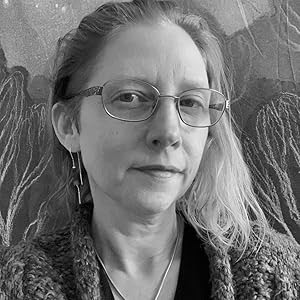


Sun Hesper Jansen is a poet and writer of dark, queer-normative, irrepressibly romantic fantasy based in Madison, Wisconsin. They are the author of To Tune the Beast (fir st book in the 'Coruscar' duology), the open-source novelette Away from the Machine, and the poetry and art collection, The Fairy of Disenchantment.

The Fairy of Disenchantment | Away from the Machine Instagram


Wednesday, December 4, 2024

Interview with Sun Hesper Jansen, author of To Tune the Beast


Today it gives the Speculative Fiction Showcase great pleasure to interview Sun Hesper Jansen, author of To Tune the Beast.

We’re here to discuss your novel To Tune the Beast, which had its debut in February 2024. Tell us about the original inspiration for the world of Coruscar, and how you came to create it.

The Beasts and their Tuners came by way of a fever dream about ten years ago. When I think of it, how else would I have ever come up with a colossal crystalline manticore whose coat makes music? In my dream, there was only one of them, and one pair of Tuners, who would become Master Euclase and his apprentice, Mica. (A boy, I thought at first, but in the writing, she turned out to be genderfluid, skewing feminine.) I started to write a short story about these people, and a particularly dangerous Tuning that would test Mica’s mettle, but when I started to ask all the questions about how such a spectacle came to be, I realized there were multiple Beasts and a whole Guild of Tuners, and a thoroughly bizarre nation and planet (Karst) that produced them, and Coruscar kind of ran away with me, until I was sitting with the first book in a duology about a tyrannical musical aristocracy about to undergo a long-overdue revolution.

Music is the most important element in Coruscar. What can you tell us about the Beasts of the title and why music is so significant?

The Beasts, properly known as Cores, are considered the Founders of Coruscar, and are only one of many sentient non-Humans who have citizenship there and sovereignty over their own affairs. That said, they’re inextricably linked with Humanity, for better and worse.  They were created by the Vah, who are gods on this world, and who have secrets the Cores were built to protect. But because the gods are greedy for novelty and also cruel, their creations were also designed to entertain them, willingly or not. When the Cores escape their slavery, it gives them agency over their own music, but it’s interesting what they choose to do with it after they make contact with the Humans. Because they possess affinity—an empathic and sometimes telepathic sense shared by many beings in this world but not by Humanity until the Cores cause it to awaken in some of them (creating the future aristocracy)—they’re able to hear not only the music the people make together but also the memories of the music carried from their various homelands. There’s an orchestral tradition in one of those cultures that leaves a major impression on the Cores, and this is what evolves into High Music, which the aristocracy of Coruscar comes to hold sacred and separate from People’s Music, the music of the commoners. The Tuners Guild is born when the Beasts realize that the pitches of their spines can be altered, giving them a potential part in any symphony. The process of Tuning is not painful, per se, but so unpleasant that it drives the Cores a bit crazy, making this dangerous work for the Tuners. The fact that the Beasts have put up with this repeatedly for nearly 200 years shows you how dependent on music they are. The reason for this has a lot to do with affinity. Imagine yourself as an adept (someone with that empathic sense) experiencing a symphony under a vast high-desert sky, in a natural amphitheater, with thousands of people like you. That communal rapture is colloquially known as the Rush, and the Beasts are in no way immune to it.

The Rush is also not limited to High Music. People’s Music is just as important in Coruscar, but the restrictions placed on it by the Human government are what give the book its central story. High Composers can enjoy and even play People’s Music, and steal from it with impunity, but the reverse is a capital offense. (The Cores, who have a taste for Human flesh, benefit from those executions, and are haunted by that, sometimes literally.) There’s an entire Licensing Authority whose job it is to ensure that so-called Afterdarkers (People’s musicians) play only what they’re allowed to play. One of my protagonists, Chalcy, is a songwriter in the Afterdark and a would-be High Composer who takes advantage of those laws to get herself heard by one of the Beasts. The stunt has a few unintended consequences. 

How did you set about world-building and how did it evolve as you were writing?

Everything grew from the music I was listening to at the time. Once I had a grasp of the world’s music, popular and classical, I had my three root-cultures. (Coruscarians, being descendants of a wild Gold-Rush-like historical moment called the Gem Rush, are a mix of three nationalities, and it’s not uncommon to mix or change ethnic identities, sometimes day to day.) One musical style, Taravi Theater, spawned a subculture so competitive they’re basically gangs; Chalcy is part of that world. As for High Music, with its hundreds of Modes dependent on time of day, season, and/or theme, it was as much inspired by Indian ragas as it was European-rooted classical music. All of that helped me get inside the minds of the Human citizens. The non-Humans, beginning with the Cores and the feline Joffeen, grew up alongside my Human characters, because I wanted Coruscar to be a totally integrated society where there’s a basic commitment to peaceful coexistence. There’s a paradox, however. For the Humans, violence against another species is an unthinkable crime (they’re all vegetarians, by the way) and yet they tacitly accept the oppression of their own people, harm themselves regularly, and routinely turn a blind eye to injustice. That side of our actual nature, balanced with the better angels that nevertheless do emerge, also guided the book. Then the characters that popped up as I was fleshing out the world kind of took control, demanding that their stories be told. Somehow they managed to be patient while I excavated the full story over the next seven-eight years.

Tell us about the Vah, the gods of Coruscar. What role do they play?

The Vah are shadowy characters in every sense. They usually take a vaguely humanoid, smoky shape, and there are seven of them. Without them, Coruscar wouldn’t exist. The Gem Rush was the result of a contest in 1729 between two of the gods, which backfired on the Vah thanks to their role in a massacre of innocent beings which the pre-affinity humans didn’t realize were sentient. Because of their past abuses, the gods have limited powers in Coruscar. Only in their own temples are they sovereign, and even there, unless they’re riding a priest, they can only show themselves in reflective surfaces. They’re forbidden to interfere with or manipulate anyone but their priests, unless they’re directly prayed to—but those prayers might also be ignored. Humans can beg boons of the Vah, but supplicants beware, because every boon is a bargain and unless you specify your terms, who knows what you’ve exchanged for their blessings? (No fewer than three of my characters discover this the hard way.) But the true extent of their powers is unknown, at least in Book One. They clearly have the ability to create entities and to tinker with individuals and entire species, drawing on multiple dimensions—which is how Humans come to be on Karst at all. Outside Coruscar, they’re infamous for starting wars, driving people insane, and generally sowing discord. Inside Coruscar, Humanity mistrusts them, but largely ignores them, with one exception. The god Shavaön, the Player, is the god of music and time, and also a trickster. Nobody can resist a trickster. 

Your protagonist is Mica, a Tuner who falls in love with a Composer. What can you tell us about their relationship?

Mica is eighteen when she meets Chalcy (who’s a few years older) at a public reception for a symphony. Mica has no love for High Music, is a devoted promoter of the Afterdark, and also a bit of a rake because that’s how she copes with the Toll, the price Tuners pay in order to have their unique relationships with the Cores, among other perks of the trade. Tuners are forbidden to have any emotional bond, even with each other, and the punishment for breaching that contract is exile of the loved one from Coruscar. Chalcy has been a fan of Mica’s for years, and gets herself noticed without revealing the fact that she’s a convicted criminal who was arrested for writing music above her class. Chalcy manages to get herself indentured to the most frightening of the Cores, the half-mad Garanat, who lets her compose the music of her dreams, but only in secret and for him alone. Initially, she seeks Mica out because she’s miserable at Garanat Keep, has lost hope of ever getting her music heard by the outside world, and wants a witness to it as well as a decent hookup with her idol, but the two soon become emotionally entangled regardless of the risks. The challenges of keeping their relationship hidden are what accidentally connects Mica to some other people she’s not supposed to get close to, but who give her a chance to make as much of a difference to Coruscar’s future as Chalcy hopes to with her music.

Chalcy’s brother Nix is a leader of the resistance to the world’s rigid hierarchy, a movement called The Absent Root. Who are they and what are they trying to achieve?

The Absent Root are a group of Afterdarkers whose guiding ambition is the elimination of the barrier between People’s and High Music. They’re considered a terrorist organization even though Nix, when he becomes the leader of the Movement after Chalcy’s arrest, makes a lot of positive reforms to the group, and tries to distance it from the violence that drove it underground. The A.R. is the natural enemy of a different political organization called the Fermata Society, whose goal is to keep everything as it’s been for the last 200 years—not only with the musical landscape, but with Coruscar’s social structure. I haven’t talked about this yet, but the country’s imminent Bicentennial in 1929 is a pivotal social moment: it’s supposed to usher in a new phase towards Coruscar’s ultimate goal of affinity for all, and allow highbloods and commoners to intermarry for the first time. What happens to the musical divide at that time is up for debate, but the Fermata is determined to keep the Merger from happening, and to protect High Music at any cost. That includes sending an innocent Afterdarker to his death at the beginning of the book, which turns into a galvanizing event for the Absent Root. 

Your bio describes you as “a poet and writer of dark, queer-normative, irrepressibly romantic fantasy”. What does that mean to you?

I think I started calling my fiction ‘dark romantic fantasy’ to distinguish it from ‘romantic fantasy’ which is a lot more light-hearted. Not that there’s no levity or comic relief in To Tune the Beast—I definitely had fun with some scenes and characters—but the first epigraph of the book actually says “expect no comfort here.” Most of the people I write about have painful lives and histories and they engage with depression and suicide a lot more openly and directly than we generally like to in our society. But my characters do find comfort with others who are also discovering what it takes to thrive in a place where literal empathy exists and yet people can still be horrible to each other. Many of these relationships fall in the LGBTQIA+ spectrum, but in Coruscar, that designation doesn’t exist. People are either svai (attracted to each other) or they’re not, bisexuality is assumed by default, and gender fluidity is commonplace. I’ve wanted to live in a world like that for most of my life, so that’s the world I chose to write, and in some small way, will into being. Of course I’m still deeply cynical about human nature, so Coruscar had to be a dystopia for other reasons. But there’s enough hope in me that I can still imagine a world where love flourishes in all its forms. I wish there was a better word in English than ‘romantic’ to describe that view of life, but I think I’m stuck with it.

To what extent does the novel reflect on issues of tyranny and artistic freedom in our world?

About a decade ago, I heard a talk by China Miéville in which he delivered the unforgettable line, ‘We live in a utopia; it’s just not ours.’ That concept was in the back of my mind the whole time I was writing. Coruscar has some truly enviable aspects. Racism has never taken root, conquest and war are seen as evil, and a gift economy has eradicated greed as we know it under Capitalism. But just like here, any legitimate social good is undermined by hierarchical thinking and gatekeeping. I suspect anyone reading this book who’s ever experienced the savagery of academia, or failed to be accepted into a university program or a competitive workshop, or who just can’t get their work seen because they don’t have the right connections, will relate to the desperation felt by some of the characters in my book. Moreover, in Coruscar, not only are musicians of both classes locked in place by the government and by the Academy of High Musical Arts, but the dead are just as active as the living in preserving the status quo. The Fermata is a pretty obvious stand-in for the stranglehold of conservative, reactionary, patriarchal power in our world.

In Coruscar, death is not final, and there are different dimensions and levels of reality. How do these work in practice?

I’ll start with the living. If you lack affinity, your only accessible world is Realside, which is the world everyone experiences with their flesh senses. If you have latent affinity, you might be slightly sensitive to other dimensions, which fall under the single designation of Alterside. Chalcy is unaware of her affinity until an audience with one of the Cores, Realgar (also a trickster), spirits her consciousness into a world of his making. Alterside contains so many dimensions that some of them can exist just between two or more people, which is how Composers compose their music, a process more like painting or cinema than anything we know. It’s also how Tuners keep their clients even minutely calm during a Tuning—by going Alterside with them and offering any distraction they can. Working with the Beasts in general requires splitting your consciousness so you can be partly Realside and partly Alterside, but nobody’s as proficient at this as a Tuner. For one thing, when you’re more than 25 meters up in the air, Realside, it’s a long way down if you get distracted by, for example, a small, adorable octopus.

To the dead—the unpeacefully dead, also called revenants—Alterside is ‘the Alterlife’ because that’s all they’ve got now. It tends to begin as a sort of geographical crisis. One of my main revenant characters, the martyred Afterdarker Sid, is freed from the terrifying moment of his death only to discover that he can’t get anywhere he hadn’t thoroughly mapped in life. He can only move between the bars he played and hung out in while he was alive and the apartments he shared with his lovers. (Relatable, I’m sure, by a few of us.) Revenants need strong emotional attachments (including ancestral bonds) to link them to the living. They’re invisible to each other unless they make the effort to be seen. They can, fortunately, learn, and in groups they have power Realside that doesn’t exist when working individually. In the book there are examples of positive and negative ghostly collectives. Final death is actually always an option, but my dead keep finding things that make them keep wanting to turn the page. Hopefully this also happens to a few of my readers. It’s a long book!

To Tune the Beast is the first book in a duology. How do you see the second part developing?

The first book, without being a cliffhanger, clearly sets the stage for To Heal the Beast, which will be a bit more traditionally questy. There are stories I barely touched on in Book One that we finally get to see developed, especially that of Master Euclase, and his complicated friendship with the fun but morally grey scholar Tsavor Marl. I get to transmigrate a soul or two, which will be awesome. And the number of readers who’ve confided that they really don’t like Chalcy can take heart; a good chunk of Book Two is what I’m calling Operation Humanize Chalcy, and it isn’t necessarily going to be Mica who helps achieve this. Mica will be a bit preoccupied with sorting her own self out with an enemies-to-friends arc I can’t wait to dig into. I’ve already given too many spoilers, so suffice it to say, all of the characters you want to see survive do so, in one shape or another. And I’m committed to ending the saga within two books, because I personally hate all the fill that goes into trilogies. (“There’s a lot going on” is a tactful critique of Book One that I’ve heard more than a few times, but the same people also admit there are zero throwaway scenes.) My aim is for Coruscar to become as addictively real to the reader as it is to me by the end of the second book, and they’ll be ready for the stand-alone novels I already have planned which take place elsewhere on Karst.

You are a linguist, and invented languages play an important role in To Tune the Beast. How do you go about creating such languages, something that was shared by Tolkien and Ursula Le Guin?

I feel pretty lazy compared to those two… I’m still working on the grammars for Taravi and Dvosk, but this is nerdy fun and even on a day I can’t write, I can at least say I’m working. My methodology is pretty much combining the phonetic and syntactic features of about 15 languages that I’ve either dabbled in or studied long enough to make part of my subconscious. Dvosk might sound Slavic and Taravi might sound a bit like Greek, but I wanted these conlangs to seem only vaguely Earthly. Tying in again with music, I suppose, acoustic phonetics is my favorite area of linguistics, so I mainly build phrases out of sounds that are a pleasure to pronounce. But I also needed a believable syntax for each of my languages, and one cool enough to concisely express ideas we can’t in English. So in Dvosk I ended up with the Chinese-inspired modal particle éi, which allows you, with a single syllable, to change “I loved him” (kiranán) to “I used to love him but I don’t anymore” (kirananéi)—and if you make that daréi instead (kiranandaréi) you’re saying that this situation changed very recently. There are also visual languages in the book—Signspeech among Humans, and the Joffeen have an Alterside-based language that is all imagery. The Joffy Perfidy is a great example; there are no motion pictures in Coruscar (yet) but Perfidy’s real name is like the shortest horror film ever made.

You are living with MS. What impact does this have on you as a writer, in practical and creative terms?

In practical terms, cognitive dysfunction, numbness, and fatigue are my most common and debilitating symptoms. Sitting down at a computer to write for more than 20 minutes is problematic. If I push myself to write for hours, or get on a creative tear, I can lose several days to a flare-up. This was particularly rough while I was still working a full- then part-time job, which is why this first book took so long to write. After I went on permanent disability, I was able to make progress because I had more time and (sometimes) more energy, which is why I’m optimistic about the second book taking significantly shorter to complete. Creatively, my MS often finds a better outlet in poetry than prose. My debut book of poems and artwork, Fairy of Disenchantment, is a sort of chronicle of my life with MS and how I use fantasy and magical realism (and actual magic) to cope with it. In my fiction, I can see disability all through To Tune the Beast. Even apart from a visibly disabled character, Mica’s nemesis Vanadine, there are invisible disabilities galore. If you look at my revenant characters, the Alterlife is absolutely a metaphor for living with a disability. Chronic illness severs you from all normalcy. Socially, you often become invisible. Spiritually and physically, you can believe you’re trapped in some other, parallel dimension. These are things I didn’t realize I was expressing in the book until well after I’d finished it.

How do you see your readers, and who will enjoy the book?

Well, people who are enticed to open a 700-page book with a manticore on the cover, then see a map, a cast of characters, a pronunciation guide, a glossary, scholarly/funny/intriguing epigraphs and footnotes, and get progressively excited and possibly even turned on by these things… Those are my readers right off the bat. I also wrote it for people who take their time with books, who want to be immersed in a world and become a citizen of it, and who appreciate narratives that value wonder over sword fights. I don’t have any of those. I do have deadly creatures, but no dragons. Wait, I guess there are some of those. Little ones. And they have been known to incinerate people, but everybody’s trying to move on from that. I also have a judicious amount of sex and violence, but I can promise you that nobody you come to care for dies. Except the one guy who dies right away, and you’ll come to care for him so much more when he’s dead. 

What do you want readers to take away from To Tune the Beast?

A head full of imagined music and the overwhelming urge to support their local Afterdark, take in a symphony or two, and trample a few barriers.


Amazon | Waterstones | Barnes & Noble | Bookshop


About Sun Hesper Jansen:


Sun Hesper Jansen is a poet and writer of dark, queer-normative, irrepressibly romantic fantasy based in Madison, Wisconsin. They are the author of To Tune the Beast (fir st book in the 'Coruscar' duology), the open-source novelette Away from the Machine, and the poetry and art collection, The Fairy of Disenchantment.


The Fairy of Disenchantment | Away from the Machine Instagram


Wednesday, June 22, 2022

Interview with O.E. Tearmann, author of Deuces are Wild


Today it gives the Speculative Fiction Showcase great pleasure to interview O.E. Tearmann, whose novel Deuces are Wild has its debut on July 16 from Amphibian Press.

Deuces are Wild is the sixth book in your Aces High, Jokers Wild series. What can you tell us about the series?
It's 2155, and seven corporations call the shots on the land that was the United States of America. Democracy is dead. The Corporations run the City Grids for a profit and own their workers body and soul. And freedom? That’s just a word in the news vids.

But there are people fighting for a change. 

There’s a unit in the resistance, nicknamed the Wildcards. Officially Democratic State Force Base 1407, the Wildcards are fighters in the war to bring democracy back. They're everything the Corporations discard and despise: dreamers and fighters, punks and freaks and geeks who won't be told what to be or who to love. They've come up every walk of life to become the best unit the Democratic State Force has, and the family every one of them needs. And they are taking the Corps down, one day at a time.

Strap in for a series that's been called 'Firefly for the cyberpunk genre'. 

Hang on tight.

The series is set in this world, in the future. Is it a dystopian future? Could it be a real future for the USA?

This version of the USA is the version I’m afraid of: the one where the pettiness and polarization just keeps getting worse in Congress until the government shuts down for good. The one where a couple big corporations swoop in and tell their workers ‘hey, we’ll take care of you. Just sign these contracts’ and end up owning their workforce. The one where paternalistic social structures and permissive economic structures boil together in a toxic stew, and everyday people are kindling on the fire.

Who are the Wildcards and the Democratic State Force? What role do they play?
The Democratic State Force evolved out of the small section of the American Army that said ‘no, we swore an oath’ when the American government dissolved and the other 90% of the armed forces signed on with EagleCorp Security Services Inc. Their mission is to reinstate functioning democracy in the former United States, a mission they’ve been trying to fulfil for three generations. For the curious, their full organisational layout can be seen at https://www.oetearmann.com/force-organization, which I put out there to keep it clear in my own head.
Twenty-five years before Book 1, a young Commander named Paul Taylor was given clearance to found and run an experimental reconnaissance base along a set of principles designed to foster community, mental wellbeing, and close ties. The Force wanted to see if a base run this way would a) have higher innovation and success rates and b) fewer suicide, mental health, and disciplinary issues.
That base became Unit 1407, call handle: the Wildcards. And the experiment worked. The Wildcards play by their own rules, and they’re one of the most successful bases in the Force.

The series has been hailed as “Firefly for the Dystopian genre”. What does that mean to you?
For me, being told ‘your book is like Firefly’ means ‘your book shows a strong family without giving up on great action, and it’s tons of fun!’ For me, this accolade is an honor and also a very apt description. I'm writing a found family that has come together from all walks of life. All of them have their challenges. But when they stand together, they can give their demons a smirk and the finger. They work together with scrappy resolve, fighting for a world where they're seen as human beings and citizens rather than tools and consumers.

The protagonist in the first books, Aidan Headly, is a trans man. Tell us why it’s important for you to represent LGBTQIA characters throughout the story.

I don't know if it's important for me, so much as it is real for me to put LGBTQIA characters on the page. I'm reflecting the people I know in the stories I tell, and the kinds of communities I'm a part of: rag-tag communities of folks who've banded together to take care of each other and protect one another from the sharp edges of this world. I'm showcasing the strength that I see in my community: the strength of marginalized folks and minority folks. I do think it’s important for the readers to see these characters represented, though. I’ve been told by readers that it was really important for them to see people like them not just being accepted, but being the hero.


How important is a character-driven narrative to you, alongside the broader themes of community and action?
I’ve read both plot-driven works and character-driven narratives. Plot-driven stories are the audiobooks I put on in the background when I’m doing the dishes or the paperwork. I don’t have to really get emotionally involved in the situations. That makes for a pleasant whodunit, but it isn’t what I want to write. For me, the point of the story is the people in it. I write people going through difficult things, and I write a community. If the book isn’t about people going through tough things and showing us, the readers, how it’s done, then to me it’s nothing but background music.
Aside from the philosophy of the storytelling, I’m functionally just a person who likes to make friends with my characters before I write them. I usually draw a character before I write them regularly; it helps me solidify them in my mind. If you want a taste of this, check out the crew roster page at https://www.oetearmann.com/personnel-page

The Wildcards have banded together to oppose an oppressive regime. As the series progresses, to what extent do they and other characters develop into a found family?
As each character comes into their own, they make the unit that much more successful. As the unit gains more ground, they do that much more to help the overall cause: the return of democracy to America. And that, on the highest level, is the story I want to tell. But on a more intimate level, I’m telling a story of a family. One of the central themes in the Aces High, Jokers Wild series is family: a positive, healthy found family taking care of each other in spite of the darkness of the world. Our characters serve our readers by showcasing the radical acceptance and collaboration of many people across many genders, ethnicities, and personal histories. We show characters from privileged backgrounds using their advantages for good and acting in empathy, and we show characters from marginalized backgrounds being supported and starting to reach their fullest potential as they thrive. The Wildcards are a bunch of misfits, and as an author I wanted to show these kinds of people finding acceptance, community, and a home that welcomes them as who they are. Since much of the audience for my work is from various marginalized backgrounds, I see this as a way to support my readers; I’m reminding them that yes, they can find a place where they’ll belong and be supported. There is a tribe out there for them. I want them to know that.

Why is the idea of found family significant to you and how has it emerged to become a key theme in progressive SFF?
In terms of evolution, cooperation and community is basically what made us human. A human on their own is, basically, a pretty smart ape. But a bunch of humans working together? They’re a culture. They’re learning from the old, helping the sick and teaching the young. They’re giving their kids a head start and showing them the ropes. They’re thriving. And yet we Americans keep telling stories of lone heroes, maybe with a sidekick, or of one protagonist with a bunch of friends who serve as the unimportant supporting cast. Even our economic theories are based on Economic Man: perfectly rational, perfectly self-interested, perfectly alone. Why are we telling stories this way?

It’s definitely easier to tell a story if you have one character alone, I’ll say that. It’s easier to focus on a single character and disregard the patterns of community, kin, and climate they’re embedded in. But in the end, it doesn’t serve us. We don’t need more heroes. We need more communities working together, sorting out interpersonal problems, and showing us that healthy ways of living and working together are out there. We need more stories that show us the connections between people, and between the people in them and everything around them. Because this myth of the Lone Hero Ruggedly Struggling and the myth of Homo Economicus In The Free Market, where he acts in his own best interest? Those myths are killing us.

Under the pen name of O.E. Tearmann, I’m telling a new kind of story. We, as a society, desperately need that now. And I’ve found other authors doing the same: Kim Stanley Robinson and Susan Kaye Quinn, Riviera Sun and Starhawk, the genres of Solarpunk and Noblebright. I think this is the first step in a new storytelling trend: one that reminds us we’re not just individuals. We’re members of communities. This is a truth I’ve seen in my life, and I want to reflect it in writing. And so I write this found family full of people who get to participate in community life in ways they never could have imagined. Aidan, a trans man who grew up lonely and abused, has ended up uncle and co-parent to five youngsters growing up on the base he commands. His husband Kevin acts as the kids’ main teacher. Their engineer, Janice, teaches plant science and shop class by working with the kids on the base food garden and climate-maintenance equipment. When we work together, it’s not just one of us who does better. It’s all of us. 


To what extent has our dystopian present influenced your desire to write a different form of SF?

The series I write began as a project in 2016. The political changes of those days were—not to put too fine a point on it—appalling. Watching the norms and courtesies of our political system buckle one by one under the strain was miserable. I watched as the communities I’m part of—artists, writers, young folks living in the heart of Denver’s Downtown, and LGBT folx— went through a cycle of despair, anger and nihilism. And I didn’t know what to do. 

During this time, I saw a lot of hopeful people end up in despair and, in some cases, turn cynical. ‘Everything’s a mess and nothing can fix it’, is still a common refrain. I heard an awful lot of defeated ‘we’re screwed’ talk. It pissed me off to the point where I said, ‘fine, let’s start from ‘we’re screwed’. Let’s write something that starts at the nadir of what our society could become. And then let’s write our way out of the dark, to show people how it’s done.”

And so I started doing it. I wrote about the kind of America I’m afraid of. I put my characters in it. I took all those cyberpunk vibes I’d inherited as a kid born in the 80s, and I intentionally subverted them. My characters walk through neon-lit sensory overloads of streets that scream advertisements at passers by. Their community has meditation techniques used to keep your equilibrium. They live in a country owned by seven corporations. They fight to bring back democracy. Their society assigns every person a social credit score to rank what resources they’re allowed access to. My characters subvert that and give out food, medicine, and help for free. The general society treats all workers as disposable. My characters say that every person is important, and with a little help, every person can do great things. I show my characters handling events with mutual support, community cooperation, and resolve. I wrote this to show that it can be done. Right now, people need to see that. If they see it enough in fiction, they can believe it in life.

As the series progresses, what themes come to the fore? Has what you write changed in response to current events?
Well, I’ve definitely yelled ‘stop stealing the plots!’ at the news a few times. I wrote the first draft of this series all in one go between 2016 and 2018, and it is truly disturbing how many things I worked with as frightening scenarios have become real news stories between draft 1 and publication. My friends have started joking ‘you’re going to start writing happy stuff soon so it gets better, right?’
But I think these days have put a sharper edge on my writing: there’s a lot more focus on community action, solidarity, and systemic change. What started as a nebulous ‘what if  the people rise up to do something good?’ idea has solidified through my reading of works like Srdja Popovic’s Blueprint For Revolution, Jeremy Rifkin’s The Green New Deal, Boyd’s Beautiful Trouble, the works of Riviera Sun and the Ruckus Society. I’ve done a lot of reading on the height of unions in the 1920s, and what pushed them to stand up back then.
Let me be clear: when I say ‘revolution’, I don’t mean ‘violent uprising’. One of the most important books I’ve read is ‘Why Civil Resistance Works: The Strategic Logic of Nonviolent Conflict’ by Erica Chenoweth. I don’t mean blood on the pavement when I say revolution. I mean a concerted decision by the community that no, this isn’t how we want to live. And we’re going to change it.
That is the main theme and the arc of this series, really: from the intensely personal ‘I can change, I can help, I can do something good’ of Book 1, we move on to ‘we can change, we can do something great, when we stand together’ as the series progresses, and by the end the message of the series is ‘if we choose to stand together, all of us, as equals, there isn’t anything we can’t do.’

Why is the idea of hope important in a dystopian narrative?
As things have gotten darker in the  real world, I’ve written fiction faster. The people in these stories are  up against incredible odds: entrenched power and feral climate, cruel storms and bitter losses. But every day, they resolve to keep trying. And so can we. 

I set out to write hope in the face of difficult times, because this is what people need to know: even in the darkest of futures, we everyday people can still take care of each other, hang onto each other, and do something about the state of things. This is the story we need to tell today. It is the story that will get us through tomorrow.


How do you work on the different instalments in the series and to what extent can they be read as stand-alone novels?
            Books 1 and 2 can definitely be read on their own, and you could probably get away with reading 3 and 4 as stand-alones. But the point of the series is to form an arc, so I’d recommend reading them together.
            As for how I work on them, I’d say I’m more of a quilter than a writer sometimes: I look back through those first drafts, pick out pieces and say ‘yeah, this can fit, I need to stitch it in over here’. Over the course of about two months, I cobble together something that holds. I go over it and embellish it. Once I’m happy with it, I send it through a round of beta-reading, followed by a round of sensitivity reading. Finally, it goes through a few expert readers so that I never make a tech mistake that makes readers yell ‘that’s not how it works!’ After that, it’s off to the publisher.

What is the significance of the recurring theme of card games, chance and luck - or fate?

I can sum that up with a single phrase: ‘Fate deals the cards. But it’s up to us how we play the hand.’

Will there be another book in the series? How do you see it developing?

We’re currently cleaning up Book 7 in the series as Book 6 gets ready for publication. There will be 8 books in this series, showcasing the reclaiming of human dignity and human rights in America. Afterwards, there will be a YA series following the next generation growing up in a healing world.

What SFF writers do you enjoy and what would you recommend?

  • Kim Stanley Robinson

  • Catherynne Valente

  • Rem Wigmore

  • Becky Chambers

  • Susan Kaye Quinn

  • Emma Bull

  • C.B. Lewis

  • Aliette De Bodard

  • Michael G. Williams


Preorder Deuces are Wild


About O.E. Tearmann:


O.E. Tearmann (they/them) is the author of the Aces High, Jokers Wild series. Their books include strong themes of diversity and found family, providing a surprisingly hopeful take on a dystopian future. Bringing their own experiences as a marginalized author together with flawed but genuine characters, Tearmann’s work has been described as “Firefly for the dystopian genre.” Publisher’s Weekly called The Hands We’re Given  “a lovely paean to the healing power of respectful personal connections among comrades, friends, and lovers.”

Tearmann lives in Colorado with two cats, their partner, and the belief that individuals can make humanity better through small actions. They are a member of Rocky Mountain Fiction Writers, the Colorado Resistance Writers and the Queer Scifi group. In their spare time, they teach workshops about writing GLTBQ characters, speak and plant gardens to encourage sustainable agricultural practices, and play too many video games. Find out more about them at https://oetearmann.com


Follow O.E. Tearmann on social media: 


Facebook: @WildCards | Twitter: @ETearmann | Instagram: @O.E.Tearmann